Africa’s infrastructure deficit refers to the shortfall between the infrastructure the continent currently has and what it needs to support inclusive economic growth, social development, and regional integration.
According to the African Development Bank (AfDB) and the Infrastructure Consortium for Africa (ICA), Africa needs between $130 billion and $170 billion yearly to meet its infrastructure needs. However, only about $100 billion is being invested per year, leaving a financing gap of $60 to $100 billion yearly.
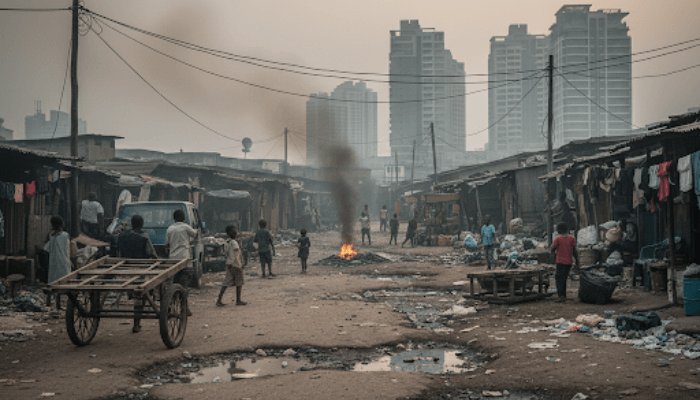
In the energy sector, over 600 million Africans lack access to electricity. Power shortages reduce productivity and increase business costs. Poor road and rail networks lead to high logistics costs, impeding trade and access to markets. In water and sanitation, more than 400 million Africans lack basic access to clean drinking water, while in ICT, though mobile phone penetration is high, broadband internet access remains limited, especially in rural areas.
From records, the infrastructure gap is estimated to cost Africa between 2 percent and 4 percent of GDP growth every year. This also contributes to productivity losses of between 35 and 70 cents on every dollar spent due to inefficiencies, delays, and high operating costs.

Read also: ECOWAS, ACSS partner to tackle insecurity in West Africa
Poor infrastructure increases the cost of goods and services, limits access to education and healthcare, and hampers job creation. It undermines industrialisation, regional trade under the African Continental Free Trade Area (AfCFTA), and the goal of lifting 100 million people out of poverty by 2030.
About $100 billion, according to the ICA, was committed to infrastructure investment in Africa in 2018. Yet, to meaningfully bridge the continent’s infrastructure deficit by 2025, an estimated $170 billion yearly is required. This gap continues to weigh heavily on the continent’s ambition to lift 100 million people out of poverty within a decade, a vision outlined in Agenda 2063 and echoed in national development plans across the continent.
A critical part of the problem is Africa’s overreliance on government-to-government financing, particularly from China. While this funding has helped deliver major roads, airports, and rail networks, the burden of sovereign debt and lack of coordinated continental strategy risks long-term consequences. China currently plays a crucial financial role in 36 African nations, and while Beijing’s infrastructure diplomacy is strategic and well-organised, many African nations are yet to align their own development priorities in a way that safeguards long-term sovereignty and sustainability.
This dilemma was once rightly captured by Deji Alli, CEO of Mixta Africa, who posed a crucial question: “China clearly has a strategy for Africa. Does Africa have a strategy for China?” The rhetorical question underscores the importance of a homegrown and coordinated approach to development financing that emphasises ownership, accountability, and diversified funding sources.

“The CBN’s interventions to stabilise mortgage finance also reflect a broader understanding that infrastructure development must be inclusive and privately supported to be sustainable.”
The company has delivered over 12,500 properties, and roughly 40 percent of those have been in Morocco, widely seen as a model for effective public-private partnerships in affordable housing.
The Moroccan government’s policy shift 13 years ago to incentivise private sector involvement in real estate development has proven transformational. From 2012 to 2018, Morocco’s housing deficit was halved, from 800,000 units to 400,000, according to the Centre for Affordable Housing Finance in Africa (CAHF). Mixta’s flagship project in Tetouan-Martil, Residencia Essafia, completed in 2015, illustrates this success. With over 5,000 affordable homes priced as low as $15,000and amenities including parks, schools, and libraries, the project created over 6,600 direct jobs and more than 15,000 indirect jobs.
Such comprehensive developments demonstrate how infrastructure, particularly housing, can serve as a vehicle for broader economic growth. Research from CAHF (2017) reveals that when housing production is scaled up strategically, its impact on GDP can range from 7 percent to 14 percent in several African nations. The ripple effect—throughob creation, demand for construction materials, and related services—makeshousing a formidable tool for recovery and inclusive growth.
We believe Nigeria is now poised to follow Morocco’s example. With a housing deficit estimated at over 17 million units (as of the last count) and a growing urban population, the demand for affordable homes is urgent. Interventions by the Central Bank of Nigeria (CBN) and the National Housing Fund (NHF) are showing promise. The NHF, backed by employer contributions, now enables the disbursement of long-term, affordable mortgages, helping middle— and low-income Nigerians become homeowners. Still, challenges remain, as issues such as insecure land tenure, bureaucratic delays, and high construction costs continue to limit large-scale development. Yet, with political will and smart policy, as seen in Morocco, these hurdles can be overcome. States like Lagos and Ogun are beginning to partner more actively with developers, providing land and easing administrative processes. The CBN’s interventions to stabilise mortgage finance also reflect a broader understanding that infrastructure development must be inclusive and privately supported to be sustainable.
Read also: Africa’s Under 40 CEOs Awards: Celebrating innovation and leadership
Beyond housing, the same logic applies to transport, energy, water, and digital infrastructure. Governments must increasingly serve as enablers, setting policy, providing incentives, and de-risking investments, while the private sector drives execution. The AfCFTA, if effectively implemented, offers another layer of opportunity by unlocking cross-border infrastructure and harmonised standards, thereby increasing regional investment attractiveness.
The case for enhanced infrastructure investment in Africa is indisputable. But the path forward requires more than dollars. It demands vision, coordination, and a strategic shift toward private sector inclusion and innovation. The real power lies in Africa crafting its own strategy, one that mobilises capital locally and globally, delivers impact at scale, and ensures that growth translates into jobs, dignity, and opportunity for millions.
Infrastructure is not just about roads and buildings; it is about people. And if Africa is to reclaim its economic trajectory post-pandemic and post-global slowdown, then governments must embrace infrastructure as the engine of that recovery, powered not only by foreign loans but by its own people, companies, and collaborative resolve.