Introduction
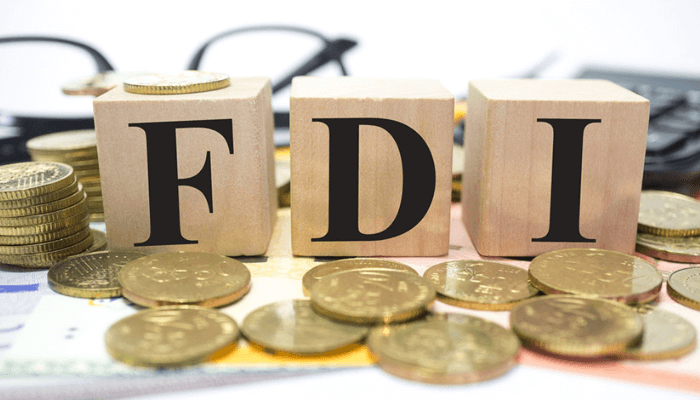
In 2024, Africa made global headlines with a staggering 75 percent surge in Foreign Direct Investment (FDI), reaching a historic $97 billion. At first glance, this suggests a continent finally gaining traction in the competitive global capital marketplace. However, a closer examination reveals a more nuanced reality. According to the UNCTAD World Investment Report 2025, this unprecedented growth was disproportionately fuelled by a single megadeal—a UAE-backed sovereign investment in Egypt. Without this outlier, Africa’s FDI growth would have been a modest 12 percent, raising critical questions: Is this surge a sign of genuine economic momentum, or does it mask deeper structural challenges?
This article critically assesses Africa’s FDI landscape, contextualises it within global trends, and outlines actionable strategies for converting short-term capital inflows into sustainable, long-term growth.
I. The global investment climate: A downward slide

To properly evaluate Africa’s FDI performance, we must first consider the broader global context. In 2024, worldwide FDI flows contracted by 11 percent, falling to $1.5 trillion. Infrastructure investments slowed, industrial sectors faced strain, and developing nations—those most in need of capital—were left behind.
UNCTAD data reveals stark regional disparities: developing countries saw stagnant FDI at $867 billion, East Asia experienced a sharp 12 percent decline (driven by China’s 29% drop), and Latin America and the Caribbean suffered a 12 percent fall due to softer energy prices. Project finance deals plummeted by 26 percent, while greenfield investments declined by nearly 20 percent.
Against this bleak backdrop, Africa’s performance stands out—not just because of Egypt’s megadeal but also because, even excluding it, the continent managed a 12 percent increase. This divergence, though modest, signals resilience worth acknowledging.
II. Inside Africa’s $97 billion FDI: What’s driving the surge?
The headline $97 billion figure is undeniably striking, but its composition tells a more complex story. The UAE’s sovereign investment in Egypt single-handedly skewed the data, while the remaining $64 billion—representing a 12 percent net growth—reflects pockets of resilience across the continent.

Certain sectors showed promising traction: digital infrastructure projects grew by 4 percent, digital platforms and services expanded by 17 percent, and greenfield manufacturing investments in electronics and textiles remained stable. Yet, Africa continues to lag in attracting transformative investments in renewable energy, green manufacturing, critical minerals, and knowledge-intensive services—sectors crucial for long-term competitiveness.
III. The illusion of concentration: A few winners, many left behind
Africa’s FDI landscape remains heavily concentrated, with Egypt, South Africa, and Nigeria dominating inflows while smaller economies struggle to attract meaningful capital. This uneven distribution underscores systemic challenges: investment is urban-centric, overly reliant on extractive industries, and vulnerable to geopolitical instability.
Nigeria’s energy sector, for instance, continues to grapple with security risks despite reform efforts. Ethiopia, once a rising star, has seen foreign capital retreat amid internal conflict. Francophone Africa, despite bright spots like Senegal and Côte d’Ivoire, remains peripheral in global investment flows. Without broader inclusion, Africa’s growth will remain dependent on outliers rather than collective progress.
IV. Global investors are shifting: Is Africa ready?
The global investment paradigm is evolving. Nearshoring and friend-shoring are rising as firms seek to mitigate geopolitical risks. Green and impact investing are gaining momentum, yet Africa’s renewable energy sector saw a 12 percent decline in project announcements in 2024. Digital readiness is now a prerequisite, but many African nations still lack foundational infrastructure.
Investors today prioritise political stability, skilled labour, digital connectivity, and regulatory ease—areas where Africa still underperforms. The World Bank’s Doing Business report highlights persistent barriers: bureaucratic red tape, corruption, and logistical inefficiencies. To compete, Africa must address these gaps urgently.
V. A roadmap for sustainable FDI: What Africa must do
For Africa to transition from sporadic megadeals to sustained investment growth, systemic reforms are essential.
1. Deepen Regional Integration
The African Continental Free Trade Area (AfCFTA) holds immense potential, but its success hinges on harmonising policies and bridging infrastructure gaps to create a seamless market of 1.4 billion people.
2. Invest in Digital Infrastructure and Education
Africa’s digital sector growth must be accelerated through expanded data centres, enhanced internet backbones, and public-private partnerships in tech education to cultivate a globally competitive workforce.
3. Streamline Business Regulations
Reducing bureaucratic hurdles—simplifying business registration, digitising tax compliance, and ensuring judicial transparency—will enhance Africa’s appeal to investors.
4. Prioritise Green Energy and Climate-Smart Investments
With global capital shifting toward sustainability, Africa must leverage its abundant solar, wind, and agricultural resources to attract ESG-focused funds.
5. Rebrand Africa’s Investment Narrative
Shifting perceptions from “aid dependency” to “growth frontier” requires targeted investor outreach, diaspora engagement, and strategic partnerships with global media and consultancies.
6. Establish Sovereign Wealth Funds and Credit Guarantees
De-risking investments through sovereign wealth funds, blended finance models, and regional guarantee schemes can significantly enhance investor confidence.
VI. The role of the private sector and development partners
Governments cannot act alone. The private sector must align with global ESG standards, while development finance institutions (DFIs) should expand guarantee programmes. Multilateral lenders must prioritise infrastructure projects that connect landlocked regions to ports and digital networks, advancing inclusive growth.
Conclusion
Is this a tipping point or a temporary spike with Africa’s record-breaking $97 billion in FDI that may offer cause for celebration, but I think it also demands sober reflection on the part of our leadership. A single megadeal cannot eclipse the continent’s structural challenges. Yet, the opportunity is undeniable: the world seeks new markets, talent, and high-growth frontiers. By embracing integration, digitalisation, sustainability, and regulatory reform, Africa can transform its investment landscape from episodic to enduring.
The pivotal question is no longer whether Africa can attract investment but whether it can rise to meet the expectations of a global economy ready to engage. The time for strategic action is now.
Prof. Sarumi is the Chief Strategic Officer, LMS DT Consulting, Faculty, Prowess University, US, and ICLED Business School, and writes from Lagos, Nigeria. He is also a consultant in TVET and indigenous education systems, affiliated with the Global Adaptive Apprenticeship Model (GAAM) research consortium. Tel. 234 803 304 1421, Email: leadershipmgtservice@gmail.com.