There has never been a more urgent time to tell Africa’s stories and to tell them right. Today, from digital labs in Kigali to classrooms in Nairobi, from boardrooms in Johannesburg to policy forums in Lagos, Africans are participating in global conversations and shaping them.
Across the continent, innovation is a lived experience. Africa’s tech ecosystem, despite external shocks, continues to produce some of the most agile startups and creative thinkers in the world. Whether in fintech, health tech, ed-tech or climate solutions, young Africans are building tools and narratives that defy outdated stereotypes. Africa is home to the world’s fastest-growing youth population. According to the United Nations, more than 60 percent of Africans are under the age of 25. By 2030, young Africans will make up 42 percent of the global youth population.
Africa’s rise is technological, cultural and intellectual. Storytelling has always been a strength. From griots preserving ancestral knowledge to filmmakers crafting stories that travel across languages and borders, Africans have long understood the power of narratives. Now they are using it to influence policy, reframe global perceptions and accelerate change.
Examples of this new era abound. In film, productions like Aníkúlápó and The Woman King showcase African heritage through global distribution platforms. In literature, novelists like Tsitsi Dangarembga and Chimamanda Ngozi Adichie continue to influence social discourse across continents. Platforms such as Africa No Filter are also funding new narratives that disrupt outdated tropes and spotlight lived realities. African podcasters, digital creators and documentarians are building followings that rival traditional media audiences.

Read also: New York Times: A female senator faces down a ‘classic abuse of power’ in Nigeria
This evolution is evident in the growing recognition of African voices on the world stage. Africa is no stranger to the Nobel Peace Prize. In previous years, laureates like Wangari Maathai and Desmond Tutu have demonstrated the power of ideas to influence systems. This year, 22-year-old Zuriel Oduwole made history as the youngest Nigerian ever nominated for the Nobel Peace Prize. She is also the first female Nigerian to receive a nomination in the Peace category. Her work focuses on education, gender equality and youth inclusion. Through documentary filmmaking, interviews with global leaders and media advocacy, she has engaged power structures and influenced policies across multiple countries.
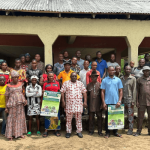
Zuriel’s storytelling is intentional and tactical. Her ability to bridge media and diplomacy has made her a global figure in youth leadership. On her recent tour in Lagos, facilitated by the Sterling One Foundation, Zuriel engaged over 150 young changemakers at the Youth Leadership Series held at the University of Lagos. She also addressed C-suite executives, captains of industry, thought leaders and policymakers at the Sterling Leadership Series, a platform that has previously hosted Nobel Laureate Professor Wole Soyinka, former Nigerian footballer Segun Odegbami, former Minister of Communication Technology Dr Omobola Johnson, journalist Howard French and world record holder Tunde Onakoya.
Her final stop was a visit to the Lagos State Governor’s office, where she met with Governor Babajide Sanwo-Olu. Alongside representatives from the Sterling One Foundation, the conversation focused on gender equality, youth empowerment and the role of state institutions in creating meaningful opportunities for young Nigerians. These discussions reinforced the broader theme of Women’s Month: Accelerate Action, emphasising the importance of collaborative leadership in turning commitments into lasting change.
This year’s call to action is timely, but action must be sustained beyond symbolic observances. It is easy to celebrate progress in March. It is harder to ensure that energy carries into boardrooms, cabinet meetings and curriculum design all year long. A decade of research by McKinsey and LeanIn.org shows that while women have made progress in representation, rising from 17 to 29 percent in the C-suite, those gains remain fragile. Women of colour hold just 7 percent of top executive roles. At the current rate, it will take nearly 50 years to achieve parity across senior leadership levels.

Read also: America first, Africa forward: How Nigeria can thrive amid Trump’s policies
The numbers tell a story. Women are ambitious. They are ready to lead. They are already leading. What remains is for systems to reflect this reality.
Zuriel’s remarks throughout the tour underscored a single truth. Storytelling is a strategic tool for influencing perceptions and policy. It is a way to document progress, challenge systems and inspire new pathways for leadership.
Efforts to elevate storytellers must go beyond profile-raising. They must be grounded in partnerships, investments and accountability. The future of storytelling in Africa depends on who gets to tell the story and who gets heard. In this moment, it is clear: the storytellers are ready.
Africa’s digital renaissance is driven by youth and powered by stories. In a world that often rushes to speak on behalf of the continent, African storytellers are stepping forward to speak for themselves. They are taking their place and setting new standards for how Africa is seen and
Olapeju Ibekwe, CEO, Sterling One Foundation, is a leader in sustainability, women’s empowerment, and social impact, committed to advancing equitable growth and climate resilience across Africa.