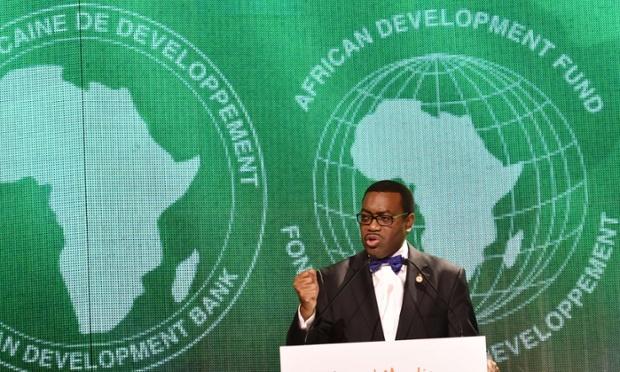
The African Development bank is calling for deeper commitment from global fglobal finance mechanisms such as Green Climate Fund and the Global Environmental Facility to support Africa to adapt to climate change and stop the displacement of public spending caused by climate change.
Akinwunmi Adesina, AfDB president made the call during a speech at the United Nations climate conference November 18 while addressing the African Heads of State and dignitaries attending the Africa Action Summit hosted by the King of Morocco on the sidelines of the 22nd Conference of the Parties (COP22) to the UN Framework Convention on Climate Change (UNFCCC) in Marrakech.
“Words of comfort are not enough to pay Africa’s rising bills for adapting to climate change,” said Adesina.
He specifically called on global finance mechanisms to pay for the premiums of African countries to the African Risk Capacity, the mechanism developed by African countries to help them cope with extreme weather events, through insurance for catastrophic events.
“The insurance premiums are not cheap and this has continued to discourage African countries from insuring themselves against the rising catastrophic risks,” said Adesina.
The decline in commodity prices is already taking a toll on several countries, constricting their fiscal space. Economic growth is projected to decline to 1.9 percent in 2016 from 3.6 percent in 2015. “Africa has a very limited scope to adjust to and cope with more exogenous shocks,” he said.
Effects of climate change are further worsening the fiscal environment for African countries. Unless urgent action is taken, governments run the risk of diverting more of the resources needed to boost growth to deal with climate risks.
Africa receives only 4% of all global finance funds. Only about 14% of global climate finance goes into adaptation.
Africa must “power up” itself to “add value to what it produces, speed up industrialization and move to the top of global value chains.” He observed that this must start with unlocking the huge amounts of energy potential on the continent.
“Potential is important, yes, but potential alone cannot light up homes or power industries,” he told the Opening Panel of Africa Day. “We must ensure that Africa develops a balanced energy mix that will allow it to industrialize. Grid, mini-grid and off-grid systems will play a major role,” Adesina reiterated.
To maintain the momentum, Adesina also called for fulfillment of the full pledge of the G7 to provide US $10 billion to the initiative. “The sooner this is made available, the faster we will all make progress in achieving the goal of universal access to electricity and acceleration of the growth of renewables in Africa’s energy mix,” he said.
The Africa Action Summit brought together 50 Heads of State and Government, UN Secretary-General Ban Ki-moon, as well as representatives of international organizations.
ISAAC ANYAOGU