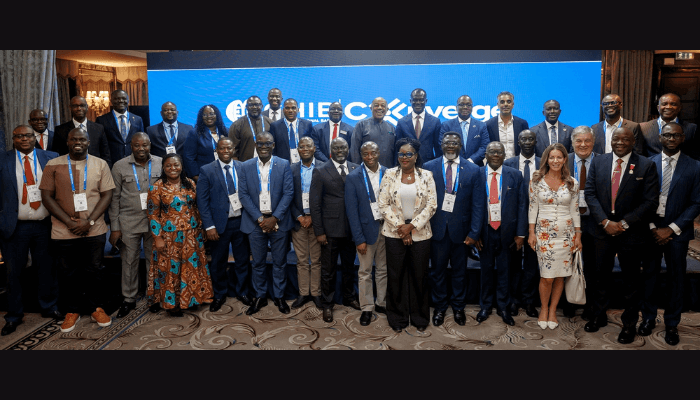
Dean Adansi, Chief Executive Officer of Ghana International Bank (GHIB), during the GHIBConverge 2025 forum in London, said Africa is sitting on untapped billions in export revenues because the country continues to export raw cocoa instead of chocolate, raw gold instead of refined bullion, and raw cashews instead of processed kernels.
Over three days from August 6th to 8th, policymakers, financiers, commodity executives, and development experts debated how to shift Africa’s commodity trade model from raw exports to value-added production.
Held under the theme “Rethinking Commodity Finance for Growth,” the conference stressed that without structural reforms and innovative financing, Africa would continue to lose billions in unrealised export earnings.
Adansi called for the creation of dedicated value-addition funds, expansion of structured trade finance for processing plants, and risk-sharing arrangements between African and international lenders. He also urged regulatory harmonisation to allow processed goods to move more freely under the African Continental Free Trade Area (AfCFTA).

The strategic importance of refining at the source was echoed by central bankers. Governor Buah Saidy of the Central Bank of The Gambia argued that exporting raw commodities had drained jobs and value from the continent for decades.
“By investing in domestic refining capacity, building regional value chains, and securing fairer terms of trade, we can anchor our currencies, strengthen reserves, and create lasting resilience in our economies,” he said.
For Ghana’s central bank, represented by its First Deputy Governor, Zakaria Mumuni, underscored the Bank of Ghana’s commitment to expanding domestic gold refining capacity and integrating ESG considerations into commodity sector policy.
He highlighted how refining at the source could reduce Ghana’s dependence on imported refined bullion and provide a hedge against volatility in global markets.
“Ghana’s long-term macroeconomic stability depends on our ability to capture more value from the commodities we produce,” said the First Deputy Governor of the Bank of Ghana.

“Expanding our domestic gold refining capacity is not just about increasing export revenues; it is about building resilience into our reserves, improving our trade balance, and ensuring that Ghanaians benefit more directly from the resources we own.”
On the second day, Lord Paul Boateng, GHIB board member and former UK Cabinet Minister, urged African leaders to see commodities as geopolitical assets. “Critical minerals, cocoa, gold — these are not just export lines in a trade ledger,” he said. “They are bargaining chips in a changing global order, and Africa must use them to secure technology transfer, infrastructure investment, and sustainable value chains.”
The conference also highlighted the role of sustainability-linked finance, digital innovation, and infrastructure in reshaping trade. GHIB used the platform to announce a partnership with Vista Bank to expand trade finance in West Africa, while honouring Edmund Poku, CEO of Niche Cocoa Industry Ltd., with its first Trader of the Year award for advancing African value addition.
Closing the event, Adansi pressed for collective commitment: “The transformation will not be led by governments alone or by the private sector alone. It requires a coalition of committed actors who see beyond short-term margins to long-term wealth creation for Africa.”