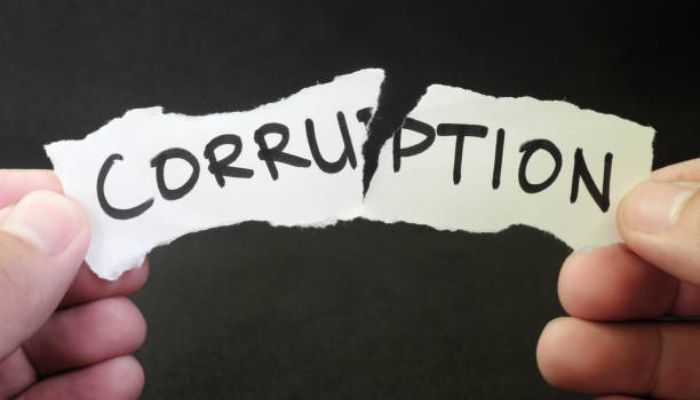
African governments must end corruption and illicit capital flows that cost the continent more than $580 billion annually if they’re to deal with a debt pile that’s approaching $2 trillion, according to the head of the African Development Bank.
While nations also need access to more concessional financing — and debt-restructuring where necessary — curbing outflows is crucial, Akinwumi Adesina, the lender’s president, said in an interview last week.
“It doesn’t matter how much water you pour into a bucket if the bucket is leaking,” he said in Maputo, Mozambique’s capital. “If you’re able to reduce the leakages to illicit capital, also corruption and all of these things, Africa will be able to keep a lot of these resources and meet the amount of infrastructure it needs.”
Read also: ICPC partners N/East Attorneys-General to tackle corruption, insecurity

The AfDB estimated in May that Africa loses about $1.6 billion daily to what it termed “financial leakages.” That figure includes the loss of $90 billion a year to illicit financial flows, with $275 billion “siphoned away” by multinational corporations shifting profits, and $148 billion going astray because of corruption.
The continent faces an annual infrastructure backlog of as much as $170 billion — which will be critical to address for economic development and job creation.
Yet many governments are grappling with the rising cost of servicing loans, which is at the highest level since the last debt crisis in the early 2000s, according to a working paper by the Boston University Global Development Policy Center and the Institute for Economic Justice.
More than half of African governments spend more on interest payments than public health, it found.
Speaking to over 1,200 lawyers, judges, and officials at the Kenya Law Society’s Annual Conference in Diani, Adesina linked Africa’s economic struggles directly to governance failures.
He described how vulture funds buy discounted national debt, then aggressively sue vulnerable nations for full repayment plus inflated interest and fees through legal loopholes. “When Africa stands for the rule of law, the world will stand with Africa,” Adesina declared, framing justice as the bedrock of prosperity.

The AfDB chief drew a clear line between independent courts, transparent public finance, and attracting vital capital. “Evidence suggests foreign direct investments move more to countries that have political stability, stable democracies, transparency, and low levels of corruption,” he stated. Key drivers also include strong regulatory frameworks, public accountability, and respect for intellectual property rights – areas where many African nations lag.
Adesina urged immediate, concrete reforms: strengthen judicial independence and transparency, rewrite natural resource laws to benefit communities not elites, establish sovereign wealth funds, and build robust African arbitration systems to settle disputes fairly locally.
Read also: NNPC probe, NDDC farce: How not to fight corruption
He challenged Africa’s legal professionals to become “guardians of promise,” enforcing constitutional safeguards on public spending and championing ethical practices. “Justice is not a byproduct of development — it is the foundation of development,” he emphasized.
Can Africa transform its legal systems into economic engines? Adesina pointed to successes: AfDB-backed commercial courts in Rwanda and Côte d’Ivoire slashed dispute resolution times, unlocking over $1 billion in investment.
Seychelles, after Bank-supported constitutional reforms mandating parliamentary approval for sovereign borrowing, saw its debt-to-GDP ratio plummet from over 100% to below 55%. Similar procurement and debt transparency reforms are safeguarding funds in Kenya.