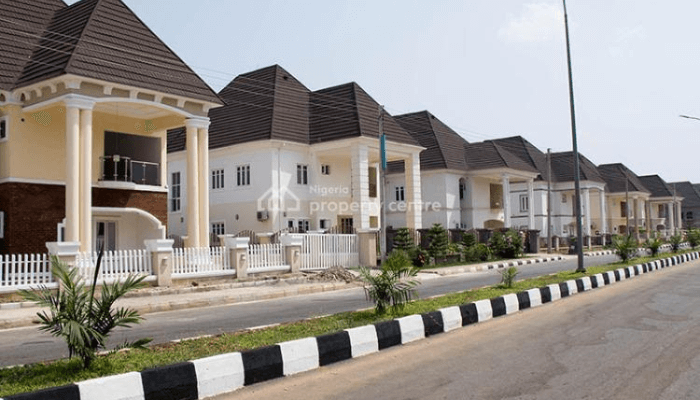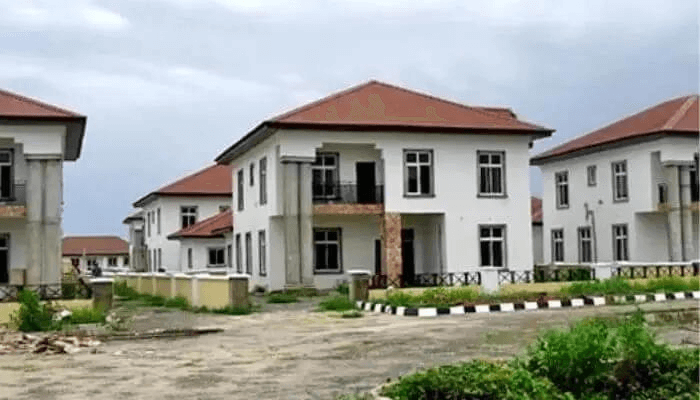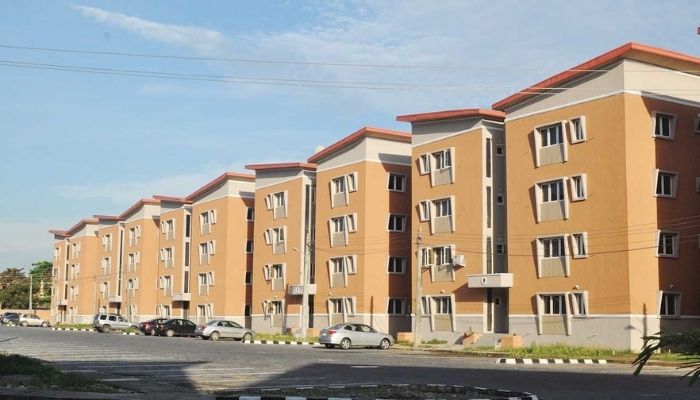
Stakeholders in the built environment have said that Africa must act swiftly and decisively to address its staggering housing deficit, estimated at over 50 million units across Sub-Saharan Africa.
Speaking at the 19th Africa International Housing Show (AIHS) in Abuja, they described the crisis not only as a humanitarian and developmental emergency, but also as a massive economic opportunity that if harnessed properly, could create millions of jobs, boost innovation, and drive inclusive growth across the continent.
Ahmed Musa Dangiwa, Nigeria’s Minister of Housing and Urban Development, declared that access to decent housing is not a privilege but a fundamental human right.
Dangiwa noted that Nigeria is leading the charge through a State-by-State Homeownership and Housing Development Campaign, designed in partnership with subnational governments, the private sector, and development partners.

The initiative, he said, aims to close the gap between policy and delivery by equipping citizens with tools and information to access affordable housing.
“This campaign is about translating frameworks into real-life solutions. We are finalising plans to establish an experts-led National Housing Policy Coordination and Monitoring Committee that will track and report on the implementation of housing policies nationwide”, Dangiwa said.
The minister underscored housing as the cornerstone of social development, arguing that decent shelter promotes dignity, productivity, and stability.
“When we invest in housing, we invest in people, jobs, and the future of our cities,” he added.
Suleiman Hassan Zarma, AIHS Advisory Board Chairman, noted that Sub-Saharan Africa alone is grappling with a shortage of over 50 million housing units.

Despite the scale of the crisis, he described it as a billion-dollar opportunity with the potential to create jobs, boost innovation, and drive economic growth.
“We have a collective responsibility and an unparalleled opportunity to drive this transformation. This is not just a conference it’s a call to action”, Zarma said.
Yakubu Gowon, former Nigerian Head of State, who was represented by Suleiman Bogoro, praised AIHS as a vital platform for shaping inclusive urban policy.
He urged African leaders to make affordable housing central to sustainable development agendas, noting its direct links to health, education, and economic productivity.
“It is imperative that our policies are equitable and reach all segments of society,” Gowon said, adding that success lies in Africa’s collective ability to “innovate, invest, and implement.”
Jerry Gana, former Minister of Information, said Nigeria must tackle the root causes of unaffordable housing by strengthening local production of building materials.
“Most materials are imported, and due to forex instability, they are beyond the reach of ordinary Nigerians,” he noted.
Gana emphasized the need to fund the housing sector adequately and reduce construction costs.
Minister Dangiwa acknowledged these challenges and said the Tinubu administration is addressing both the supply and affordability of housing.
He cited macroeconomic reforms to stabilise the naira, increase incomes, and reduce inflation as part of a broader plan to make housing sustainable.
“Our Renewed Hope Cities and Estates, including social housing schemes, are part of an ambitious vision.
These developments are currently being rolled out in Abuja, Lagos, Port Harcourt, Enugu, Maiduguri, Kaduna, and Nasarawa, alongside similar projects in all 30 states”, Dangiwa said.
Taiwo Oyedele, Chairman of Nigeria’s Presidential Fiscal Policy and Tax Reform Committee, announced several tax incentives to boost the housing sector.
These include VAT exemptions for rent and housing transactions, reduced tax rates on building activities, and new incentives for domestic production of construction materials.
Shehu Osidi, Chief Executive Officer of the Federal Mortgage Bank of Nigeria, praised Dangiwa’s inclusive and visionary leadership.
He called for deeper collaboration between public and private actors to ensure wider access to housing, particularly for low and middle-income earners.
Vincent Obong, Ghanaian MP and Chairman of the Works and Housing Committee, lauded AIHS as a model of regional cooperation.
“It provides a vital platform for cross-border learning and integration,” he said.
According to him, with the theme “Reimagining Housing through Innovation, Collaboration, and Policy,” the AIHS serves as the continent’s platform for driving the vision of a future where every African has access to decent and affordable housing.