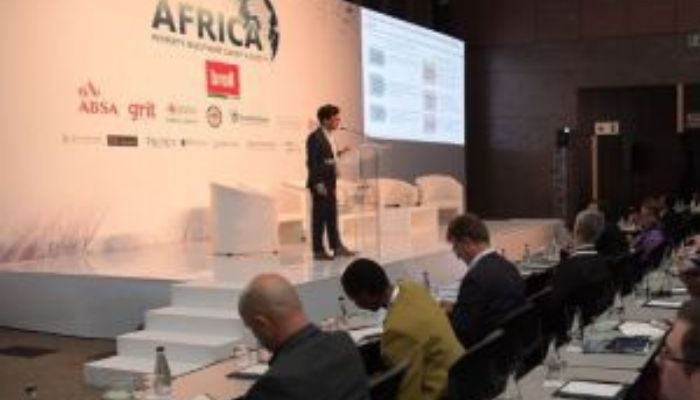
The 9th edition of the Africa Property investment Summit & Expo recently concluded in Johannesburg. Africa real estate industry leaders met to network and dialogue around this year’s theme: Building a Smarter Future for Africa Real Estate. Various speakers highlighted the key issues facing the industry as a whole. Dr. Martyn Davies – MD Emerging markets and Africa, Deloitte spoke about the so-called resource curse facing Africa and other resource rich nations. “Resources don’t matter!” he argued and he presented examples of countries from Singapore to Switzerland who without any resources have achieved tremendous and sustained GDP growth. “What does Switzerland have?” Dr. Davies asked: “8 million people and a couple of cows. Yet it is now the richest nation in the world.” In Africa, Rwanda was the one country he saw as taking rapid steps towards achieving sustainable growth without a dependence on natural resources. From drone delivered healthcare services to speedy company registration processes (30 days maximum) Rwanda is utilizing technology and setting in place polices that will enable its economy leapfrog to the first world levels. This amazing feat for a post war country and its clear vision for the future is epitomized by their local currency notes which features children with laptops vs. deceased local leaders, indicated Dr. Davies.
Delivering smarter cities in Africa requires investments by both local and foreign entities. However our continent especially power houses such as Nigeria have recently been plagued with tough economic downturns. This has led to investment flight particularly to Eastern Europe by South African investors. Have the negative sentiments begun to change? The Pan-African Investor & Developer round table: Reassessing and analysing the Africa real estate investment case sought to address this issue. Ben Kodisang CEO of ALT Capital Partners a Pan-African real estate investment fund shared his positive views on the matter. According to Ben, the worst is behind us as evidenced by the recent successful capital raises by both GRIT and Growth Fund Capital. One can’t argue against the demand for retail, commercial and logistics that is still within our countries, he stated.
READ ALSO: Amidst disagreements Reps summon Buhari over killing of 43 farmers in Borno, insecurity
Bronwyn Corbett CEO of GRIT shared a mixed perspective. What matters is the diversity of your operations in order to balance out country risks. During their road-show, GRIT’s key focus was on educating investors that Africa is not one country – hence a diversified portfolio is an essential solution. It is important to move away from the herd mentality and design a targeted portfolio of assets that will appeal to certain investors. Many investors have made mistakes in their strategies but have blamed the countries instead of focusing on why these strategies failed. It’s why the South Africa funds are now focused on Eastern European markets for instance, she argues.
You cannot be the jack of all trades. GRITs investment approach is to be clear and ruthlessly stay the course. For instance, they are currently looking at a multi geography solutions with an initial emphasis on stable pegged to the Euro currencies such as those of the francophone African countries of Senegal and Ivory Coast. A focused strategy is key and accounts for how GRIT was able to raise 100 million usd from pure UK financial institutions.“We brought fresh capital into Africa and I’m really looking forward to the next chapter now” Bronwyn added.
The capital flight from South Africa pension funds however has been quite significant. Tom Mundy Head of JLL SSA research put this at approximately $14 billion. Is this the case for other sources of funding such as the DFI’s? Olaf Schmidt Mgr. Africa department IFC shared his views by first stating “The one predictable element in Africa is that Africa is unpredictable”. The IFC sees Sub-Saharan Africa as a long term play with a real growth potential. As such, with a total portfolio worth $23 billion, IFC’s intention is to increase its $500 million commitment to real estate projects in Africa via a similar diversification approach. Their long-term perspective and diversification strategy will serve as a key differentiator, Mr. Schmidt proposed. Real estate requires long-term capital and this is the challenge with the traditional sources of financing that have funded projects in Africa thus far. Patient capital such as pension fund monies is needed vs. short-term focused capital such as PE funds.
Nonetheless, there are still opportunities for different funding sources, both long-term and short-term. For PE funds, the challenge remains where to deploy the 60 billion usd of capital that they have raised. There is an essential lack of suitable assets for these funds. To address this issue, IFC specified the need to partner with the right counterparts who can deliver the required product.It is no longer a build it and they will come approach. Instead, the strategy is to find the right partner with the right platform that can deliver in response to market driven forces and to the quality demanded by international institutions. This is particularly the method the IFC intends to employ towards affordable housing. To successfully enter into the affordable housing market, it’s essential to design a different model and risk profile, and partner with the various required stakeholders. Each have a role to play. Mortgage institutions for instance have the off-takers and need to provide mortgages at suitable interest rates. Government agencies need to address land and title concerns. Finally developers are required to deliver housing solutions at the right prices. All these stakeholders have to come together if a sustainable affordable housing solution is to emerge. As such, companies that have a platform that can be used by these various stakeholders for the delivery of a sustainable affordable housing product, on a pan-African basis, have a distinctive competitive advantage.
Africa has not lost its gloss, stated Tara O’Çonnor the Executive Director, Africa Risk Consulting & ARC Briefing who shared her views on the panel Geopolitics, Oil, Commodities and Its effects on African Real Estate Investments. Africa is still high on the agenda of every boardroom as evidenced by the recent $3.5 billion and $60 billion in investments commitments made by Theresa May and the Chinese government respectively. There is clearly a desire by international investors and an opportunity to diversifythe client base by engaging with various countries in Africa. Expanding investments to include the Francophone block of 14 countries with CFA currencies pegged to the Euro also serves as an opportunity to manage geopolitical and economic risks.
Tola Akinhanmi, Acting Head: Real Estate Finance West Africa at Stanbic IBTC Capital ltd took this argument a step further. Stanbic IBTC has a foot print in 20 African countries. As part of their long-term vision and strategy to manage these economic and geopolitical risks, they too have recently entered the Francophone space via Ivory Coast. It is important for the business to be innovative and adaptive especially since these moments of instability also provide opportunities, argued Tola. Strategies have to match both the reality of the market and address the interests of the capital markets. Hence products such as smaller 8-10,000 sqm malls with local anchor tenants, or offices with smaller flexible floor plates have to be considered. According to Mr. Akinhanmi, a change in target assets from retail/office to other classes such as student housing, hospitals and industrial need to occur. There are opportunities to grow and we need to adapt in order to match these opportunities.
The overall sentiments of the real estate enthusiasts at this years’ API were largely positive concerning Africa. A shared view was that the Africa real estate industry will require innovative patient real estate funding on both the equity and debt sides. Diversification both in terms of countries and asset classes is key and a clear means to retain capital inflows while managing the economic and geopolitical risks.
Chinwe Ajene-Sagna