African Export–Import Bank (Afreximbank) has its Cairo headquarters standing as a beaming testimony to its ambition, evidencing a charge delivered from trade deficits and dependency. Professor Benedict Oramah took the helm in 2015, pledging to build a “solid African bank” capable of financing the continent’s trade dreams. 10 years later, the veteran banker steps aside as the numbers tell an impressive story.
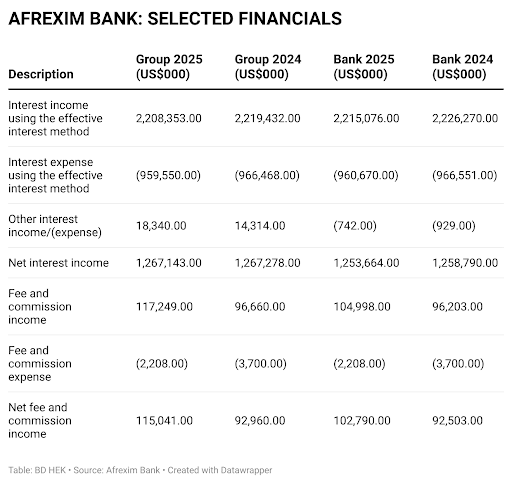
Having inherited a $5 billion balance sheet in 2015, Oramah inflated it by almost eight fold to $38 billion within ten years of his stewardship. The spurt testified of bold bets on neglected sectors with Oramah preaching Africa’s case in boardrooms from London to Beijing.
As lenders across the world beat a retreat from African risk, Afrexim doled out $20 billion in trade finance in 2024 to support energy, creatives, and infrastructure projects. Initiatives like the Pan-African Payment and Settlement System (PAPSS), active in 17 countries presently, have raised intra-African trade under the AfCFTA banner. Meanwhile, the Fund for Export Development in Africa (FEDA) has improved value chains and stepped up in crisis responses – the bank mobilised up to $2 billion, underscoring its position as a “development supermarket.”
But Oramah’s tenure also had its dark patches. Fitch downgraded Afrexim to BBB- with a negative outlook in June 2025, pointing at potential losses of up to $2 billion from loans to debt-stressed nations like Ghana and Zambia. Critics hinted at flexible accounting and solvency strains that heighten the risks of counter-cyclical lending in volatile markets.

As George Elombi, the Cameroonian LSE-trained lawyer with three decades at the bank, assumes the captaincy of the continental lender, the expectations speak a heavy cargo.
Elobi’s style is technocratic, contrasting Oramah’s flair style. This promises steadier partnerships. Elombi has outlined a seven-point agenda to include scaling assets to $250 billion in 10 years, preserving past gains, deepening collaborations, expanding raw material trade with job-focused processing, building infrastructure like border logistics, harnessing AI for e-commerce, and prioritizing extractives without tax hikes.
Yet the mandate is unmistakable. Afrexim must fund the trade that weaves Africa together. Elombi must answer the lingering questions of the Oramah era. Can Afrexim de-risk while keeping the forward trajectory? Can the lawyer-banker translate grand schemes into widespread prosperity and guarantee that the small-scale manufacturer in Nigeria and the cashew farmer in Mozambique can get Afrexim’s capital? Oramah has laid the audacious foundation; Elombi must build a solid refuge for all African traders.