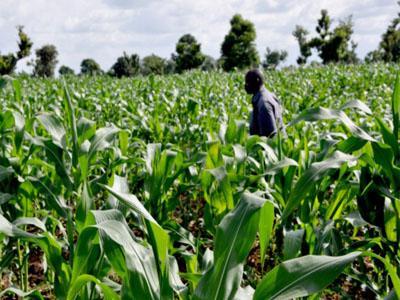
Experts in the agricultural sector have said that without the adoption of technology and innovation Nigeria may fail in its quest to boost farmers’ productivity and improve their livelihoods.
The experts have identified low use of technology and innovation as the biggest challenge confronting farmers in the country. According to them, the country has failed to improve its yield per hectare owing to the inability of farmers to farm with modern technology.
Abiodun Olorundero, CEO of Green Vine Farms, said in a Businessday response to questions, that lack of technology and innovation in the sector may mitigate the progress made so far in the sector.
“Lack of technology and innovation remains one of the reasons why we still have shortfall in production. Technology is very crucial if Nigeria really wants to boost agric productivity,” Olorundero said.

Nigeria is listed among the least countries in the world with mechanised farming. The rate of the use of agricultural machinery is still below that which is considered necessary to meet the rising demand for food, as stipulated by the Food and Agriculture Organisation (FAO).
Available statistics show that Nigeria is one of the least mechanised farming countries in the world with the country’s tractor density put at 0.27 hp/ hectare which is far below the Food and Agriculture Organisation (FAO)’s 1.5hp/hectare recommended tractor density for Africa and other developing countries.
“For us to increase the productivity per unity area, we must increase our level of mechanisation. Hoes and cutlass cannot get us anywhere in terms of boosting production,” said Rotimi Fashola, senior partner of OIT Fash Consult in an exclusive interview with BusinessDay.
When measured on mechanisation scale in 2003, 14 years ago, Nigeria had only 30,000 tractors and currently adding 1,000 new ones each year, which is still not considered sufficient in replacing the ones that are aging, broken down and worn out.
“We must be innovative in our design, implementation and execution of agricultural programs, projects and activities in agriculture sector,” Ibrahim Kabiru national president, All Farmers Association of Nigeria (AFAN) told BusinessDay.

“How do we even track the progress we make? How much do we devote to research on this? These are issues that need to be factored in at the moment,” Kabiru said.
Afioluwa Mogaji, chief executive officer, X-ray Farms Limited said, “It is time the government to take the issue of mechanisation very seriously. Farmers cannot boost productivity without a high level of mechanisation.”
The experts urged the government to provide Special Agric Mechanisation Intervention Fund (SAMIF), which should be domiciled in deposit money banks to provide matching funds to give loans at single digit interest rate for mechanisation.
They also call on the government to create an environment that is conducive for farm machinery manufacturers, to establish assembly plants and also provide special funds to agricultural institutions to undertake research and development for local manufacture of agricultural machinery and implements.
“Government must in the interim partner with at least 2 reputable tractor manufacturers to establish Complete Knocked Down (CKD) assembly plants, but in the long term encourage the design and manufacture of indigenous tractors, implement the use of local tractors and other equipment,” Yakubu said.
Josephine Okojie