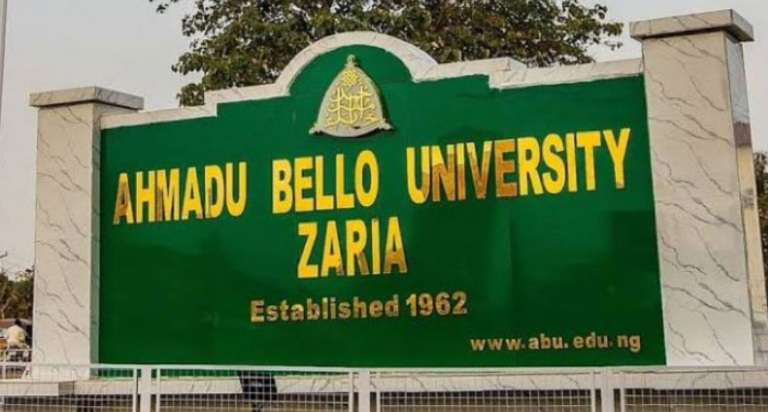
The management of Ahmadu Bello University (ABU), Zaria, has debunked circulating reports alleging that some of its scientists were involved in a secret nuclear weapons programme for Nigeria.
In a statement shared with BusinessDay on Monday, Auwalu Umar, the university’s director of public affairs, described the claims as baseless and the product of an AI-generated video being circulated on social media by unidentified individuals.
According to the video, unnamed online sources had falsely alleged that Nigerian scientists at ABU enriched weapons-grade uranium in the 1980s with support from Pakistan’s AQ Khan Network.
Umar dismissed the allegations as “false, reckless, and dangerous,” stressing that Nigeria has consistently maintained a firm commitment to the peaceful use of nuclear science in line with international treaties.

He explained that most of the scientists at ABU’s Centre for Energy Research and Training (CERT) were undergoing training abroad during the 1980s and could not have participated in any uranium enrichment activity. “Neither Nigeria nor ABU has any connection with the AQ Khan Network or any nuclear weapons programme,” the statement read.
Clarifying further, the university noted that the only operational nuclear facility at the time was a 14 MeV Neutron Generator commissioned in 1988. The Nigeria Research Reactor-1 (NIRR-1) project, it said, began in 1996 under the International Atomic Energy Agency’s (IAEA) Technical Cooperation Programme and was commissioned in 2004.
ABU added that the NIRR-1 reactor, developed in collaboration with China and the IAEA, initially used highly enriched uranium but was converted to low enriched uranium in 2018 under the Global Threat Reduction Initiative.
The university emphasised that all its nuclear research is conducted transparently and under international oversight, reaffirming that Nigeria neither operates a uranium enrichment facility nor a fuel fabrication plant.
Read also: China dominates Nigeria’s solar market, accounts for 70% of panel shipments

The statement also traced Nigeria’s nuclear history, highlighting that the country joined the IAEA in 1964, signed the Nuclear Non-Proliferation Treaty in 1968, and remains a signatory to the 2009 Pelindaba Treaty, which prohibits nuclear weapons in Africa.
ABU reiterated its commitment to the peaceful application of nuclear science in areas such as medicine, agriculture, and energy research, in line with the university’s founding vision and Nigeria’s national policy on atomic energy.