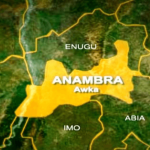
Abia, Anambra, Ebonyi, and Enugu have emerged as leading states prioritising long-term capital investments over operating expenses, according to the BudgIt 2025 States on States report.
The data measured the priority states give to capital expenditures relative to daily costs. Abia (0.30), Anambra (0.33), Ebonyi (0.36), and Enugu (0.37) occupied the top four spots of the 35 states analysed. Taraba rounded the top five with 0.39. These states devoted the biggest slice of their budget to infrastructure, education, and healthcare, as they focus on areas vital for human capital development and scalability.
“States that rank higher on Index D give comparatively higher priority to investing in capital expenditure compared to their expenditure expenses,” BudgIt researchers said.
Read also: How Nigeria can mobilise private capital to close $100bn infrastructure gap

At the other end of the table are Ondo (3.63), Plateau (2.57), Cross River (2.54), Kogi (2.34), and Ogun (2.31). These states, occupying numbers 31-35 on the table, prioritise investments in operating expenses such as wages, administrative costs, and recurring expenses over capital expenditure. This pattern of budget disbursement highlights the continuing disparities in how subnational governments balance the tension between sustaining operations and investing for future growth.
“States that rank lower in Index D have a financial strategy that prioritises investment in their operating expenses over capital expenditure in the state,” BudgIt said. “These states are not sufficiently investing in improving the human capital development profile of the state.”
Index D is one of four indices used to assess overall fiscal performance across 36 states and carries a weight score of 10 per cent of the overall fiscal performance. A higher score indicates a stronger orientation towards long-term investment, while a lower score points to short-term fiscal management dominated by consumption spending.
Read also: Recurrent spending dominates in 30 states while capital lags
The 2025 report marks a notable shift from last year, when Rivers, Niger, Anambra, Gombe, and Ebonyi led the capital index, and Plateau, Benue, Ekiti, Kogi, and Delta ranked the lowest. The emergence of Abia and Enugu among this year’s top five suggests improving fiscal discipline in the South-East, where states are realigning budgets toward capital projects that can drive inclusive growth. Overall, the index reveals a regional pattern of stronger investment focus in parts of the South-East and North-East, while states in the South-West and North-Central continue to allocate more to recurrent obligations than to long-term development spending.

Mid-table performers include Kwara (0.54), Jigawa (0.55), Zamfara (0.60), Edo (0.65), Kano (0.68), and Nasarawa (0.71), all showing modest but steady improvements compared with 2024 levels.