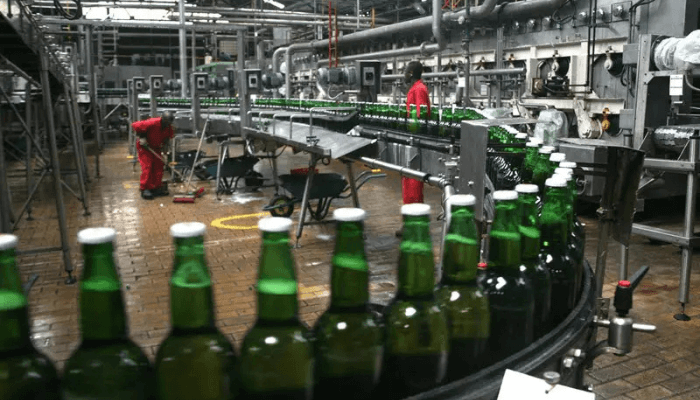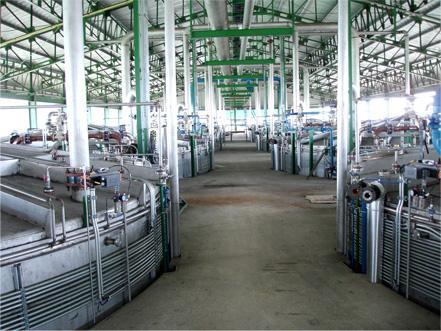
Allied Atlantic Distilleries Limited, the only manufacturers of ethanol in Africa, targets an expansion of their plants which will see its production capacity of Extra Neutral Alcohol (ENA) surge to 22 million litres before 2025.
The country’s demand for ethanol hovers around 300 million litres, and AADL currently produces an infinitesimal 9 million litres. This represents a whopping 291 million litre deficit which incurs the nation over $250 million in importation costs.
“We need encouragement from Government in areas of tax reliefs and low interest rates on loans obtained from Deposit Money Banks (DMB). In advanced countries, when you have a pioneer status as the only manufacturer of a product, the Government supports you with these incentives to trigger expansion”, Dhiman Anurag, Managing Director, Allied Atlantic Distilleries Ltd said.
However, Rajasekarr Rajavelu, a director at AADL, says the Governors of Oyo and Ogun states have been supportive, following their allocation of several hectares of land to the company.

The company, which currently engages 8,000 cassava farmers for its operations, seeks to double the number while providing indirect employment to more than 80,000 people in Ogun and Oyo states.
In producing ethanol, AADL pioneered the technological know-how of using cassava to economically produce ENA of international standard.
“Our first option was sugar but there were no sugar factories in Nigeria at the time. The United States use corn, while other countries use wheat, rice or sorghum. But we decided to look at other raw materials, which led to our use of cassava,” Anurag said.
AADL produces cassava-based ENA, otherwise known as ethanol, and also supplies raw material to distillers, pharmaceutical and other related industries. In addition to the ethanol plant, AADL produces carbon dioxide (CO2) for use in various industries including the soft drinks Industry.
Anurag added that the aim of the expansion is to consolidate on the success achieved so far in reducing the nation’s dependence on imported ENA with resultant savings in foreign exchange, production of jobs in the industrial sector and improvement in the country’s farmer’s income; at a time where the nation’s diversification efforts have been intensified.

Bola Soyinka, Director of the Strategic Business Unit, Agro-Allied pointed out that the huge tax burdens AADL is saddled with is quite challenging, stressing the need for Government to slash the heavy tax rates. This, in his words, “reassures Government’s commitment to stimulate local production.”
LOLADE AKINMURELE