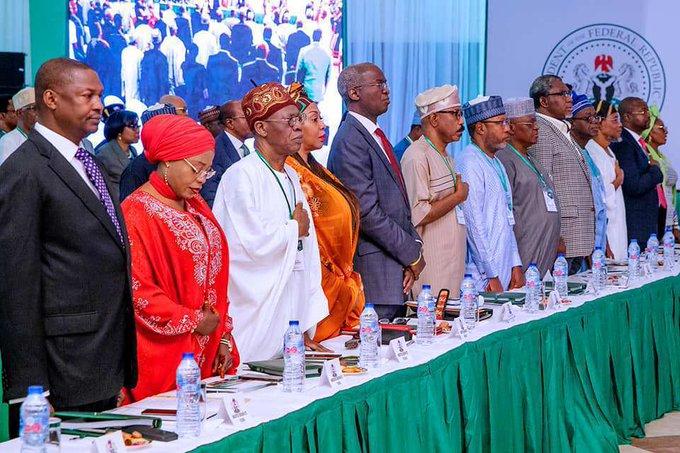
Given the new reality of declining or flat revenues, high unemployment and the prospect of another recession, a paradigm shift is required in the job description of ministers and managers of key sectors of the economy. A significant part of their key performance indicators (KPIs) should be the amount of foreign direct investments (FDI) they are able to attract to their sectors.
There is now unanimity among economists that FDI is critical to drive economic growth in developing countries. In addition to focusing on FDIs, the ministers can turn their attention to tapping into the billions Nigerians abroad send home yearly. After FDIs, “remittances are the second-largest and most stable type of inflow into developing countries” according to Economic Associates, a consultancy.
The surge in FDIs over five years ago, as investors banked on the growth in the number of consumers, has trickled but remittances, which surpassed FDIs into developing economies two years ago, have steadily increased.
If there was a league table for the amount of FDIs and remittances goverments of developing economies were harnessing Nigeria would be in the “relegation zone” the EA report further notes.

Singapore, for example, a poor, inconsequential former British crown colony with a meagre population of 1.6 million in 1960 and with no natural resources, was able to transform itself to one of the richest countries in the world, with the third-highest GDP per capita, partly through attracting foreign investment into the country and harnessing them to the their development programmes.
One of the keys to this transformation was not just in the appointment of highly educated, focused and efficient ministers, but also in the issuance of an otherwise tough order by Lee Kuan Yew that all ministers must be able to attract certain levels of FDIs to their sectors. What looked like an impossible task soon became a competition as ministers jostled to attract the highest number of FDIs to the country.
Aided by very attractive incentives and a considerable ease of doing business, the country witnessed a huge surge in the inflow of foreign capital and investments, leading to its rating as one of the safest places for foreign investments in 1984 and 85, according to Business Environment Risk Information (BERI) ranking. Thus, despite its unique size and history, other developing countries now look up to Singapore for lessons in how to attract investments and how to make them similarly compatible with their own development needs.
Nigeria is in particular need of the Singaporean lesson. Rather than ministerial appointments being mere “job for the boys [and girls]” and a means of elite political settlement, they could be made marketers of the country and appraised on their abilities to attract both local and foreign direct capital that are now necessary for economic growth and development in any developing society. Then, Nigerians will no longer complain about the large number of ministers because they won’t be drains on the country’s resources but catalysts of economic growth and development.
We must join the league of African countries who have positioned themselves as favourable destinations of FDIs. Mozambique, for instance, a country ravaged by war some decades ago, is rapidly transforming its fortunes, posting average economic growth rate of 7 percent for the past decade principally due to increased FDI, which peaked at 26.13 percent of GDP in 2015. Nigeria cannot afford to be left behind. Hence the urgent need for a plan to join the premier league (or champions’ league) of emerging economies that attract the most FDs and remittances, and hence the need for new KPIs for the ministers.