As Nigeria approaches a demographic turning point, the conversation around youth development has become more urgent than ever. With over 70 percent of the country’s estimated 223 million people under the age of 35, according to the National Bureau of Statistics (NBS) 2023 report, it is no longer enough to refer to young Nigerians as leaders of tomorrow in rhetoric. They are, in fact, the drivers of today and the architects of the nation’s future.
Defined broadly as individuals between the ages of 15 and 35, Nigeria’s youth represents a formidable human resource base that, if properly harnessed, can stimulate massive socio-economic and political transformation. But that is a big ‘if’, one that continues to expose the systemic failures of governance at federal, state, and local levels.
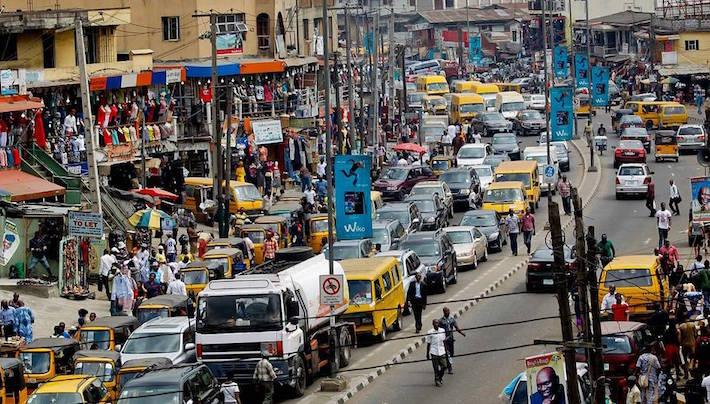
The NBS Youth Statistics Report (2023), developed in partnership with the Federal Ministry of Youth Development, paints a revealing picture. Lagos State leads in youth population with 6.1 percent, followed by Kano at 5.7 percent, while Bayelsa lags at just 1.3 percent. These figures signal where the highest pressures for employment, housing, education, and healthcare are likely to be felt.
“This moral erosion is compounded by the fact that many who engage in fraud, cybercrime or even outright theft often face little or no consequences.”
Sadly, youth unemployment continues to define the lived experiences of millions. As of Q1’2024, Nigeria’s unemployment rate stood at 5 percent, per NBS’ new methodology. However, underemployment and job insecurity remain alarmingly high, with over 20 million youths either jobless, underpaid, or trapped in the informal economy.

Read also: For Nigeria, it’s time to don the work boots, not the laurels
The World Bank’s Nigeria Development Update (June 2024) warns that the youth bulge, if not urgently addressed, will escalate insecurity, migration pressures, and political unrest. And we are already seeing the signs – youth restiveness in the Niger Delta, banditry in the Northwest, and surging cybercrime in urban centres are all direct consequences of a country that has failed to plan for its most critical demography.
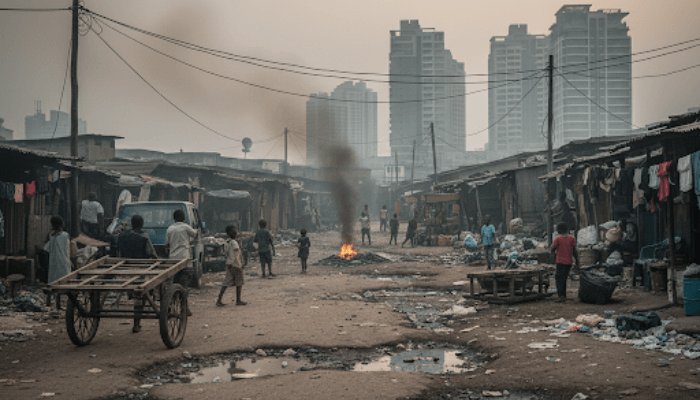
For many Nigerian youths, the journey from education to employment is like crossing a broken bridge with no guarantees. A child born into a poor family today might struggle through dilapidated public schools and manage to earn a degree, only to emerge into a bleak labour market with no prospects. Dreams are deferred, families remain trapped in poverty, and desperation becomes fertile ground for crime.
In a society where wealth is celebrated regardless of its origin, the wrong message is passed down. The hammer mentality – the desire to get rich quickly – is now a street slogan among many young people. Lavish weddings, designer clothes, and flamboyant lifestyles by the children of the elite become the benchmark for success. Meanwhile, hard-working, law-abiding youths are either mocked or ignored.
This moral erosion is compounded by the fact that many who engage in fraud, cybercrime or even outright theft often face little or no consequences. Instead of being ostracised, they are sometimes celebrated as ‘smart’ or ‘sharp guys’. Society’s failure to draw clear lines between hard work and criminality is having corrosive effects on the national image.

It is particularly disheartening that government responses remain slow, fragmented, and often not serious. Despite the Nigerian Youth Investment Fund (NYIF) being launched in 2020 to support young entrepreneurs, disbursement has been poor and riddled with complaints of politicisation and inaccessibility. Similarly, youth-focused vocational training programmes like N-Power have faced major funding delays and administrative bottlenecks.
Rather than building infrastructure to support job creation, successive governments have spent trillions fighting insecurity, a war that might have been avoided by addressing the root cause – youth unemployment. Nigeria is in a loop where it refuses to invest in its future, then spends even more reacting to the crisis that neglect creates. This is not just unwise; it is unsustainable.
Nigeria must now make a strategic pivot. Youth empowerment must be moved from the periphery of development plans to the centre. Investment in this demographic should not be viewed as charity or handouts but as a national imperative.
As Dayo Keshi, president of AfriGrowth Foundation, once stated, “Young people are central to resolving social conflicts and building peace.” This means governments must focus on capacity-building, education reform, skills acquisition, and access to capital.
To start, federal and state ministries should partner with the private sector to host career expos, startup accelerators, and mentorship programmes. These platforms should not only teach technical skills but also link youths directly to employment opportunities.
Digital economy sectors, such as fintech, agri-tech, and creative industries, hold promise. However, access to the internet, electricity, and startup financing must be scaled dramatically to close the inclusion gap.
In the medium term, revamping the education system to match the demands of the 21st-century workforce will be key. This includes curriculum overhaul, teacher training, and incentivising science, technology, engineering and mathematics (STEM) education.
Above all, families must also play their part. Social values must be reemphasised at home. Character, patience, and discipline cannot be outsourced to schools or churches. Parents must resist the urge to glorify ill-gotten wealth and instead model integrity and resilience.
With a youth population of over 140 million, the country has a rare opportunity to leapfrog into a prosperous future, but only if it starts treating its young people as assets, not liabilities.
We can continue to pay for bullets, barricades, and prison cells. Or we can choose to invest in education, innovation, and opportunity. The choice is ours, and time is running out.