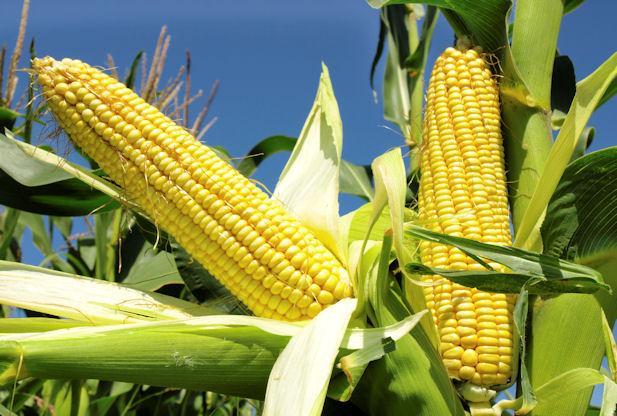
On July 13, 2020, the Central Bank of Nigeria (CBN) extended foreign exchange (FX) restriction to importation of maize/corn.
The apex bank directed all authorised dealers to submit the list of Form Ms already registered for the importation of maize/corn using a designated format on or before the close of business on July 15.
It said the move was part of efforts to increase local production, stimulate rapid economic recovery, safeguard rural livelihoods and create jobs.
“As part of efforts by the Central Bank of Nigeria to increase local production, stimulate a rapid economic recovery, safeguard rural livelihoods, and increase jobs which were lost as a result of the ongoing COVID-19 pandemic, Authorised Dealers are hereby directed to discontinue the processing of Forms M for the importation of Maize/Corn with immediate effect,” the CBN said in a circular signed by O. S. Nnaji, its director, trade and exchange department.

“Accordingly, all Authorised Dealers are hereby requested to submit the list of Forms M already registered for the importation of Maize/Corn using the attached format on or before the close of business on Wednesday July 15, 2020. Please ensure strict compliance,” the bank further said.
With the FX restriction on maize, the number of items prohibited from the FX market is now 44. Analysts expect that more items, especially foods, will be added to the long list.
The apex bank’s FX restriction has some upsides. It has provided an opportunity for local farmers to expand capacity, increase revenue and earn more foreign exchange. For some time, farmers have complained of low patronage and criticised unbridled importation of food products into the country, which often rivalled theirs.
Consequently, since the announcement of the FX restriction, they have been in exciting mood. Abdul Umaru, a maize farmer in Bauchi State said, “We have often complained about maize importation. We have always said that local maize farmers can produce enough for Nigeria. The country does not really need importation, especially as we spend a lot of money on planting.”
An import ban, technical or otherwise, is expected to stimulate local patronage and local production. For instance, after the closure of Nigeria-Benin border in August 2019, rice farmers excitedly said the policy had changed the trajectory of their business.

“We are making so much profit in the sale of rice right now. I am buying paddy and milling it in the north to supply to markets in the south,” one trader in Kebbi told BusinessDay.
Also, Aminu Goronyo, national president, Rice Farmers Association of Nigeria told BusinessDay, said in January, 2020, that lots of rice farmers were increasing their production areas because of huge market for paddy fuelled by the border closure.
“This is because millers are patronising rice farmers now and ‘off-taking’ all that they produce immediately,” Goronyo had said.
Protectionists argue that placing a ban on a food product would not just stimulate production, but also expand jobs and boost agriculture contribution to the gross domestic product (GDP).
However, there are downside risks to the CBN decision to place a technical ban on maize. In the first place, maize/corn is not just a food crop but also a cash crop. It is eaten raw and used by food companies as an important input. It is used in the production of many products including noodles, starch, cornflakes, sweeteners, oil, beverages, glue, industrial alcohol, and fuel ethanol.
Nigeria is Africa’s second-largest maize producer after South Africa. The country produces 10.5 million metric tons of maize per annum with a demand of 15 million metric tons, leaving a supply-demand gap of 4.5 million metric tons (MT) annually, according to data from the Federal Ministry of Agriculture and Rural Development. The gap is often met by imports from many countries especially Argentina. Like other crops placed on the CBN’s long list of items not eligible for FX access, the country is not sufficient in maize production contrary to claims by farmers or people aiming to profit from the policy.
Nigeria is not even sure of producing up to 10.5 million tons currently due to security challenges in the north occasioned by Boko Haram insurgency and herdsmen attacks. Many farmers have fled their maize farms and taken up other businesses to avoid being killed by herdmen or Boko Haram insurgents. Maybe a more recent statistics could have shown that the country’s maize industry is in a precarious situation.
More so, local maize is deemed expensive due to low production and high cost of farming . For instance, a ton of local maize sells for N140,000 to N160,000, whereas the landing price of an imported ton is N120, 000 to N125,000, according to market sources.
Rationality demands that firms using maize as inputs will buy imported maize rather than local ones—as long as both provide the same value.
“Our problem is that we are yet to understand that local producers are not competitive. So, any policy must factor in this, otherwise you keep killing different industries,” one representative of a multinational company said.
Many manufacturers seem to like the CBN directive on maize, but they complain that the policy, as usual, fails to provide adequate time for planning, thereby exposing factories to disruptions. And this is basically rational because policies on agriculture naturally require time because production of foods or agricultural products is inelastic. They cannot be increased suddenly even when farmers desire to. A proper consultation by the CBN should have also revealed the supply challenges in the maize value chain which are yet to be addressed. For instance, can maize farmers suddenly meet the quality requirements of multinationals without adequate training and support? This is why before taking a step to place any item on FX restriction, adequate care should be taken and gestation period provided, commodity analysts say.
Moreover, some of the country’s strategic grain reserves are depleted.
Maize is particularly important for companies creating jobs for the economy including Nestle, Flour Mills, De-United Foods, among others. How will these companies cope, especially in an atmosphere where many of them are struggling to get FX to import other inputs?
Furthermore, poultry farmers, who also use maize as feed, say that their industry is already on the brink of collapse owing to the negative impact of the COVID-19 pandemic and the FX restriction would bring it to its knees.
“We are only asking for a window to import maize now because of the scarcity and sharp rise in the prices of maize,” Ibrahim Ezekiel, national president, Poultry Association of Nigeria (PAN), said in a response to questions.
“It has been a difficult moment for poultry farmers since the pandemic. But with this action by the CBN, I do not think the poultry industry will survive,” Ezekiel further said.
President Muhammadu Buhari has never hidden his disdain for food imports.
On August 13, 2019, he had directed the CBN to stop providing foreign exchange for the importation of food, saying his administration had achieved food security.
“Don’t give a cent to anybody to import food into the country,’’ the president was quoted as saying.
“We have achieved food security, and for physical security we are not doing badly,’’ he had said.
However, Buhari’s statements about food security were far from reality. Even his Ministry of Agriculture and Rural Development would not agree to that.
The problem is that leaders and policy makers often make rash decisions that are not based on science or research. Most times the policies are just based on emotions.
Data from Agriculture Ministry show that the country has not achieved food sufficiency even in cassava and yam which it is the largest producer in the world.
Nigeria is the largest producer of yam with 40 million metric tons per annum but yam demand in the country is 60 million metric tonnes per annum (MT), leaving a gap of 20 million MT.
Nigeria produces 42 million MT of cassava but has a demand of 53.8 million MT of the crop, leaving a gap of 11.8 million MT.
National supply for Irish potato is put at 900,000 MT per annum but with a demand of 8million MT and a gap of 7.1 million MT.
Similarly, local production of sweet potato is estimated at 1.2 million MT, while demand is 6million MT, leaving a gap of 4.8 million MT.
More so, Nigeria produces 400,000 MT of wheat annually but with a demand of 4 million MT, which leaves a gap of 3.6million MT. And so on and so on.
In conclusion, the CBN’s policy may not be totally bad, but it is somewhat wrongly timed. Making such decisions requires time to avoid disrupting the value chain and achieving a direct opposite of what was originally intended.