Introduction
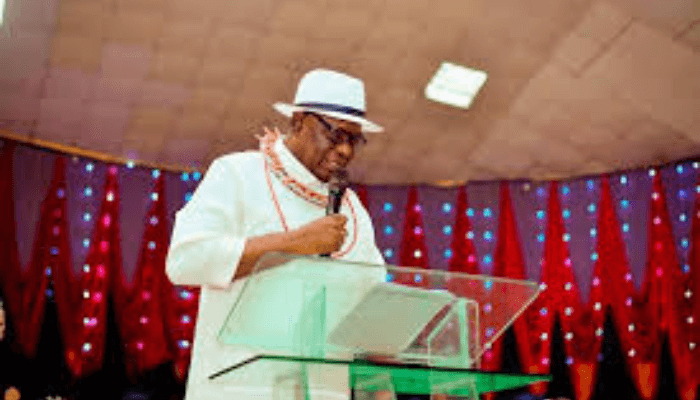
On 6th July 2025, in Houston, TX, America, Prof. Benjamin O. Okaba, President, Ijaw National Congress (INC) Worldwide, held an International Press Conference where he unveiled the INC-inspired “Global Awakening of the Ijaw Struggle for Justice and Sovereignty.” I’d best describe this document as the Okaba Declaration of 2025. Observations arising from this conference are:
One, the Declaration states that Ijaws are desirous of establishing their own sovereign state to secure endangered Ijaw lives and restore contaminated Ijawland in the Niger Delta. The envisaged Ijaw state will not be part of Biafra or the Oduduwa Republic. It will be sovereign with no foreign power exercising suzerainty over it.
Two, there is a major ideological shift: (a) In colonial Nigeria, Dr. Harold Dappa-Biriye limited his demands for minority rights to the British. Professor Okaba, however, is talking to the UN and international community. He argues, “…the Ijaw case transcends domestic grievance, it demands international intervention, for where national law calcifies oppression, transnational justice must respond.”
(b) Dr Biriye fought for all Niger Delta minorities, but Professor Okaba is only interested in Ijaw business. The former demanded for limited rights within the Nigerian federation but the latter is for outright independence and excision from Nigeria as a last resort in the event of failed diplomacy. The professor’s “Ijaw first” position aligns with this writer’s “patriotism hierarchy” of Ijaw first, Niger Delta second and Nigeria last in political and economic endeavours undertaken by Ijaw political elites and intelligentsia. This paradigm shift from pan-Nigerian and pan-African leanings of past Ijaw statesmen- Ernest Sisei Ikoli, Dr. Biriye, and Professor Lawrence Baraebibai Ekpebu- has become necessary if the Ijaw nation is to record accelerated developmental strides in Nigeria.

(c) The Dr Biriye-led Niger Delta Congress, NDC, relied on the sympathetic Ahmadu Bello-led Northern Peoples Congress, NPC, as a partner. This time around, the INC looks beyond Nigerian borders for credible international partners like the US, UN, international media and the British with whom the Ijaw nation has subsisting pre-colonial treaties.
(d) Dr Biriye addressed the British from the Lancaster House, London, venue for colonial Nigerian Constitutional Development Conferences. But Professor Okaba talked to the world from Houston, Texas. He was not even interested in the so-called Chatham House.
Three, the Declaration is “fueled by the prevailing circumstances and dehumanizing experiences of our people, and galvanized by global solidarity;” including the: (a) Blatant manner the Ijaw-born former President Goodluck Jonathan was rigged out of office by the Yoruba and Hausa/Fulani Entente (b) Illegal overthrow of the Ijaw-born Governor Sim Fubara by the Yoruba and Ikwerre Coalition (c) Neglect of Ijaw’s perilous environment (d) Looting of Ijaw-owned oil and gas resources by Nigeria, and (e) Attempt by King Mohammed VI of Morocco to fraudulently capture and claim Ijaw gas resources through the contemptuous Nigeria-Morocco Gas Pipeline (see “Nigeria-Morocco Gas Pipeline is Crime Against Ijaws of the Niger Delta”).
And four, the emergence of the INC of the Americas (INC-A) as a formidable pressure group. During the 2nd Global Ijaw Convention in Houston, Texas, July 4-6, 2025, Hon. John Whitmire, Mayor of the City of Houston, declared “July 5, 2025, as Ijaw Convention Day.” The Americas are home to a different breed of Ijaw elite- united and highly motivated in matters concerning their homeland.
Another highlight of this year’s Houston convention was the election of new officers for INC-A. The new man who heads this organization is Dr Ebizimo Nagberi (Chairman). His exco comprises of Mrs Juliana Oguara (Vice Chairman); Mr Ebikeme Amafini (Secretary); Bishop (Dr) Suobite Ayibakuro (Assistant Secretary); Engr Isaac Thankgod (Publicity Secretary); Dr Abiye Iyo (Organising Secretary); Mrs Esther Kowei-Sanami (Treasurer); Chief Kennedy Amughan (Legal Adviser); Sir Clifford Inimgba (Auditor) and Sir Kenneth Ibiene Anga KSC (Ex-Officio).

For this year’s event, Sir Kenneth Ibiene Anga KSC and his team organized safe passage to America for Professor Okaba and other Ijaw greats. They included former Nigerian First Lady, Her Excellency Dame Patience Faka Jonathan, Ph.D. Also, in attendance were Bayelsa State Governor Douye Diri, political leader of the Ijaw nation; HRM King Bubaraye Dakolo, the Paramount Ruler and Ibenanaowei of Ekpetiama Kingdom, and Chairman, Bayelsa State Council of Traditional Rulers; HRM King Seiyifa Koroye (Tarakiri-Owei VIII), the Pere of Tarakiri Kingdom; Amaopusenibo, Dr. Sam Sam Jaja, DSSRS, Balolo of Opobo Kingdom and Jonathan Lokpobiri Snr, President of the Ijaw Youth Council, IYC, Worldwide. To top it all, former President of Nigeria, Dr. Goodluck Ebele Jonathan GCFR, GCON, delivered a goodwill message to the convention by video.
The Okaba Declaration of 2025
“Gentlemen of the press, we assemble at this historic press conference not merely to recount our wounds, but to illuminate a truth long buried beneath the sediment of silence. The Ijaw nation, ancient and dignified, stands today at a decisive threshold of being completely erased or emancipated. Our right to self-determination is not a matter of sentiment or protest. It is anchored in solemn treaties with the British Crown, validated by the sacred norms of international laws, and preserved in the living memory of a people who have refused to forget who they are….
“Our quest for self-determination is rooted in rigorous, multidisciplinary scholarship evidenced in compact and diplomatic exchanges between the Ijaw nation and the British Crown. These documents demonstrate that before 1914, prior to the British amalgamation of Nigeria, Ijaw communities entered into mutual agreement with the Crown, affirming local governance, resource rights, and autonomy (we shall publish these archives widely and submit them to the United Nations and international legal bodies to underscore their enduring validity under international law).
“From Nigeria’s independence in 1960 to the present day, there has been a calculated and sustained legal trajectory, whereby successive regimes have constructed a juridical architecture designed to transfer control of oil and gas from Ijaw territory into centralised federal custody. From the 1969 Petroleum Decree to the 2021 Petroleum Industry Act (PIA), these instruments, engineered largely by oppressive hegemonic regimes and later embedded in a post-military constitution, have institutionalized the expropriation of the natural resources in Ijaw land, waterways, and mineral wealth. What masquerades as national interest is, in truth, a profound betrayal: a systematic disenfranchisement of a people whose ancestral domain once engaged the British Crown in treaty-based diplomacy. These laws do not merely dispossess the Ijaws of economic value; they severe their sovereignty, dignity, and cultural inheritance. They represent a seamless evolution of colonial extractive logic into postcolonial statecraft, internal colonialism veiled in the robes of legality and legislative order.
“The legal instruments in question do not merely marginalise; they orchestrate a calibrated economic asphyxiation of the Ijaw nation. By stripping regional control of hydrocarbon wealth, suppressing derivation entitlements, and shielding corporate polluters through federal impunity, the Nigerian state has institutionalised a regime of repressive governance where Ijaw communities remain the locus of production but wallow in the periphery of benefit. Gas flaring, oil spills, and aquatic toxification persist not as unintended consequences but as inevitable by-products of a profit-centric legal order. This constitutes a form of structural violence, slow, invisible, yet devastating, where the Ijaw people are not only impoverished but imperilled in their own environment.
“Perhaps most pernicious is the constitutional petrification of these decrees under Section 315(5) of the 1999 Nigerian Constitution (as amended), which renders their repeal virtually impossible through ordinary democratic processes. This legal ossification transforms historical injustice into an irreversible jurisprudential orthodoxy, foreclosing the avenues of redress within Nigeria’s own legal system. It is a tragic irony: a democratic constitution has become the chief custodian of autocratic plunder. In this light, the Ijaw case transcends domestic grievance; it demands international intervention, for where national law calcifies oppression, transnational justice must respond….
“The Ijaw call for justice is rooted not in emotion but in international law. We invoke the universal principles enshrined in the United Nations Charter, the International Covenant on Civil and Political Rights, the Vienna Convention on the Law of Treaties, and the United Nations Declaration on the Rights of Indigenous Peoples. These are not decorative texts for ceremonial reference, they are the moral scaffolding of the global order, forged after humanity’s darkest hours to prevent the continued subjugation of the marginalized. To ignore their application to the Ijaw question, is to render them hollow, and to betray their very spirit. We therefore assert, unequivocally, the Ijaw people’s right to self-determination, to decide our political future, own and manage our resources, preserve our ecosystem, and protect our cultural life without interference…. (for full text see Prof Benjamin Okaba’s “GLOBAL AWAKENING OF THE IJAW STRUGGLE FOR JUSTICE AND SOVEREIGNTY”).
Ijaw Genocide is Real
The UN has two definitions for genocide. One, it is when state or non-state actors, at the behest of government, carry out mass killing of a targeted group. Another way the UN defines genocide is when a government refrains from killing a group but destroys their sources of livelihood. It is a question of time before the victims succumb to diseases, hunger, poverty and mental ennui. The destruction of properties quickens the Hobbesian nightmare where life is solitary, poor, nasty, brutish and short.
Ijaw genocide is a combination of the two definitions: (1) Between 1999 and 2009, the Monitoring Group of the IYC recorded over fifty thousand killings. The victims included ordinary Ijaw villagers arbitrarily gunned down in the creeks and estuaries by the Military Joint Task Force, JTF. Odi, Gbaramatu, and Ayakoromo were so depopulated, and (2) the collapse of the Ijaw traditional food system occasioned by oil exploration. According to Professor Okaba, from 1976 to 1991, more than 2,976 oil spills discharged some two million barrels of crude into Ijaw rivers and wetlands. By 2001, 6,817 oil spills emptied an additional three million barrels, and in 2023 alone, 535 new spills decimated terrestrial and aquatic lives.
We conclude with a graphic account of the destruction of the Ijaw creek town of Ayakoromo in 2010 by the JTF, our case study. Over two hundred Ijaws were killed in this attack, which made thousands homeless. Generating sets, fishing boats, houses, warehouses and schools were all burnt.
Garuba Ogurugu Disi, whose phone number is still in my possession, is prepared to testify before the UN on how Nigerian soldiers killed his people. He was the only Ayakoromo leader with the nerve to remain behind after the attack. The day Honourable Godsday Orubebe, Minister of Niger Delta, brought relief materials for the refugees, Disi accepted them but the presence of armed soldiers meant intended beneficiaries could not come out of hiding for the materials.
Disi said his townsmen dived into the swamps and swam out of reach of the invaders. But even nursing mothers refused to come out of the mangrove forests for relief materials. Mosquitoes, festering wounds and water-borne diseases took their toll on Ayakoromo infants and the elderly. The military helicopters first opened fire on his defenceless people before naval boats cut off their escape routes. His people were collectively punished for the sin of one bad Ijaw called John Togo. Ijaw genocide is real. Enough is enough.
Akamande, Email: oweiak@yahoo.com, is Leader of Thought of Izon Ebe.