|
Getting your Trinity Audio player ready...
|
…As Nasarawa hosts stakeholders on SABER
The effort at creating an enabling environment for investment and businesses to thrive should not be left in the hands of the federal government alone, as states have the potential to drive the country’s economic development.
Although, most states keyed into the federal government reforms, it is however, important for states to know that putting in place measures to attract willing investors that drive the local economy lies on them.
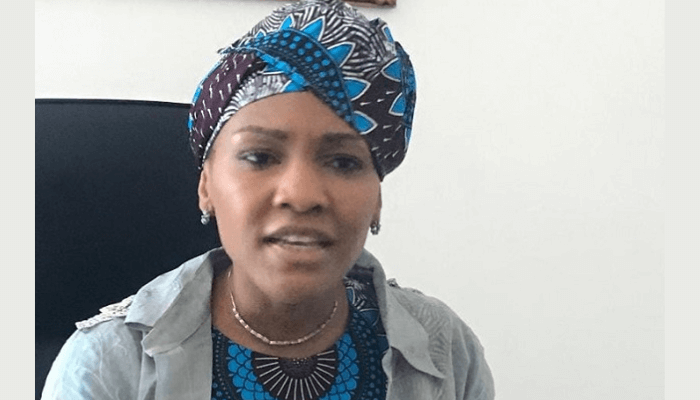
Zahrah Mustapha-Audu, director-general, Presidential Enabling Business Environment Council (PEBEC), threw the challenge, at a one-day town hall meeting for stakeholders on State Action on Business Enabling Reform (SABER), on Friday in Lafia.

The PEBEC DG, who described SABER as a transformative initiative that supports and incentivises reforms at the state level, urged states to aligns local efforts with the national goal of making Nigeria a more transparent, profitable, and easier place to do business.
According to her, the stakeholders’ engagement was designed to strengthen public sector capacity and capture feedback from private sector players; seen by PEBEC, as the true engines of economic growth, job creation, and innovation.
Mustapha-Audu, then expressed optimism that, the partnership with states would foster deeper collaboration, rebuild trust, and generate practical solutions tailored to each state’s unique business challenges.
“Reform is not a federal effort alone. States are the engines of local economic development, and their policies, infrastructure, and service delivery directly impact the ease of doing business in every community.
“Together, let us build a business environment that works for local businesses, entrepreneurs, multi-nationals, Foreign Direct Investors, and a future full of prosperity for all Nigerians,” she said.

The Governor Abdullahi Sule, remarked that, most reforms initiated by his administration, targeted at creating friendly environment for business and investments are already yielding great results.
Governor Sule, who was represented by his Deputy, Emmanuel Akabe, said that obtaining Certificate of Occupancy (C of O) of a land in the state now takes one month, owing to reforms aimed at enhancing the ease of doing business.
“C of O is now obtainable within one month, and upon payment of required Right of Occupancy (R of O) fees and submission of application form”.
He recalled his first year in office, where he signed more C of Os than were ever issued in the state since its creation in 1996, adding that, since inception in 2019, he prioritised making the state investment haven, through various initiatives.
“Some of the initiatives include the development of the Nasarawa Economic Development Strategy (NEDS) document, culminated in the establishment of the Nasarawa State Investment Development Agency (NASIDA), the revenue and taxes harmonization legislation passed by the state assembly, the establishment of the Bureau of Public Procurement as well as the Bureau of Statistics in the state.
“NASIDA is a one-stop-shop agency that helps to guide investors willing to do business in the state.
“Before SABER, Nasarawa State had already entrenched principles to make business establishment very easy for whoever that is coming to invest in our state,” Sule said.
The governor was optimistic that, the town hall meeting would provide opportunity for adequate feedback from stakeholders to enable the state improve in order to have a perfect business environment.
Louis Azige, the Programme Manager for SABER in Nasarawa, revealed that the state had already implemented 15 reforms, covering areas like land and tax administration and digital infrastructure deployment.
He added that digital platforms had been launched to improve access to information and transparency in business-related services.
Azige, said that the meeting was an opportunity for state officials, Reform Champions in Ministries, Departments and Agencies (MDAs) to interact with the business community and CSOs on business enabling reforms being implemented in the state as well as to get feedback on how to improve the business community.