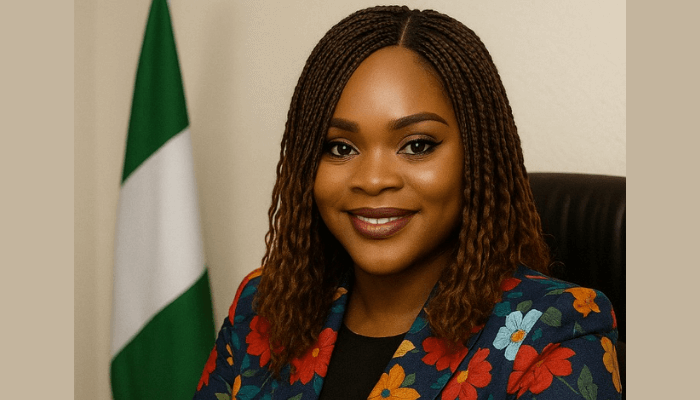
Julia Nwanya, a Master’s degree holder in Finance from the University of Texas brings more than a decade of experience across corporate finance, strategic analysis, and economic policy. In this interview with MERCY ENOCH, she reflects on her transition from Nigeria’s financial sector to the U.S. graduate space, shares insights on data-driven strategy, and explores the intersection of finance, policy, and inclusive economic systems. Excerpts:
You had a solid career in Nigeria’s corporate finance sector before relocating to the United States for graduate studies. What prompted that move?
I have built a strong foundation in finance back home, starting at Cutix Plc and eventually serving as a senior financial analyst at Ibeto Group. Over time, I started to see that technical finance alone couldn’t address the deeper issues facing businesses, especially
serving as a senior financial analyst at Ibeto Group. Over time, also, I started to see that technical finance alone couldn’t address the deeper issues facing businesses, especially around access to capital, structural inefficiencies, and long-term resilience. I needed a broader lens. That’s what led me to pursue a Master of Science in Finance at the University of Texas at Dallas. I wanted to complement my industry experience with a more global and policy-informed perspective that could scale.

Tell us more about your experience in Nigeria, and what were some of the major highlights?
Leading a cost-containment initiative that cuts operational expenses by 20percent was a major highlight. We also restructured our pricing model, which improved gross margins from 27 to 32percent. These weren’t just balance sheet wins. They positioned the business for sustainable growth in a volatile sector. It taught me that finance, when done right, is strategic and forward-looking. It’s about engineering resilience.
You are known for combining data analytics with financial strategy; what tools do you use to stay ahead?
I rely heavily on Tableau and SQL for modeling and analytics, and I use Python for stress-testing financial assumptions. I’ve also incorporated Power BI and Deltek VantagePoint to manage complex financial data and visualise risk in real time. But tools are just that, tools. The real value lies in asking the right questions and interpreting the numbers with strategic clarity.
You’ve completed your graduate studies now; how has the experience shaped your direction?

Completing my Master’s programme helped sharpen my thinking around how finance intersects with public policy and systemic equity. I didn’t just research. I authored and co-authored papers focused on how federal policies influence minority-owned SMEs and on the scalability of investment frameworks that can support them. That work deepened my commitment to designing financial systems that don’t just serve the bottom line but also expand economic access. It’s one thing to analyze returns, it’s another to help reimagine who gets to participate in creating those returns.
Let’s talk about recognition. You’ve received awards for your work. What do those mean to you?
Each one reflects a different part of my journey. The ‘Visionary Leadership Award’ from the African Accounting and Finance Association recognised how strategy and execution can shape outcomes beyond the spreadsheet. At Ibeto Group, I was honored with the ‘Financial Excellence Award and Employee of the Year’. Those weren’t just acknowledgments of strong performance. They were proof that leadership and impact come from having a long view, staying grounded in data, and being willing to rethink the status quo.
Looking ahead, what’s next for you?
I’m focused on developing and advising on frameworks that integrate private capital, digital infrastructure, and inclusive financial practices. Whether I’m working with mid-sized firms or helping to shape public-private partnerships, my aim is to build systems that are resilient, data-driven, and grounded in long-term value. I’m also exploring how policy design can better support economic inclusion, especially in underserved markets. Finance is evolving, and I want to be part of the shift toward smarter, more equitable models.
Lastly, what advice would you give young professionals navigating the intersection of finance and policy?
First, never treat finance as an end in itself. It’s a language, a tool, a lever. To use it well, you need context. Learn to understand the risks, the systems, and the people behind the numbers.
Technical skill will take you far, but what will set you apart is your ability to connect data with purpose. When finance aligns policy and is grounded in real-world needs, that’s when transformation happens.