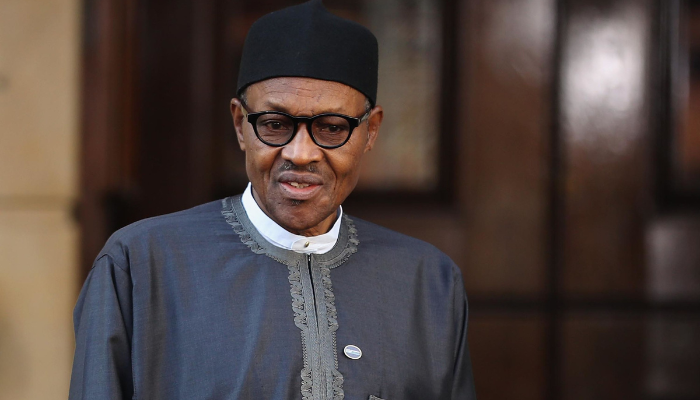
Muhammadu Buhari, Nigeria’s twice-elected civilian president (2015–2023) and former military ruler (1983–1985), died on Sunday at the age of 82. His legacy will continue to remain decisive, depending on who you ask.
For many Nigerians in their 30s, he symbolised squandered potential and a leader who met peaceful protests with military force. For older citizens, he was the disciplinarian of the 1980s’ War Against Indiscipline. Some will remember a tall, reserved man with a reputation for prudence. But for many, he will be remembered as a president who desperately wanted power, only to appear unprepared when he finally got it.
In Nigeria’s tech circles, Buhari’s legacy is complex: a period of extraordinary growth marred by heavy-handed regulation. Under his watch, the sector flourished, not necessarily because of his policies, but often in spite of them. From banning Twitter and cryptocurrencies to launching the eNaira and witnessing the rise of unicorns, Buhari left behind a mixed record on technology.
Crypto crackdown

On February 5, 2021, the Central Bank of Nigeria (CBN) directed banks to stop transacting with individuals and entities dealing in cryptocurrencies, effectively banning crypto activity in one of its fastest-growing markets.
Between 2015 and 2020, Nigerians traded $566 million worth of Bitcoin, making the country the world’s second-largest peer-to-peer Bitcoin market after the United States, according to news.bitcoin.com.
The ban forced many startups to pivot and pushed trading underground. Peer-to-peer (P2P) platforms flourished. By the end of 2021, Nigeria ranked sixth globally for crypto adoption, according to Chainalysis. The firm reported a 1,200 percent surge in the country’s crypto market, driven by P2P activity.
Between July 2022 and June 2023, crypto transactions grew to $56.7 billion. By the time the ban was lifted in December 2023, the figure had climbed to $59 billion in the following 12-month period.
Post-Buhari, the government’s stance on cryptocurrency has shifted, and on March 29, 2025, President Bola Tinubu signed the Investment and Securities Act (2024) into law, recognising crypto assets as virtual assets under Nigerian law.

Zacch Adedeji, chairman of the Federal Inland Revenue Service (FIRS), recently said, “We cannot run away from the cryptocurrency ecosystem because it is the in-thing. But as it stands in Nigeria today, there is no law that regulates cryptocurrency operations. We need a law that regulates that area of our economy.”
Read also: Former President Buhari committed to mother earth in Daura
Twitter ban
In June 2021, Buhari condemned the attacks on police stations, prisons and offices of the Independent National Electoral Commission (INEC), especially in the South-East, warning that those supporting insurrection and violence in the country would be shocked.
He tweeted, “Many of those misbehaving today are too young to be aware of the destruction and loss of lives that occurred during the Nigerian Civil War. Those of us in the fields for 30 months, who went through the war, will treat them in the language they understand.”
This prompted an uproar, and Twitter (now X) deleted the post with a comment, “This Tweet violated the Twitter Rules.”
This prompted the federal government to suspend the microblogging and social networking service, instructing telecom operators and internet service providers to cease supporting the platform.
It took another 222 days before Nigerians could access Twitter without a Virtual Private Network (VPN). According to the NetBlocks Cost of Shutdown Tool, the Nigerian economy lost $250,600 every hour due to the ban. The ban lasted for 5,328 hours, amounting to a loss of $1.34 billion.
The real cost, however, was borne by startups and small businesses that relied on Twitter for marketing, customer service, and public engagement.
e-Naira
In late 2021, Buhari launched the eNaira, Africa’s first central bank digital currency, as his administration tried to tap into crypto enthusiasm.
Intended to reduce reliance on cash and improve financial inclusion, the digital currency only made up just 0.36 percent of the total currency in circulation, only N13.98 billion out of N3.87 trillion, according to the CBN.
Growth
All was not doom and gloom under the former major-general. The ICT sector grew from 9.80 percent of real GDP in the third quarter (Q3 2015) to 15.97 percent by Q3 2023. Broadband penetration rose from six percent to 48.28 percent, while mobile connections surged from 144.4 million to 220.9 million. 4G coverage deepened, and Nigeria became one of Africa’s first countries to roll out 5G.
On the startup front, venture capital funding jumped from $70 million in 2015 to over $1 billion in 2022. Nigeria minted unicorns, including Flutterwave, OPay, Interswitch, Andela, and in 2022, Buhari signed the Nigerian Startup Act, a law co-created with the tech community to promote innovation.
That same year, Buhari told Microsoft’s president that Nigeria was “ready to lead Africa’s digital tech race.”
The National Identification Number (NIN) database also grew under his watch, expanding from seven million to nearly 100 million. But the process was marred by long queues, technical failures, and public frustration.
Electronic payments surged, with fintechs the biggest winners. In 2023, mobile money operators like OPay and PalmPay processed N46.91 trillion, a 141.8 percent increase from N19.4 trillion in 2022, according to the Nigeria Inter-Bank Settlement System (NIBSS).
While their market presence surged, according to a KPMG report, with 58 percent of Nigerians switching from banks to fintechs due to a 2023 cash crunch, many Nigerians had to pay with hunger and their lives.