By the time you drive past the Lekki-Epe expressway towards Eleko Beach, you start to realise the road has changed, not just in condition but in temperament. It’s smoother, more orderly.
You’re headed to a place most Lagosians have heard about but few have seen, the Lekki Deep Seaport, Nigeria’s first deep-seaport. And the road knows it.
The stretch is quiet. In the distance, the Dangote Refinery flares gas into the blue-grey sky. Along the shoulders of the road, streams of workers mill around.
Tucked on the right, a cycling distance from the refinery, sits the Seaport, hidden in plain sight.

Read also: Lekki port took 23 years. Now it’s paying off — LFZ CEO
A busy quietness
There’s no crowd at the port’s entrance. No honking trucks or chaotic queues. A few metres past the gate are a few labelled buildings, including the Lekki Freeport Terminal.
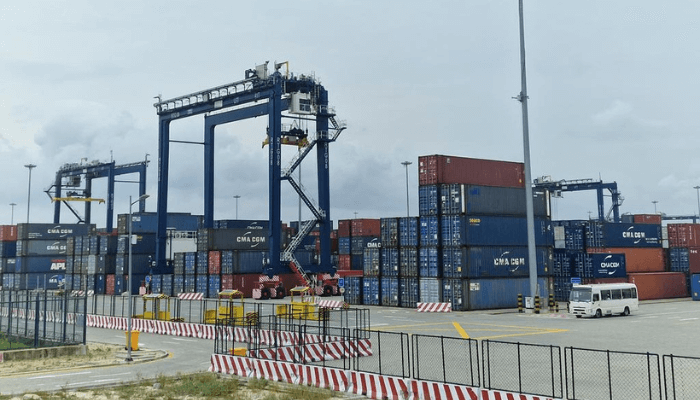
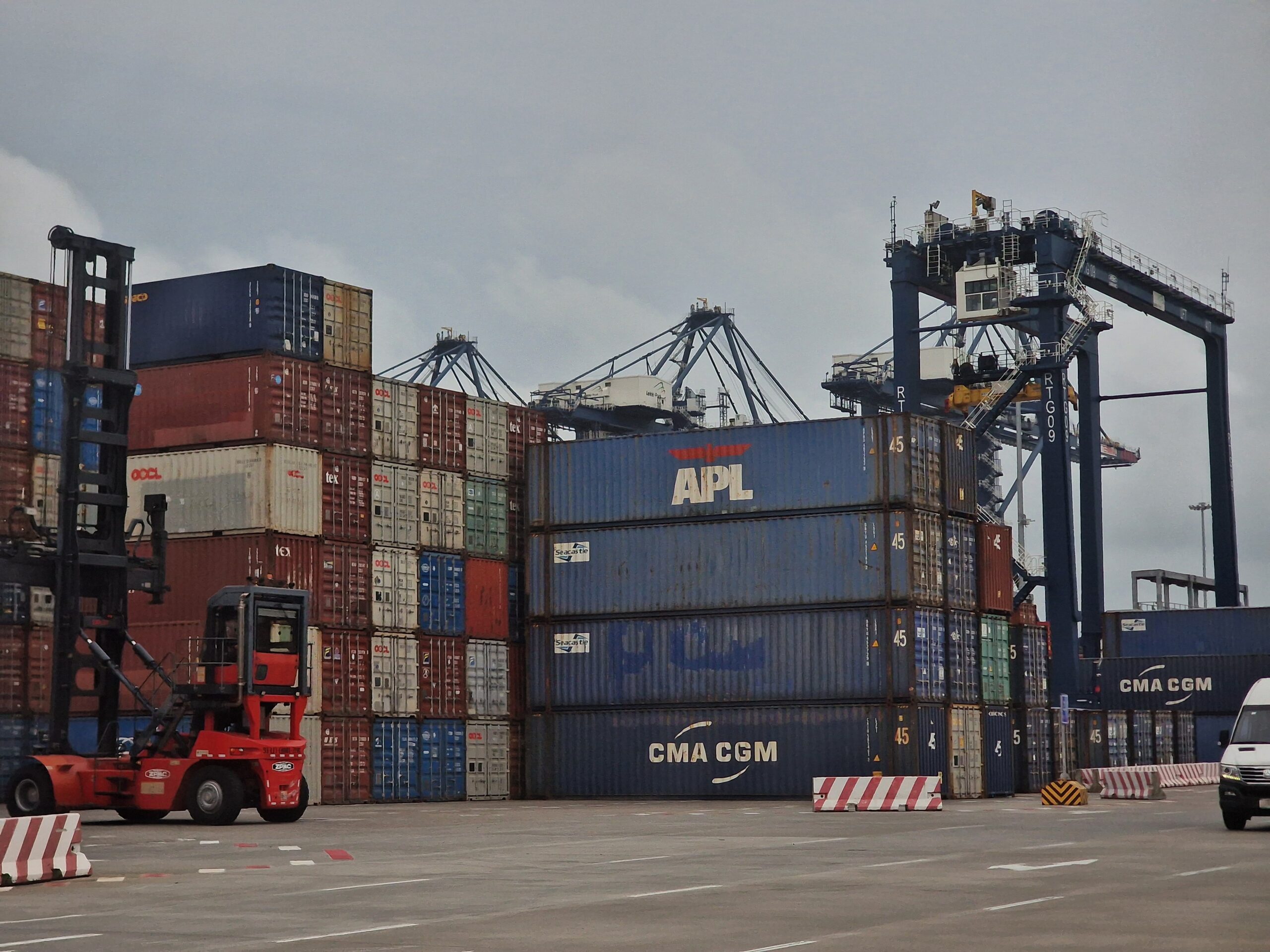
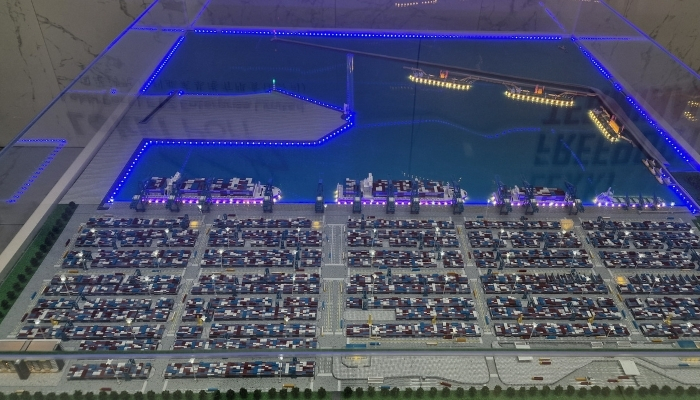
The moment you step into the terminal, the sheer scale hits you. Containers are stacked in tight rows. Familiar names, ONE, CMA CGM, MAERSK, COSCO SHIPPING, APL, lined up like city blocks.
Some are empty. In Nigeria, shipping companies are mandated to have designated holding bays for empty containers. Full ones are closer to the shore. Daniel Odibe, deputy chief operating officer, said. Some handlers stack as high as seven. This year alone, the port has handled about 50,000 to 100,000 empties.
Here, containers last 15 days at the ports before leaving. “Once a ship calls here, and that shipping line has empty containers there, once they drop, they go with them.”

Port officials say the calm is by design. Due to the risks, like a strong wind knocking over empties, there are no visible boots around. Lekki Port operates a strict zero-pedestrian policy. There’s little chatter, fewer distractions. The machines do the heavy lifting.
After entry to Lekki port, every container undergoes one of two checks, scanning or physical examination.
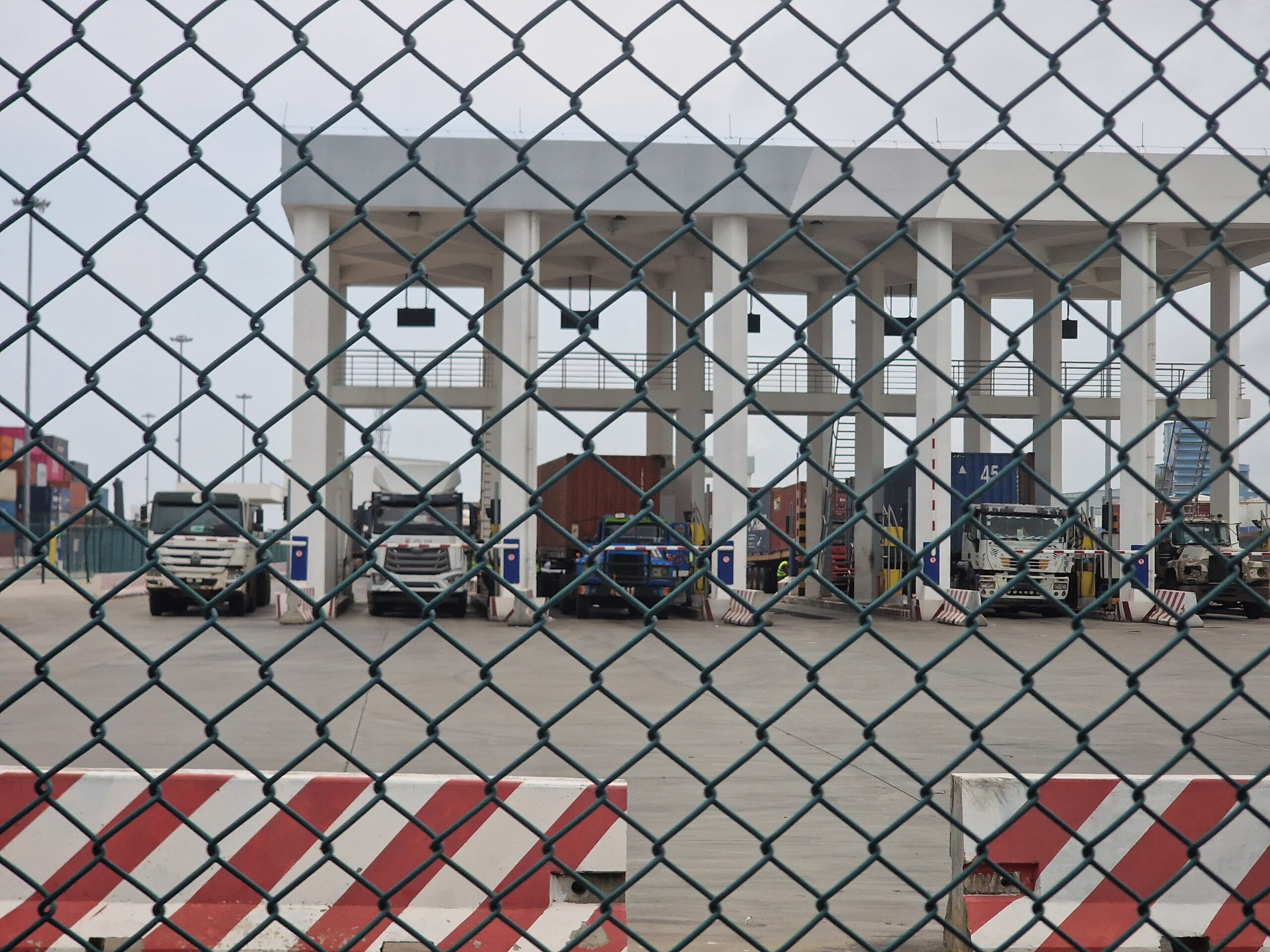
Examination starts as early as 9am, mostly automated. Two FS6000 drive-through scanners read each container in about 30 seconds. They operate like airport security, but bigger and better “If your bag has bottled water, it shows there,” Odibe said. “Same thing here.”
Still, not everything can be scanned. Some goods that require physical inspection are sent to physical inspection by Customs at a different zone, though port officials lament the loss of valuable space to this manual process.
“This physical examination ground is prime space that should be used for more productive activities. We’re pushing to have 100 percent automation. We have the capacity for it,” Odibe said
But the process starts before the trucks ever arrive.
Every truck heading into Lekki Port is booked in advance. The port’s Vehicle Booking System (VBS), integrated with Lagos’s broader traffic plan, prevents the pile-ups that choke some of the country’s biggest ports.
At the entry point, a “manless AUTOGATE,” fitted with biometric tech and scanners, clears the trucks within minutes. Inside, there’s space for 157 to park.
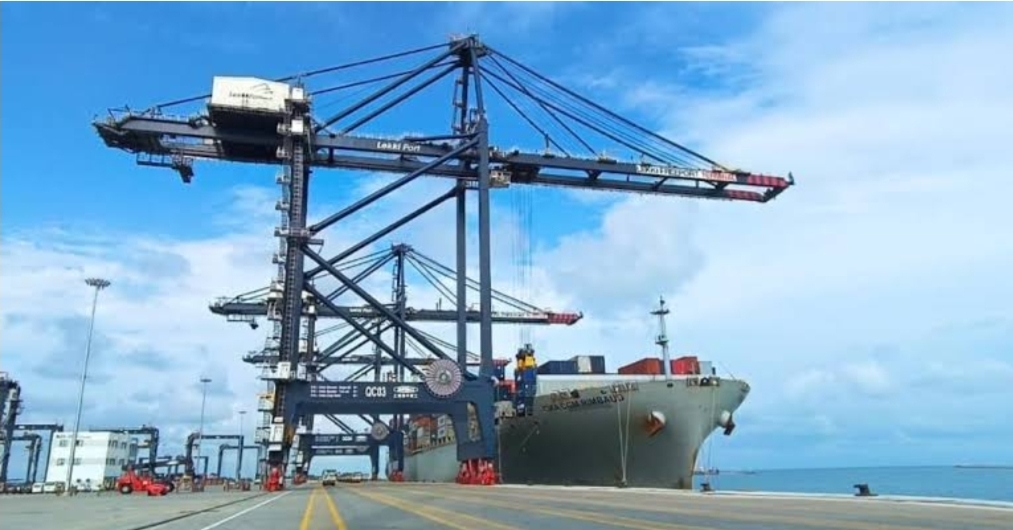
At its heart, Lekki Port is a behemoth. The quay stretches 680 metres, long enough for two vessels side by side, each up to 366 metres long and carrying 14,800 TEUs.
The ship-to-shore cranes, super-post Panamax models with 21-container width reach, dwarf the mobile harbour cranes used in the country’s biggest ports.
They stack up to 4 high and are among the largest in the world to comply with environmental protection standards. Ultimately quieter, cleaner, and faster.
“These cranes can handle 25 to 30 containers an hour,” says Odibe. “That’s nearly double what Apapa manages.”
So far, the port is still growing into itself.
Read also: Lekki Port eyes increased trade as FG unveils dredging plans
In 2023, volumes dipped following Nigeria’s fuel subsidy removal. But by mid-2024, as the naira stabilised, activity bounced back.
Inside the port, 21 buildings support operations, from labour housing and customs offices to substations that keep power and water running.
At the reefer station, chilled containers are plugged into thick rows of sockets, preserving perishables, including Chinese fish, West African ice cream, and pharmaceuticals that can’t tolerate Lagos heat.
Deep work
But the port’s real edge is depth.
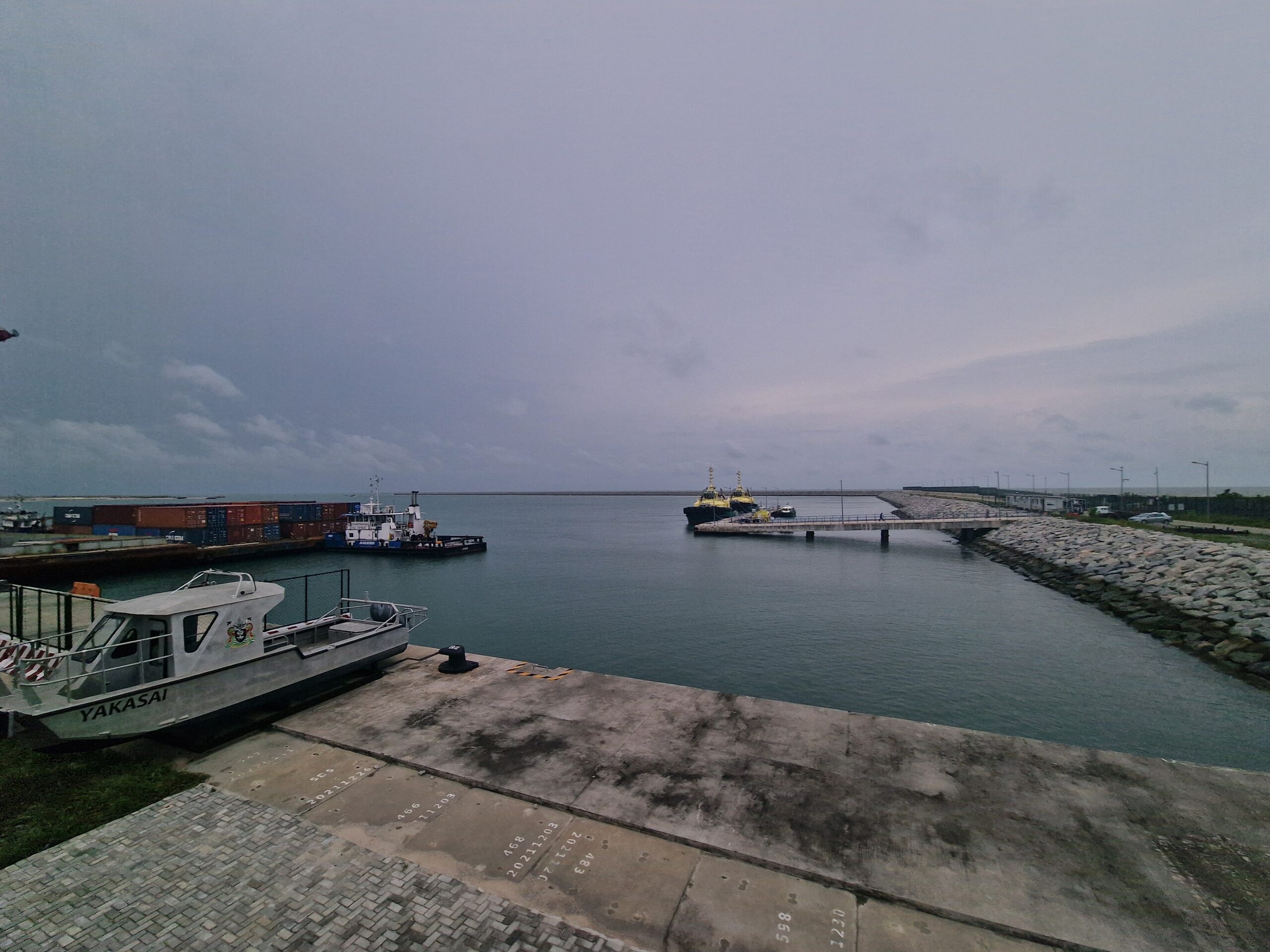
Lekki has the deepest seaport in West Africa, with a draught of 16.5 metres and a turning basin wide enough to accommodate the world’s biggest vessels.
Its breakwater stretches 9.6 kilometres into the Atlantic, guiding ships to the pilot’s anchoring point. Four tugboats guide them in. The Navy watches from a distance. Local fishing boats keep to themselves.
In January 2024, CMA CGM Scandola, the first LNG-powered 14,812 twenty-foot equivalent units (TEUs) container vessel to sail to West Africa, with an overall length (LOA) of 366 meters and a width of 51 meters was received at the port.
It is the only port in Nigeria with the facilities to receive such large container vessels.
This year, the port expects to hit 500,000 TEUs. So far this year, they’ve done 222,000, a sharp rise from last year’s 58,000.
They’re planning bigger things like an inland cargo distribution to Onitsha via barge. A trial to Onne had hiccups, but a retry is on the cards. A 50km axial road from The Lekki Free Zone directly to Ogun State is also expected to break ground by year’s end.
The port’s COO, a quiet man named Yang Xixiong, says it’s a long game. “This is about changing how trade works in Nigeria.”
A patient success
Lekki Port took 23 years to build. Adesuwa Ladoja, the managing director of the Lagos Free Zone (LFZ) at the BusinessDay CEO Forum this month, said the Lekki Deep Seaport is a symbol of patience, partnership, and persistence.
Ladoja described the project, led by Tolaram, as “a journey that has come to a very good ending.”
The project got presidential committee approval in October 2002 with the federal government, Lagos State, and the Nigerian Ports Authority (NPA) were all part of the development.
The China Harbour Engineering Company, initially brought on as contractors, later became equity partners in the port.
The $1.5 billion project was one of the very first to test Nigeria’s public-private partnership model at multiple levels, with both federal and state governments working alongside private foreign investors.
“We had to ensure it was a win-win for everyone,” she said. “This wasn’t going to be a situation where only foreigners benefited. Nigeria had to benefit as well.”
She credited the project’s success to Tolaram’s “owner’s mindset,” a company culture anchored on long-term thinking, integrity, and shared value. “We see ourselves as shaping the future, not being shaped by it,” she added.
By 2017, breakwater officially began and the full project commenced in the heat of the Covid-19 pandemic. Regardless, 2 years later, the first phase was complete by 2024, it received Nigeria’s largest vessel.
The port was concessioned for 45 years, with a 25-year extension possible. It runs on a BOOT model, that says build, own, operate, and transfer. It is held 70 percent by China Harbour Engineering Company, 30 percent by Tolaram. Within that, the Nigerian Ports Authority holds 5 percent, and Lagos State 20.
Read also: Lekki port took 23 years. Now it’s paying off — LFZ CEO
Transhipment plans
Transhipment is also part of the port’s future, Xixiong says.
Cargo is already moving from Lekki to Ghana, Cotonou and Ivory Coast, previously routed through the Port of Lomé, and more talks are ongoing for more inland distribution.
From August, an e-call-up system goes live. The levy is being enforced by the Lagos State Ministry of Transportation as part of efforts to regulate truck movement through an electronic call-up system at the port.
The National Association of Road Transport Owners (NARTO) and the Maritime Workers Union of Nigeria (MWUN) opposed the introduction, with a N12,500 levy on trucks accessing the Lekki Deep Seaport under the E-Call Up system.
“We like bad habits,” said Xixiong, “but this time, we’ll keep it tight. With proper scheduling, truckers can do two trips a day, and earn more.”
The port has set its sights on something big, with an estimated $361 billion economic impact over the life of the concession, multiplying its cost by over 230 times. And it’s still in Phase One.