Nigeria’s milk production is less than half of local demand, driving a $1.5 billion (N2.3 trillion) in annual dairy imports.
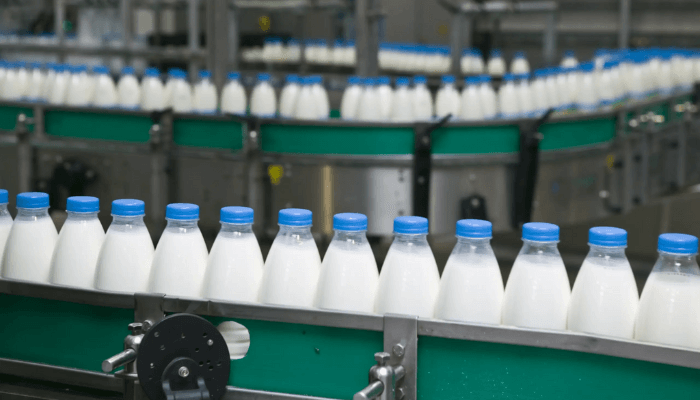
This presents an opportunity for investors willing to set up local milk processing plants to serve millions of Nigerians who consume dairy products daily.
Investors who pump money particularly into local raw milk production can cut a big slice of this market, save the nation of foreign exchange and create more jobs.
Africa’s most populous nation produces just 700,000 metric tons of milk annually out of 1.6 million metric tons demand.

FrieslandCampina WAMCO, Nestle, Arla, Promasidor, among others, are among the nation’s dairy makers.
Read also: How Nutri-Milk Superkids fetes Lagos children
The heavy reliance on imports has made milk unaffordable for most families, but it has also opened an investment window.
“Dairy production is profitable. Demand for milk is rising globally, but it is also capital intensive,” said Muhammadu Abubakar, president of the Commercial Dairy Ranchers Association of Nigeria (CODARAN).
Abubakar further stressed that dairy farming requires land and feed resources.

“Long-term investment capital could drive sustainability and smooth operations in the sector,” Abubakar highlighted. Such funding would enable farmers to upgrade facilities, access better feeds, and expand operations beyond subsistence levels, he noted.
A more favourable business environment is also seen as critical to attracting the necessary private sector investment. “The president’s promise to make Nigeria’s business climate suitable for investors would go a long way in cushioning the crisis,” said Oladapo Fasae, professor of Animal Production and Health at the Federal University of Agriculture, Abeokuta.
Okpe Onamadia, a food sector analyst, said increasing urbanisation and changing consumer preferences have raised demand for Nigeria’s dairy industry, noting that “it is an industry that holds much promise for investors.”
“If you can do backward integration and get herders together to source raw milk, you can reap enormous benefits from this industry.
“However, you need capital. You need to increase the productivity of Nigeria’s dairy farmers, which is still average.”
How to close productivity gap
Genetic transformation and artificial insemination are essential strategies for closing the productivity gap between local and exotic cattle. Indigenous breeds like the White Fulani and Keteku, which cost between N500,000 and N1,000,000, typically yield only 2.5 to four litres of milk per day.
“These can only produce between 2.5 to four litres per day as against 30 litres per day for exotic breeds like the Dutch Holstein Friesien,” said Aliyu Muhammad, a dairy farmer.
Read also: Nigeria to double milk production amid 30% global dairy demand surge
Importing high-yield breeds that can withstand Nigeria’s climate would significantly boost output, analysts say.
Smallholder farmers remain central to the industry, and experts believe empowering them is key. “It takes just one cow to start dairy production,” Atiku Sani, a dairy farmer, noted, underlining the sector’s accessibility. But beyond access, stakeholders stress the need for hands-on training in modern dairy farm management, improved feeding techniques, and disease control to drive real gains.
According to Agronews reports, collaboration between public and private sectors and research into sustainable dairy practices are also crucial drivers of long-term growth.
“Livestock products such as milk have the capacity to unlock huge economic growth,” noted Onifade Olufemi, professor of forage agronomy, University of Agriculture, Abeokuta.
Malnutrition crisis
Nigeria’s deepening malnutrition crisis is now closely tied to the country’s severe dairy shortfall, as experts warn that low affordability and limited access to milk are endangering millions of children.
Per capita dairy consumption in Nigeria stands at just 8.1 litres, far below Africa’s average of 28 litres, the global average of 44 litres, and drastically short of the 210 litres recommended annually by the Food and Agricultural Organization (FAO).
“As long as protein sources like milk remain unaffordable, the malnutrition crisis will keep worsening,” Jerry Chiemeke, an analyst, noted.
“Most Nigerian rural households cannot afford milk and so depend on starchy foods due to poor access and affordability of milk. This high child malnutrition rate calls for more investments in dairy production,” according to the AgroNigeria report.
Nearly one in three Nigerian children under five suffers from severe malnutrition, with 32 percent experiencing stunted growth.
“We’ve witnessed numerous nutrition-related illnesses in Nigeria over the years. Investing in key protein sources is essential as proteins can play a pivotal role in strengthening the immune systems of women and children,” said Kevin Roepke of the U.S. Soybean Export Council.
According to the United Nations Children’s Fund (UNICEF), malnutrition is responsible for 45 percent of under-five deaths, placing Nigeria second globally for child malnutrition.
“Milk, a proven source of protein, calcium, and vital micronutrients could be part of the solution,” according to recent reports.
The World Food Program has directly linked the malnutrition crisis to the lack of access and affordability of milk. Experts stress that bridging Nigeria’s dairy gap is essential not only for nutrition but also for economic transformation.
With over six billion global consumers, the dairy sector represents a multi-billion-dollar opportunity for investors—one that Nigeria urgently needs to tap.
Read also: Nigeria brings in Danish cows to cut $1.5bn milk import bill
Global outlook
The global dairy market, valued at $883.2 billion in 2022, is projected to hit $1.5 trillion—growing at a robust compound annual growth rate (CAGR) of 5.1 percent according to Allied Market Intelligence. Yet, while the world’s appetite for dairy surges, Africa remains a small player—accounting for just five percent of global milk production.
Asia leads the global milk production industry, driven largely by India and Pakistan, and currently accounts for half of the world’s total output, according to the FAO and the International Dairy Federation’s 2025 reports .
Europe follows with 20 percent, while North America contributes 17 percent, based on 2023 global production data.
In Africa, dairy production is concentrated in a handful of countries. Egypt, South Africa, Kenya, and Uganda are the continent’s top producers, according to the FAO.
Nigeria’s dairy makers are hard hit by low access to capital, low productivity of cattle, poor infrastructure, crisis, farmer-herder clashes and policy flip-flops.
“Many dairy farmers still rely on traditional and outdated farming practices, resulting in low yields and poor-quality milk. The low productivity is partly due to the lack of access to improved breeds of cattle and inadequate veterinary services,” said an article by Alain Charles Publishing.