|
Getting your Trinity Audio player ready...
|
There are gatherings, and then there are moments when a nation pauses to listen to its builders think aloud.
On July 10, 2025, inside the hushed, climate-controlled expanse of the Balmoral Convention Centre at the Federal Palace Hotel, BusinessDay’s CEO Forum reaffirmed its place as the room where Nigeria’s most consequential conversations take shape, and sometimes, where the country’s next big bet begins. The theme of the 13th edition was ‘Nigeria: From Reform to Recovery.’
This was no ordinary networking circuit. This was the room where CEOs leave behind the easy titles of ‘captain of industry’ and become, for a few hours, co-architects of a future that will outlive them.
Since 2009, this annual convening has attracted an invitation-only list that reads like the footnotes of the country’s gross domestic product (GDP): corporate titans, state governors, senior ministers, foreign diplomats, trade envoys, portfolio managers, impact investors, young founders, legacy industrialists. If Nigeria’s biggest private-sector deals or boldest policy shifts have a birthplace, it is often in a side conversation sparked in this room – over a glass of cold water or the clink of wine at dusk.

This year’s edition unfolded against a backdrop that felt paradoxical, fragile optimism. The macro numbers flicker: inflationary fires still burn, but the blaze is lower than months ago; a newly muscular Central Bank shows signs of discipline and restraint; the foreign exchange (FX) distortions that once turned ordinary commerce into a gambling hall are slowly stabilising. But beneath these green shoots lies the same question that has lingered for decades: Can Nigeria make this time different?
The Publisher’s Call: Rhetoric is Cheap, Execution is Everything
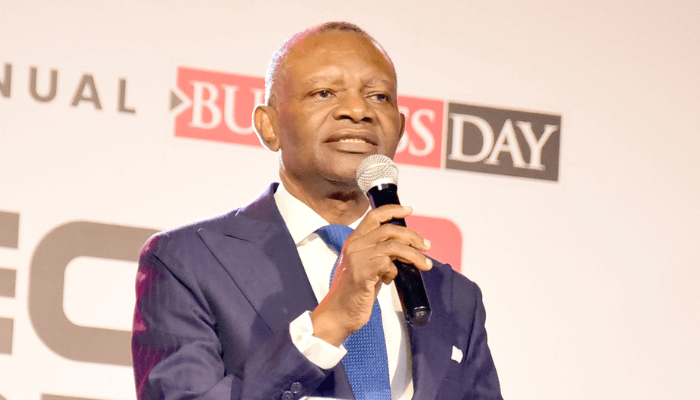
Frank Aigbogun, BusinessDay’s Publisher and CEO, took the stage first, his presence an annual reminder that good journalism is more than headlines. It is a public square for uncomfortable truths. His voice, clear but measured, cut through the polite rustle of notepads and the glow of phones being silenced.
He opened with disarming honesty: Nigeria’s economy is not where its people want it to be. Not yet. But there is space for belief, if leaders, both public and private, will lean into reform with clear eyes and steady resolve. He pointed to evidence that the tide can turn: sectors like cement and telecoms once looked impossible too. Now they hum with local capital, local talent, and world-class scale. So why not power? Why not agriculture? Why not industrialisation that feeds the people whose sweat built it?
His words, equal parts challenge and confession, found their mark. Heads nodded. Some CEOs scribbled notes. A senator near the back tapped an aide to check a policy brief on his tablet.

Aigbogun’s real provocation, though, came with a simple assertion: rhetoric is cheap. Execution is rare. This room, he warned, must do more than clap at data and promise synergy at photo-ops. He spoke of dead capital waiting to be freed, of asset sales that should have happened yesterday, of the silent costs of inaction that children yet unborn will pay for if today’s leaders don’t lead differently.
As a flourish, he held up BusinessDay’s new editorial project – Who Is Thinking for Nigeria? – an expanding vault of more than 70 deeply researched essays. Each piece is a provocation in print, a spark meant to outlive the news cycle. “If we do not ask better questions,” he said, voice dropping low enough that some leaned forward, “we should not expect better answers.”
KPMG’s Razor: Reform’s Promise – And Its Price
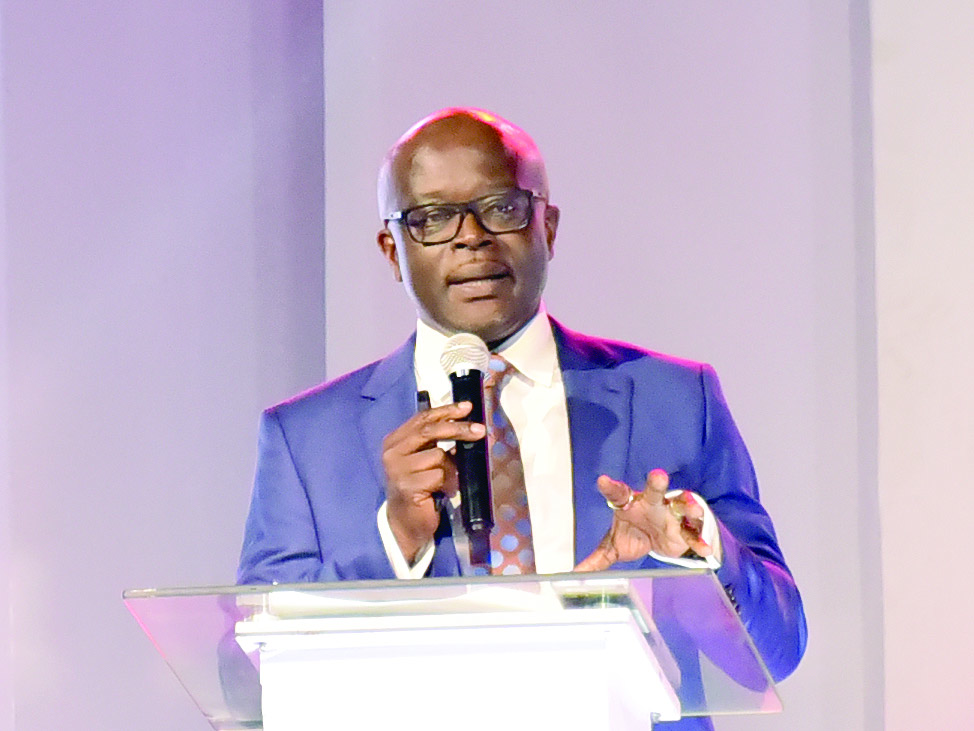
Moments later, the floor belonged to Tola Adeyemi, KPMG’s Senior Partner and CEO for West Africa. A seasoned reform whisperer, Adeyemi did not bother with rhetorical flourish. He let the data do its cold work.
In calm, deliberate tones, he laid out the anatomy of why countries reform, because they must steady the ship, cut waste, widen opportunity, earn trust, and attract capital. Nigeria’s moment checks every box. But good intentions are cheap too; real reform is hard, messy, and politically expensive.
He offered a moment of piercing honesty: “These are the right reforms – but they have hurt. They have been painful for companies. For households. For the small trader recalculating costs every market day. Yet this is the path we must stay on – and deepen.”
Tola turned to KPMG’s signature Growth Accelerator Framework – five blunt tests for any nation that claims it wants real reform:
1️. How healthy is the business environment?
2️. Can entrepreneurs thrive, or are they strangled by red tape?
3️. Does industry scale and modernise – or stall?
4️. Does the country attract real capital, or just noise?
5️. Can it sell competitively to the world, not just to itself?
His slides showed the scorecard: progress, but patchy. Good policy on paper, shaky execution on the ground. Sudden shocks, poorly cushioned for the everyday citizen. The hidden danger? Reform fatigue. When sacrifice feels endless and results feel distant, trust evaporates, and the next government, whoever they are, feels the temptation to reverse course.
His solution was practical and piercingly clear: communicate better, cushion better, codify better. Small, quick wins. Big, bold institutions. And above all, the discipline to make today’s reforms law, immune to the drama of tomorrow’s elections.
His final point landed like a judge’s gavel: Nigeria cannot bet its future on heroes alone. It must bet on systems that work – quietly, daily, relentlessly, long after the applause fades.
Industry’s Manifesto: Dangote’s Scale and the Power of Local Value
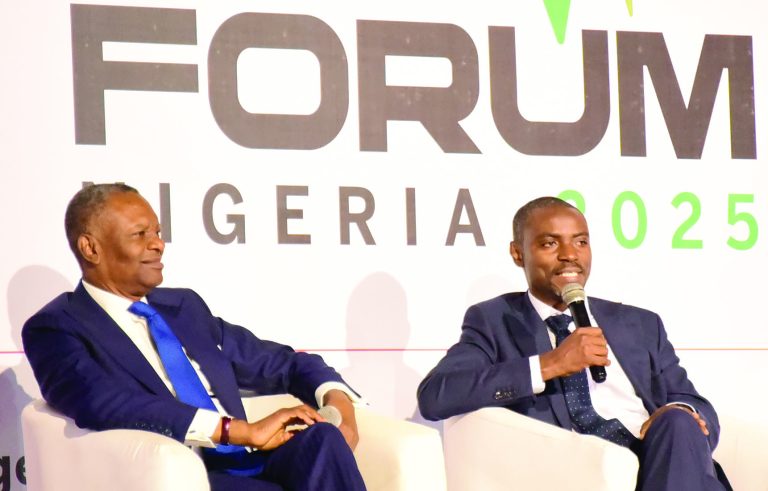
When the fireside chat opened, Frank Aigbogun leaned in with the tone of an editor sniffing for a headline. Across from him sat Aliyu Suleiman, Group Chief Strategy Officer at Dangote Industries, standing in for Africa’s richest man, whose ambition for scale has redrawn entire industries.
Suleiman’s voice was warm but firm. He reminded the audience that the real secret of the Dangote playbook was simple: spot big national gaps that bleed foreign exchange and plug them with local production at scale. Cement. Salt. Sugar. Now, oil and gas. Each move was a multi-billion-dollar bet that local capacity could outcompete foreign supply – if the system would just cooperate.
He dropped the number that made traders sit up: “Fifteen crude cargoes a month that used to leave Nigeria now stay here. By next year, twenty. Each one processed at the refinery, each dollar of value-added staying closer to home.”
He spoke too of agriculture: backward integration in sugar is now viable because FX realities have flipped the old calculus. Local rice mills. Tomato plants. Fertilisers scaled to feed not just Nigeria but neighbours across West Africa.
Aliyu’s final plea: for scale to deliver real value, the government must hold up its end. Predictable approvals. Efficient ports. Secure supply chains. Investors need certainty that outlasts the whims of election seasons.
His last line echoed Frank’s opening: big bets matter – but systems that let big bets flourish matter more.
Closing Chords: A Room That Refuses to Forget
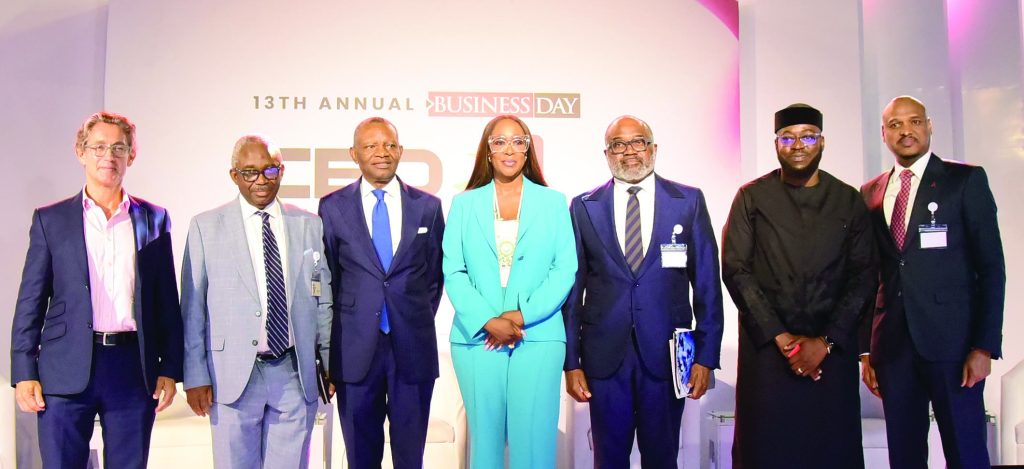
As the final applause washed over the stage, a quiet resolve lingered. Guests lingered near the Italian diffusers gifted to partners, tokens of refined gratitude for big ideas made real through big support. Younger executives pocketed copies of Questions Are the Answer by Hal Gregersen, a nudge to stay curious, restless, and ambitious.
Outside, Lagos traffic throbbed as always. Inside, the echo remained: Nigeria’s biggest questions are not yet solved. But here, once a year, the people with the power to do the solving promise each other that they won’t stop asking.
That is the enduring promise of the CEO Forum: that the work is never done, but the room will always be here to keep pushing the questions, raising the stakes, and reminding each generation that nation-building is not a slogan. It is a craft. It is discipline. It is scale, made real, again and again, by leaders who know the headlines fade but the work must never stop.
This is the enduring promise of the BusinessDay CEO Forum: That Nigeria’s story can be rewritten, not by slogans or single heroes, but by the quiet, relentless work of leaders willing to gather, to think, and to build.
This is the first part of a three-part BusinessDay CEO Forum post-event series. Watch out for the remaining parts.