|
Getting your Trinity Audio player ready...
|
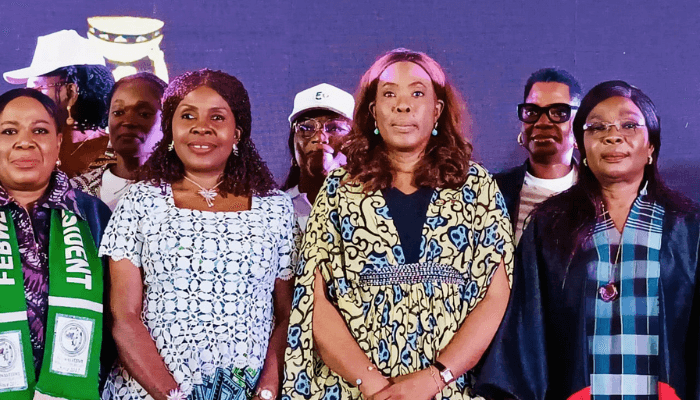
The challenges facing women engaged in cross-border trade across West Africa took centre stage at the ECOWAS Caravan 2025 held recently in Lagos.
Launched this year by the Economic Community of West African States (ECOWAS), the Caravan is a transformative empowerment initiative designed to support small-scale women traders in West Africa’s informal trade sector.
The two-week journey followed the Abidjan–Lagos trade corridor, running from June 30 to July 14, with major stops in Abidjan, Lomé, Cotonou, and Lagos, culminating at the ECOWAS Gender Development Centre.
Speaking during the official launch of the Lagos leg and the caravan’s closing ceremony, the ECOWAS Commissioner for Social Affairs and Gender, Fatou Sow Sarr, in a statement, emphasised the pivotal role women play in the region’s informal economy.

“Women are the lifeblood of informal trade in West Africa… this caravan is about visibility, voice, and value — it’s about shifting narratives and shaping policies that support women where it matters most: on the ground,” she said.
Folashade Ambrose-Medebem, Lagos State Commissioner for Commerce, Cooperatives, Trade and Investment, officially launched the Lagos stage of the sensitisation and awareness campaign for small-scale women traders. She described the initiative as a timely and necessary intervention.
“This initiative is a direct response to equip and empower our women, who form the majority of traders along the corridor and represent the backbone of informal cross-border trade across the region.
“These women play a critical role in ensuring food security, creating jobs, and sustaining livelihoods in both border communities and their homes”, she noted.
According to Ambrose-Medebem, these women are more than traders; they are economic builders who continue to operate under conditions marked by uncertainty and frequent harassment, she said in the statement.

She stressed that the campaign represents a significant step forward, aiming to expand awareness of trade regulations, legal frameworks, and ECOWAS community protocols that govern cross-border commerce.
Speaking to the media, the Commissioner noted that the Lagos State Government remains committed to supporting informal sector traders, particularly women entrepreneurs.
“I want to say that Governor, Babajide Sanwo-Olu, approved ₦500 billion for MSMEs under the Lagos State Access to Finance initiative for small businesses through cooperatives at 0% interest”, she noted.
The fund, matched by the Bank of Industry with another ₦500 billion, is non-collateralised, features a six-month moratorium, and offers a competitive 9% interest rate.
Chinyere Almona, Director-General of the Lagos Chamber of Commerce and Industry (LCCI), applauded ECOWAS for its commitment to gender equality and regional integration, calling this year’s campaign “symbolic and necessary.”
She added, “For women working in agriculture, fisheries, artisanal value chains, and cross-border trade, their daily grind is not just a livelihood; it’s an act of resilience and enterprise.
“Women traders form the uncelebrated backbone of West Africa’s informal trade economy, representing over 70% of informal cross-border traders and playing an indispensable role in food supply.”
Almona urged Governments and stakeholders to invest in institutionalised, continuous capacity building through community-based training hubs in local languages, digitalisation of border procedures, and the creation of mobile-friendly platforms to expedite trade clearance and improve efficiency.
“Women in the informal trade are producing the formal results that are adding to the GDP and creating major employments.”
Omotola Omole, National President of the Federation of Business Women Entrepreneurs (FEBWE), commended ECOWAS for its steadfast support of women.
“ECOWAS has consistently stood with women, ready to support, connect, and empower every woman who dares to dream big and trade to uplift her community,” she said.
Others who presented papers included the Lagos State Commissioner for Agriculture, Ruth Abisola Olusanya, who sent a representative.
The ECOWAS Small Business Coalition also expressed heartfelt appreciation to the ECOWAS Commission, partners, collaborators, and delegates for their pivotal roles in making the ECOWAS Caravan 2025 a landmark success.