When the sun rose over Abuja on June 21, it bathed the city’s modern skyline in a quiet promise, one of unity, trade, and transformation.
Inside the gleaming halls of the International Conference Centre, that promise was put to the test.
Leaders, ministers, business titans, and technocrats from across West Africa gathered not to celebrate past achievements, but to rewrite the region’s economic future.
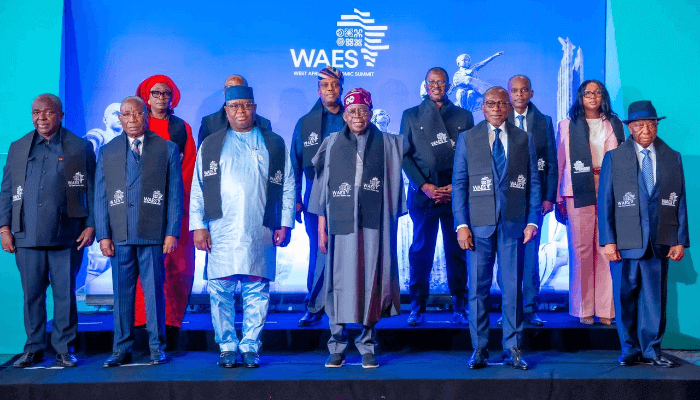
The 2025 West Africa Economic Summit (WAES) was more than another policy meeting; it was a moment of reckoning.

For decades, West Africa has been rich in potential but poor in integration. While goods, services, and people have always found ways to move, often informally and across invisible lines drawn long ago, official barriers, outdated systems, and a fragmented vision have left much of that potential unrealized.
Read also: ECOWAS, UN deepen diplomatic ties to tackle West Africa’s security, democratic challenges
But at WAES 2025, a new chorus emerged: trade must become seamless, digital identity must be foundational, and the region must finally move from fragmentation to functionality.
The Summit posed a simple but urgent question: how can West Africa trade more with itself, build more for itself, and ultimately thrive as one interconnected bloc?
From vision to urgency: A time for implementation

President Bola Ahmed Tinubu, who chaired the ECOWAS Authority of Heads of State and Government before he handed over a few weeks ago, set the tone in his opening address.
“Rather than competing in isolation or relying on external partners, we must strengthen our regional value chains, invest in infrastructure, and coordinate our policies,” he declared.
His message was clear: the region has long relied on potential rather than performance. Now, with a rapidly growing youthful population, shifting global supply chains, and heightened investor interest in Africa’s untapped markets, the time for action is now.
“Opportunity alone does not guarantee transformation. Opportunity is not destiny. We must earn it,” Tinubu warned.
The summit’s core ambition was to go beyond speeches and produce practical outcomes. “Let us emerge from this summit with actionable outcomes,” he said, urging a renewed focus on trade facilitation, infrastructure, digital identity, and financial inclusion.
Digital identity: A missing link in the trade chain
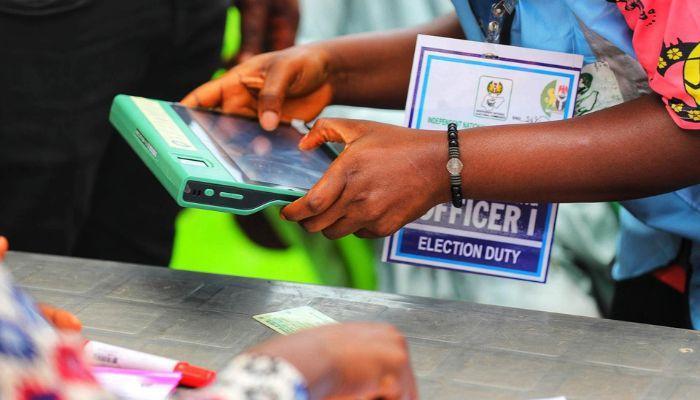
If movement, trade, and trust are the pillars of integration, then identity is the bridge. That argument was powerfully made by Abisoye Coker-Odusote, director-general and CEO of Nigeria’s National Identity Management Commission (NIMC).
In her keynote address titled Digital Identity and Trade in West Africa, she underscored the strategic importance of harmonised digital identification across the region.
“Digital identity strengthens trade by making the informal visible, reducing fraud, and enabling access to financial services,” she said.
Nigeria has enrolled more than 120 million people under its National Identification Number (NIN) scheme, and Ghana, Côte d’Ivoire, and Senegal have also made progress in developing digital identity systems. But for Coker-Odusote, progress must be regional, not just national.
“One of the major obstacles to intra-regional trade is the difficulty individuals and small businesses face in verifying their identity across borders,” she said.
A unified, interoperable digital identity infrastructure, she added, “will serve as the foundation upon which seamless trade, payment interoperability, and cross-border services can be built.”
To this end, she advocated for the creation of a West African Digital Identity Working Group and a regional digital ID charter to drive shared technical standards, legal frameworks, and grassroots inclusion.
Learning from the past, investing in the future
History, it was said at the Summit, holds valuable clues. Before colonial boundaries and customs unions, West Africans were already trading goods like kola nuts and livestock, driven by trust and familiarity. Yusuf Maitama Tuggar, Nigeria’s minister of foreign affairs, highlighted this legacy in his address, urging a return to market-driven regionalism.
“Markets are a West African story, a story about trade, innovation, and the generation of wealth,” he said. Tuggar cited pre-colonial trade hubs like Salaga, Katsina, and Kano as examples of how trade flourished long before artificial borders were drawn.
Yet in 2024, only 8.6 percent of the $166 billion in West African exports stayed within the region. Tuggar believes this is less about a lack of capacity and more about outdated orientations. “We must make it easier to bring informal trade into the formal economy and scale up prosperity,” he asserted.
His call to action was also directed at private sector players. “We are not here to tell the private sector its business, but to give you the space to grow. Use it!” he said, referencing the Summit’s ‘deal room’ designed to fast-track trade and investment agreements.
Read also: There is no issue with ECOWAS Protocols, but lack of implementation by member states
Turning resources into results: From pit to processing
West Africa’s wealth lies not only in its mineral reserves or youthful population but in its ability to move up the value chain. Leaders at the summit echoed the need to shift from a model of raw material export to one rooted in local processing, manufacturing, and innovation.
“The era of pit to port must end,” said Tinubu. “We must turn our mineral wealth into domestic economic value, jobs, technology, and manufacturing.”
Ngozi Okonjo-Iweala, director-general of the World Trade Organization (WTO), offered a global perspective, emphasising how West Africa’s failure to industrialise leaves it vulnerable.
“We also need to build up manufacturing capacity, and meetings like this one have a critical role to play,” she said.
She cited the pharmaceutical sector as one example of an industry that could thrive regionally. “Senegal, with its Institute Pasteur de Dakar, is a potential hub for vaccines… and in fact, I think that in Nigeria, part of that ecosystem is already being put in place,” she added.
She also urged the region to leverage its “green comparative advantage” by powering mineral processing with renewable energy and venturing into sectors like battery component manufacturing.
Private sector: The engine, not the passenger
At the heart of WAES 2025’s message was a recognition that governments alone cannot drive economic transformation.
“Governments must provide the right environment, law, order, and market-friendly policies, while the private sector drives growth,” said Tinubu.
Indeed, the summit was packed with panels and networking spaces designed to foster collaboration between governments, financial institutions, technology firms, and SMEs.
From fintech to logistics, agriculture to energy, the message was consistent: private innovation, backed by enabling policy, is the region’s best bet for accelerated progress.
From infrastructure to inclusion: Building the foundations of integration
Projects like the Lagos-Abidjan Highway and the West African Power Pool are testaments to what regional cooperation can yield. But integration also requires softer infrastructure: laws, data systems, and regulatory harmonisation.
Coker-Odusote argued that digital identity is not merely an administrative fix but a tool for inclusion.
“When underserved grassroots communities, especially women, youth, and informal traders, are empowered with secure digital identities, they are not just being counted; they are being connected to opportunity,” she said.
The call was echoed by civil society advocates, who urged for gender-sensitive digital campaigns, mobile enrolment in remote areas, and broader public awareness to bridge the digital divide.
A new era for West African trade?
WAES 2025 closed with both optimism and urgency. There was agreement that integration is no longer optional. Trade fragmentation has cost the region jobs, investments, and opportunity. But with the right mix of infrastructure, identity, and institutional alignment, a borderless West Africa is within reach.
“We cannot afford to be left behind again,” the Nigerian president declared. “Not in the fourth industrial revolution, not in green energy transitions, and certainly not in regional integration.”
Okonjo-Iweala shared a similar sentiment, noting that the African Continental Free Trade Agreement (AfCFTA) provides a broader framework within which ECOWAS can scale its ambitions.
“If ECOWAS can think in terms of sub-regional value chains, our markets and scale economies become bigger and more attractive to investors,” she said.
Read also: NiMet, ECOWAS strengthen ties on early warning systems, capacity building
From summit to strategy: What comes next
For all the high-level consensus, the challenge remains one of execution. Will governments allocate budgets for digital identity? Will customs systems be streamlined? Will regional manufacturing receive the incentives needed to thrive?
Coker-Odusote laid out a roadmap for the future. Governments, she said, must treat digital identity as core infrastructure. Identity agencies must harmonise systems. Regional bodies like ECOWAS and WAEMU must institutionalise cross-border verification. And the private sector must integrate digital identity into its operations.
“Let us not wait for another generation to inherit this challenge. Let us solve it now, collaboratively and decisively,” she urged.
The summit may be over, but the race toward economic transformation has only just begun.
If WAES 2025 marked a turning point, it is because it forced West Africa to ask difficult questions and to begin offering solutions rooted not in external dependency, but in regional agency.
As Tinubu aptly put it: “This is the new West African proposition, let us make it real. Let us make it bankable.”