…Study puts lie to ‘unjust labeling’
…Critics blame govt for citizens’ negative perception, treatment
For millions of Nigerians, travelling abroad often feels like walking into a courtroom where judgment has already been passed. The evidence? Their nationality.
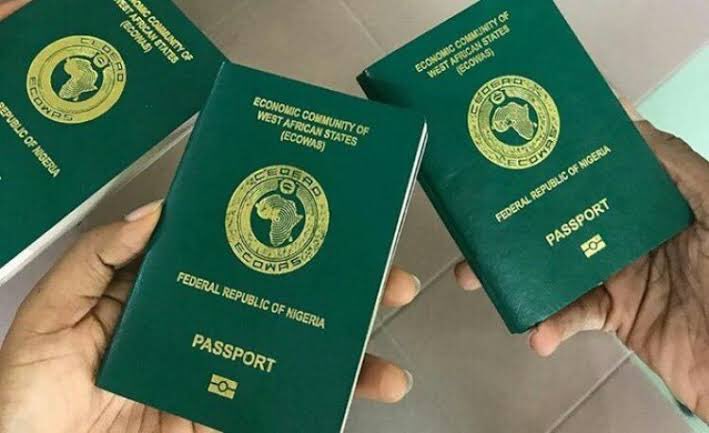
A Nigerian passport, once a symbol of pride and identity, now too often attracts suspicion. From prolonged airport interrogations to unexplained visa rejections, citizens of Africa’s largest oil producer carry the weight of a global stereotype: that of the fraudster.

Yet, this image, cemented by decades of sensational media coverage and institutional bias, is at odds with reality.
A recent study titled “Nigeria’s Fraud Reality: Dismantling Global Stereotypes Through Data” by Uchechukwu C. Ajuzieogu and Maryangel C. Nnamdi lays bare the gap between perception and fact.
“We had discovered what might be the largest gap between perception and reality in modern criminology,” writes Miranda Chen, a lead researcher at Oxford, cited in the book.
At the heart of the study is a simple but powerful question: If Nigeria is not the world’s fraud capital, why does the world treat it like one?
Read also: Fear and fragility: How safe are Nigerians?

The data they won’t tell you
In April 2024, the University of Oxford published the first global Cybercrime Index. To many, the results were surprising. Nigeria ranked sixth, behind Russia, Ukraine, China, the United States, and Romania.
Yet the stereotype persists. FBI data shows that 71% of traceable advance fee fraud operations actually originated from within the United States. Nigeria accounted for only 7.9%.
Still, Nigeria remains the most visible face of global online scams.
“The ‘Nigerian’ in ‘Nigerian Prince’ has become a brand name that has nothing to do with actual geography,” said FBI Special Agent Maria Rodriguez in an interview quoted in the book.
“We’ve arrested American citizens in Detroit running these scams, Romanian nationals in Chicago, British citizens in Miami. But the victims still call them ‘Nigerian scams’ because that’s the cultural shorthand we’ve all internalized.”
A reputation that costs billions
The stereotype has serious consequences. The study estimates that Nigeria suffers $2.1 billion in annual economic losses due to stereotype-based discrimination. This includes lost investments, visa denials, financial service restrictions, and reduced global mobility for its citizens.
Multinational corporations routinely apply a “Nigeria risk premium” of 2–5% to contracts involving the country. Nigerian startups, even with stronger fundamentals, raise 34% less capital than similar firms from Ghana or Kenya.
“What we discovered is that reputation risk has become its own economic force,” said Amanda Richardson, a senior underwriter quoted in the book. “Even when actual operational risks are low, the perception of Nigerian-associated risks creates real costs that get passed on to businesses and individuals.”
When policy follows prejudice
Even international watchdogs appear to contribute, albeit indirectly. In 2024, the Financial Action Task Force (FATF) placed Nigeria on its “grey list” of jurisdictions under increased monitoring. Yet, as the piece notes, Nigeria had met 32 out of FATF’s 40 recommendations, better compliance than many countries not listed.
“The reputational impact of FATF grey-listing often exceeds the actual risk assessment,” notes former FATF assessor Sarah Williams. “For Nigeria, this has created a feedback loop where reputation damage makes it harder to attract the investment and expertise needed to address the very gaps that led to grey-listing.”
How government can change the narrative
If Nigeria’s leadership is serious about restoring the country’s image, they must move beyond rhetorical outrage and adopt deliberate, systemic strategies. The research work outlines a reputation rehabilitation framework, offering a roadmap that mirrors Germany’s post-WWII transformation. Some steps include:
Own the problem, don’t outsource it
Nigeria must confront the issue of fraud head-on, with transparency. The EFCC, which secured over 400 fraud convictions in 2024, should make data on its operations more accessible, showcase due process, and separate enforcement from political interference.
Make reputation a national policy priority
As the authors have noted, ‘You cannot export legitimacy if you don’t build it at home.’ That means good governance, rule of law, a responsive justice system, and a consistent anti-corruption framework, not just to impress outsiders, but to earn the trust of Nigerians themselves.
Use culture and innovation as soft power
Nigeria is home to five of Africa’s seven unicorn companies. In 2022, Nigerian startups attracted $967 million in venture funding. Afrobeats hit 13 billion streams on Spotify, and Nollywood remains the world’s second-largest film industry by output.
These aren’t just achievements; they’re tools for reshaping global narratives.
Afrobeats, fintech, and Nollywood are not just sectors. They’re arguments, living, global evidence that Nigeria is more than the sum of its headlines.
Hold the global system accountable
Nigeria must advocate for standardised, data-driven approaches to crime attribution globally. The government should work with African institutions, legal bodies, and advocacy groups to challenge discriminatory visa regimes, banking restrictions, and employment exclusions.
“The Nigerian fraud stereotype has achieved a kind of cognitive immortality… It persists independently of the facts that originally supported it,” Rebecca Thompson, a social psychologist at Stanford University, quoted in the book. Tackling this means pushing back on institutions that refuse to align perception with evidence.
Read also: Social media, Global North visa policy, and Nigerians’ quest for greener pasture
Changing minds and policies
For any Nigerian leader genuinely interested in change, the goal should be to ensure that Nigeria is judged not by old headlines, but by current realities.
“This is our daily reality,” said Olugbenga Agboola, Flutterwave CEO. “We’ve built world-class anti-fraud systems precisely because we’re Nigerian… but we still encounter skepticism based purely on geography.”
That must change and the Nigerian government must lead that change. Not with outrage, but with results. Not by asking for empathy, but by demanding fairness.
Evidence or stereotype?
As Nigeria’s Fraud Reality concludes, “While Nigeria faces genuine cybercrime challenges requiring continued attention, the persistence of outdated stereotypes has created systematic barriers that impede legitimate economic development and professional advancement.”
The question remains: Will Nigeria continue to be defined by perception, or will it reclaim its narrative through reform, performance, and persistence?
The world is watching. And so are Nigerians.