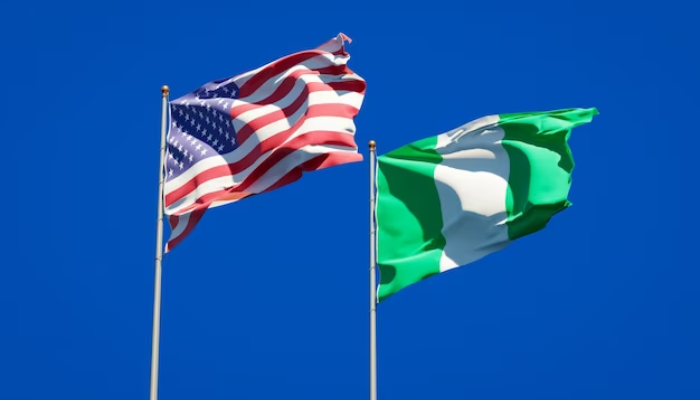
Recently, the president of the United States of America, Mr. Donald Trump, invited some African leaders to a three-day summit in Washington, D.C., termed an “incredible” commercial opportunity.
The leaders of the minor economies and populations include the presidents of Gabon, Senegal, Guinea-Bissau, Mauritania, and Liberia. Curiously, the meeting only focused on Trump’s “trade” policy rather than “aid.” For countries already slammed with Trump’s 10 percent tariff on goods exported to the United States, such a visit may provide an opportunity for a deal if not an inducement.
According to a report monitored on BBC, the African leaders were hosted at a dinner at the White House, where they indulged in the usual African style of lavishing their host with praise and encouragement that their citizens would find most amusing, if not disgusting. Mohamed Ould Ghazouani, the Mauritanian president, was the first to start.
Referring to the peace deal between DR Congo and Rwanda that the US facilitated, “In the short time you’ve been back in office, the last few months, you came to the rescue for peace. You rushed to Africa to resolve a long-standing problem.”

Read also: How worsening insecurity deepens Nigeria’s food crisis
President Trump appeared pleased with the other African leaders applauding and echoing Mohamed’s speech. Many Nigerians have queried why Nigeria was not part of the ‘Conviviality’ session. Some have attributed this to poor diplomacy, while others have suggested that Nigeria was ignored for other reasons, including political instability.
On the other hand, if the meeting, which was termed a “high-level summit,” intends “to deepen diplomatic ties, advance shared economic goals, and enhance security cooperation” between Washington and “select African nations,” why were none of Africa’s big players, such as its largest economies, South Africa, Nigeria, Egypt, and Ethiopia, part of the show?
What is unknown to Nigerians, according to a reliable source, is that America, in recent times, has been hostile to Nigeria and Nigerians because the country has refused to accept Venezuelan deportees released from its prison.
While the five countries invited for the recent diplomatic praise singing session are leaders of countries that have accepted to receive these deportees, Nigeria, in a bold face, has politely refused to make it a dumping ground for criminals.

Our sources also revealed that the unfriendly and hostile American treatment of Nigeria and Nigerians in recent times, which includes visa pressure, is to get the country to accept this dangerous trend.
Although our government is said to be mute on this development, its newfound courage should be applauded.
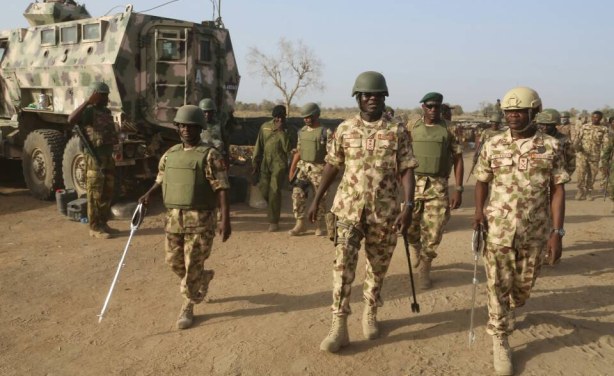
It is curious why America will target Nigeria as one of its dumping grounds for criminals given the prevailing security situation in Nigeria, a country that is already being plagued with myriad cases of insurgency emanating from its current security challenges, ranging from Boko Haram terrorists to kidnappings, banditry, cultism, and other criminal activities. The nation’s current situation calls for caution, especially with the request of the American government on the Venezuelan deportees, which the Nigerian government has rightly declined to accept.
Read also: CAN calls for total overhaul of Nigeria’s security architecture
If President Bola Ahmed Tinubu’s administration had succumbed to this horrifying request, it would have pleased the American government while creating more security and economic challenges.
For example, the Boko Haram insurgency alone has resulted in significant loss of life, displacement, and economic disruption. Studies estimate that the conflict has caused the deaths of tens of thousands of people and displaced over two million people. It has also devastated the economy, particularly in the northeast, with disruptions to agriculture, businesses, and infrastructure.
According to sources, the security threats being experienced in the country, which could be worsened by the Venezuelan deportees if accepted, will not only undermine national stability and the rule of law but also have adverse effects on the economy.
In light of this, the American request for the reintegration of the deportees with some criminal background would have been a terrible mistake had the Tinubu administration accepted.
Olarenwaju Adigun, a foreign policy analyst, lives in Ibadan.