|
Getting your Trinity Audio player ready...
|
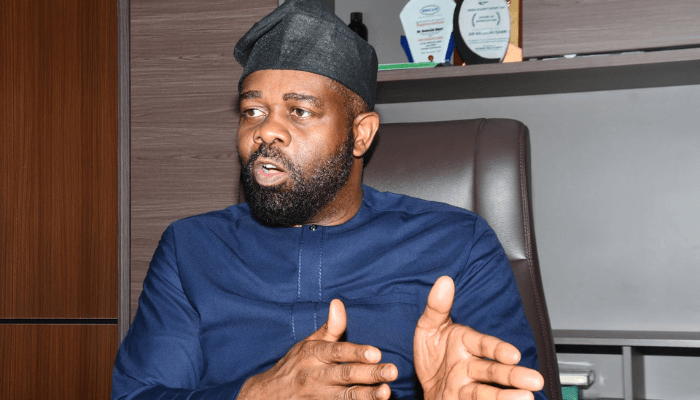
Kelechi Ohiri, the DG/CEO of Nigeria’s National Health Insurance Authority (NHIA), has said the country’s ongoing health reforms must be viewed through the lens of human capital development and national prosperity.
Ohiri said this while speaking at BusinessDay’s 17th CEO Forum themed ‘Nigeria: From reform to recovery’, where he noted that beyond statistics and infrastructure, all reforms must ultimately benefit the population by improving lives and productivity.
“In many ways, Nigeria is at an inflection point. We can no longer afford to see healthcare as just a social service — it is a fundamental economic asset,” Ohiri stated.
He emphasised the pressing need for health sector reform in the face of persistent demographic and economic challenges, including high infant and maternal mortality rates, a low Human Capital Index, and widespread out-of-pocket health spending.

Read also: Coordination needed to boost Nigeria’s comprehensive reforms – KPMG
According to the World Bank, about one million Nigerians are pushed into poverty each year due to catastrophic health expenses.
“If you don’t have a pocket, you don’t pay for healthcare,” Ohiri stated and he described the situation as a major threat to the country’s fragile middle class and its broader economic stability.
Nigeria’s youthful population presents an opportunity for a demographic dividend if the country can improve health outcomes and expand access to care, according to NHIA’s DG.
Drawing comparisons with Indonesia, Ohiri illustrated how strategic reforms in health can spur long-term economic growth and population productivity.
Under the leadership of President Bola Tinubu and the Coordinating Minister of Health and Social Welfare, Nigeria has launched reforms across four key pillars which are effective governance, equitable and quality health systems, unlocking the healthcare value chain, and ensuring national health security.

He noted that the NHIA itself is driving reforms across four core areas which are expanding financial protection, improving equity, enhancing quality of care and driving market efficiency.
With over 70 percent of Nigerians still paying for healthcare out-of-pocket, NHIA is targeting expanded coverage. By 2027, the agency aims to enroll over 20 million Nigerians into health insurance schemes, and is already 97 percent towards that goal as of 2025.
Read also: Dangote targets expansion in refinery, cement, agriculture
Targeted programs are now ensuring access to maternal care and support for vulnerable groups. New reimbursement structures have increased provider payments by up to 378 percent, helping attract more private and public facilities into the system while ensuring better care for patients, he stated.
Ohiri said the NHIA is investing in data-driven tariff reforms and working with states to decentralise services effectively and every state now has an operational health insurance scheme.
He highlighted ongoing efforts to build resilience in Nigeria’s health system through local production of drugs and medical commodities.
“The pandemic showed us that we cannot depend on global supply chains. Nigeria must be able to produce what it needs for its citizens,” he said.
Ohiri believes that strengthening healthcare is both a moral and economic imperative for Nigeria. “Economic growth without a social safety net leads to instability. Healthcare is not just a moral obligation; it’s a macroeconomic strategy. If we get this right, we’re not just saving lives — we’re building the foundation for prosperity.
He urged policymakers and stakeholders to treat health not as a charity, but as a strategic driver of national development, GDP growth, and industrialisation.
“Health is human capital. Human capital is economic capital. That’s the lens we must use moving forward.”