|
Getting your Trinity Audio player ready...
|
Chinedu Ogwus has called for a homegrown, economically inclusive energy transition strategy, urging African nations to leverage their natural resource endowments as engines of sustainable development rather than liabilities within the global green agenda.
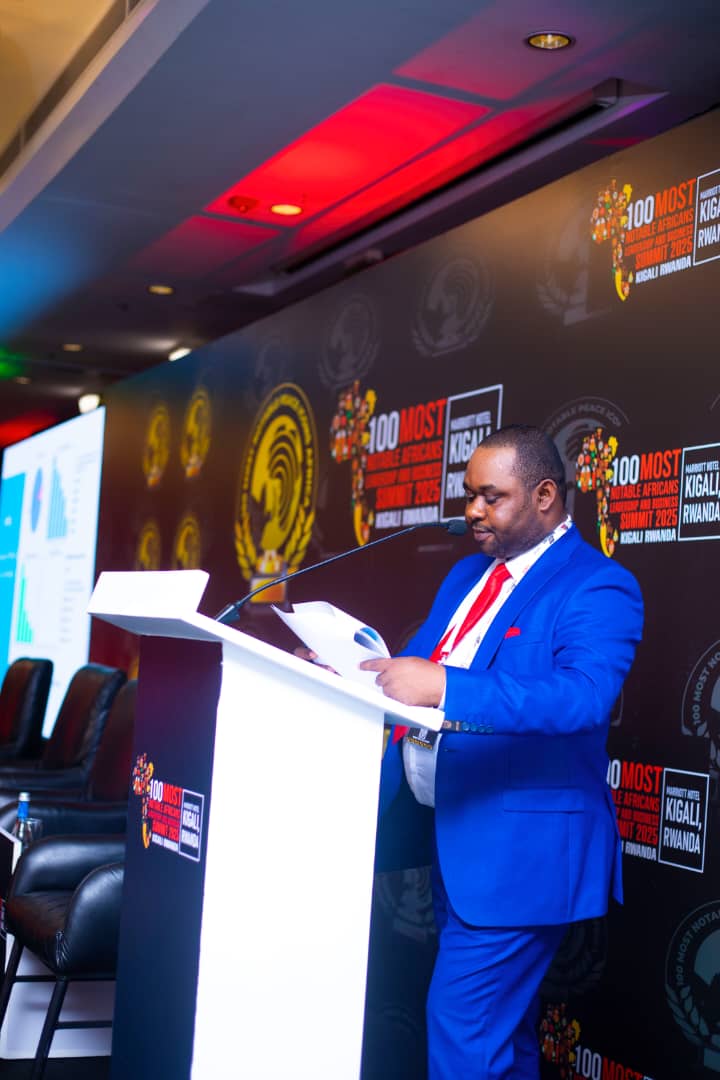
At the 100 Most Notable African Leadership and Business Summit held in Kigali, Rwanda, comprising policymakers, investors, and climate sector leaders, Ogwus presented a pragmatic framework aimed at advancing energy sovereignty across the continent.
Central to his proposal was the adoption of a blended energy model that balances the use of renewables and fossil fuels—a model he argued is better aligned with Africa’s unique developmental, infrastructural, and demographic realities.
“Africa’s fossil fuels must become launchpads, not liabilities,” he said, underscoring the need to reposition oil, gas, and coal as strategic assets for accelerating industrialisation, expanding grid access, and financing clean energy investments.

Rejecting imported, one-size-fits-all climate frameworks, Ogwus urged African governments to develop energy policies grounded in local contexts.
He advocated for alignment with the African Union’s Agenda 2063 and prioritisation of decentralised, off-grid solutions capable of driving inclusive growth in underserved regions.
Read Also: Tunji-Ojo, US ambassador meet over new visa rules
“Africa must move from energy dependence to energy sovereignty, and it must do so on its own terms,” he added.
Ogwus also linked energy strategy to broader economic outcomes, including job creation, youth and female empowerment, and regional integration.

Drawing from his work in the Niger Delta through the Ogwus Youth Empowerment and Community Development Organisation, he stressed that energy access should be a lever for socioeconomic transformation.
His push for green industrialisation, adoption of scalable clean technologies, and inclusive capacity-building was rooted in decades of professional experience spanning engineering, policy advisory, and community development.
The summit address, widely praised for its depth and practical relevance, earned him international accolades as he was named one of Africa’s 100 Most Notable Peace Icons.
He was also conferred with a Medal of Honour by the Asian-African Chamber of Commerce and Industry, recognitions that further validate his growing influence as a thought leader in the energy and development space.