



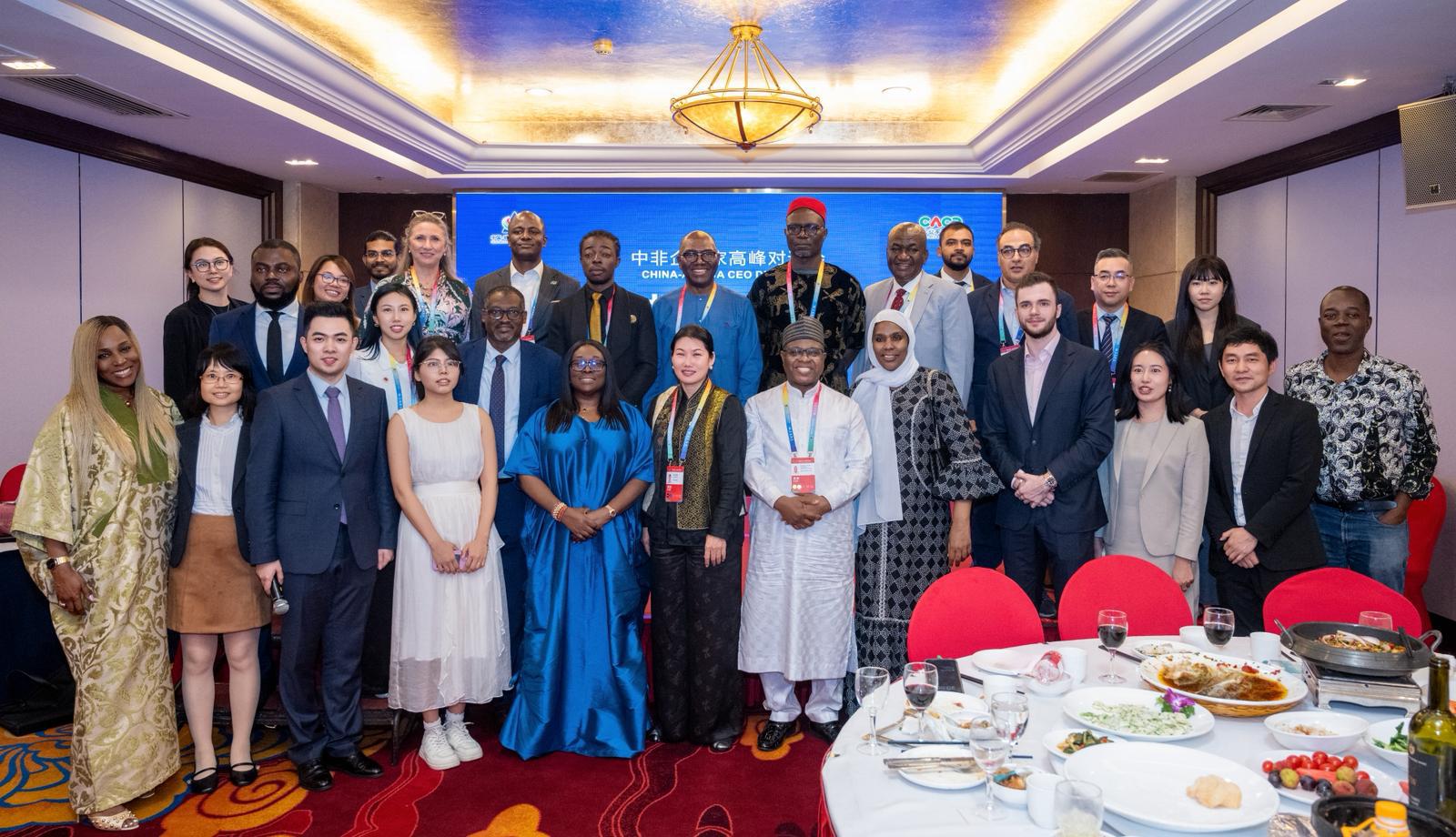
Nigeria’s push for deeper global partnerships found new expression at the 2025 China-Africa CEO Dialogue, where branding and cultural intelligence featured prominently alongside trade and infrastructure talks.
Among the Nigerian delegates at the event was Tobiloba Adeyemo, founder of Raptview, who helped spotlight the role of design, localisation, and narrative strategy in international commerce.
“Africa doesn’t need handouts, we need equal partnerships,” Adeyemo said during a panel on cross-cultural branding.
The CEO Dialogue, part of the broader China-Africa Economic & Trade Expo (CAETE), drew over 1,000 delegates from more than 40 African countries.

Hosted by the All-China Federation of Industry and Commerce and the Hunan Provincial Government, the forum is part of China’s efforts to scale private-sector engagement across the continent.
While policy and trade topped the agenda, conversations also veered toward less traditional subjects like the cultural readiness of brands entering African markets.
Adeyemo, who once led marketing at GAC Motor Nigeria, advocated for a shift from transactional business models to more transformative partnerships grounded in local insight.
“We often talk about exports in terms of commodities, but we forget that what truly scales is understanding,” he said. “The way a product speaks matters just as much as what it offers.”
He unveiled a prototype of the Cultural Readiness Index, a tool aimed at helping foreign companies assess their preparedness for African market entry.

Nigeria’s delegation at the discussions included Yusuf Tuggar, Nigeria’s Foreign Affairs Minister, Temi Popoola, ceo of the Nigerian Exchange Group (NGX), Iyabode Soji-Okunsanya of Access Bank, and Jubril Arogundade, executive director at LAGRIDE.
Their presence reflected Nigeria’s growing appetite for cross-sector collaboration combining traditional investment with youth inclusion, innovation, and soft power.
Through his Lagos-based agency Raptview, Adeyemo leads projects that merge digital storytelling with behavioural insight. For Nigeria, it may be a reminder that one of its most strategic exports is the ability to tell its story, and the power of those chosen to tell it.





