



Huawei, a leading global information and technology (ICT) solutions provider, has continued to record remarkable business growth for first half of 2015 with the total revenue reaching a total of USD9.09billion, Olaonipekun Okunowo, firm’s senior marketing manager, Nigeria Consumer Business Group, has said.
The result showed an impressive year-on-year increase of 69 percent, of its Consumer Business Group (BG), with unit’s sales income representing 32 per cent of total income of the parent company; Huawei Technologies up from 24 percent in first half of the year.
Huawei’s handset business revenue reached USD7.23 billion in first half of 2015, recording a year-on-year increase of 87 per cent.
Okunowo said: “This was due to the success of Huawei Consumer BG’s strategy of focusing on mid-to-high-end handsets, which contributed to both the increase in shipments and average selling price.

“This incredible growth is a testament to our core business strategy to offer premium quality products, bringing our expected earnings for 2015 from USD 16 billion to USD 20 billion,” adding that “Such an unparallel and rapid growth in performance is an outcome of Huawei’s Consumer BG’s commitment to consumers’ needs and our core strategy of providing innovative hardware technology and software experience. With our unswerving and huge investment in R&D, Huawei is set to become one of the key players in the long-run.”
He added that in H1 2015, Huawei Consumer BG shipped a total of 48.2 million smartphones, representing a year-on-year increase of 39 per cent, while global smartphone demand has only recorded a 7 percent growth in the same period. Shipment for the mid-to-high end category recorded a year-on-year increase of 70 percent, representing 31 percent of the total handset shipment and 42.9 percent of total income. The income of the mid-to-high end category increases 388 percent while the profit of this category representing 44 percent of the total profit.
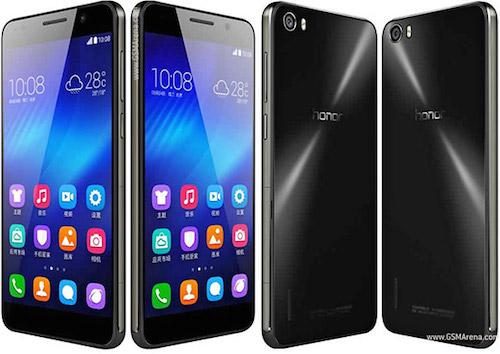
Huawei’s global strategy continues to stimulate stable business growth in both China and overseas markets. Revenue surged 124 per cent year-on-year in China, while some regions recorded more than 40 per cent revenue growth. Western Europe, Northeast Europe, South Pacific, North Africa and Middle East recorded 45percent, 54percent, 41percent, 164 percent and 48percent year-on-year growth, respectively. Huawei’s high-end smartphone shipment in Italy and Spain achieved year-on-year growth of 293per cent and 448percent, respectively. According to GFK[1], Huawei’s share of the global smartphone market continued to increase throughout the first quarter of 2015, recording 6.7percent in January, 7.1percent in February, 7.8percent in March, 8.1per cent in April and 8.8per cent in May.
In first half of 2015, Huawei’s flagship smartphone, Huawei Mate7 shipped a global total of 5 million units with impressive sales in over 100 countries including China, Western Europe, Middle East, South East Asia, and South Pacific, among others. Huawei P7 recorded accumulative sales of 7 million units and was available in over 100 countries and regions. Over one million units of Huawei P8 have been sold in the first two months since launch with availability in over 52 markets including China, France, Spain and Italy.

In May 2015, Huawei was named one of BrandZ’s ‘Top 100 Global Brands’ of 2015 for the first time, ranking in 16th position in the technology and science category with brand value of USD 15.335 billion. This follows Huawei’s success in being the first Mainland Chinese brand to reach Interbrand’s Top 100 Best Global Brand list in 2014.
In the second half of the year, Huawei Consumer BG will continue to leverage its experience and knowledge in telecommunications hardware and software to capitalize on the opportunities presented by the “all things connected” era. Thus, Huawei intensified its wearables strategy and introduced the Huawei Watch W1, TalkBand N1 and B2 during the Mobile World Congress in Barcelona this year.
Globally, Huawei has 16 R&D centers including an aesthetic research center in Paris, a mathematics research center in Russia, a design and quality control research center in Japan, a software research centre in India, among others. As of June 30, Huawei has applied for a total of 76,687 patents, among which 18,000 are device-related. A total of 41,903 patents have been authorized on a global level.
In the development of interconnected cars, Huawei entered into a number of strategic partnerships with major automobile brands in 1H 2015, including Volkswagen, Mercedes-Benz, and Audi, with the latter two partners appointing their third-party suppliers to use Huawei vehicle-mounted 4G communication modules in their future car-networking equipment. By integrating the company’s capabilities in 4G and 5G networks, Big Data and cloud technology, Huawei aims to be the leading player in the interconnected cars industry and promote interaction among cars, smart phones and wearables to create seamless communications and a comfortable and safe driving experience for users.




