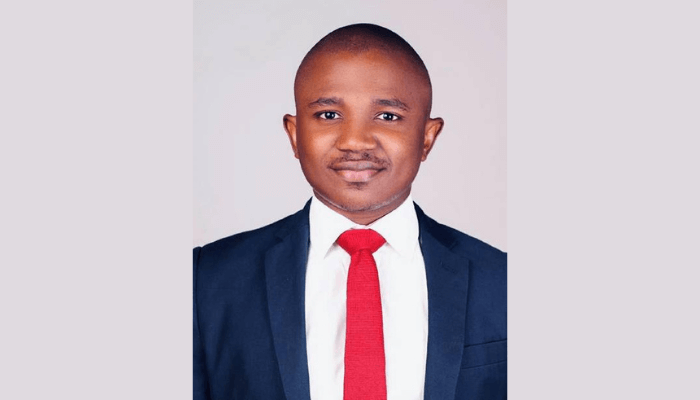
Ademola Ogunbajo, President of Oando Clean Energy, has called for a shift in Nigeria’s energy priorities, stressing that the country is not yet ready for Compressed Natural Gas (CNG) vehicles. Instead, he has advised that available gas resources should be directed towards powering industries and building a stronger energy backbone for the economy.
“This is not the decade of gas; this is the decade of gas infrastructure and industrial development. Gas should not be powering vehicles—it should be powering industries, charging stations, and the things created by people,” Ogunbajo said whilst fielding questions during a panel discussion on the Role of Renewable Energy in Africa’s Future Energy Mix at the NOG Energy Week in Abuja.
He emphasised the need for focused investments that drive value creation, warning against misaligned priorities in the country’s energy transition efforts.
Ogunbajo said that Nigeria alone could unlock as much as $250 billion in economic value from renewable energy over the next three years if investments are strategically channelled.

According to him, energy must be directed towards areas that create real value for people, such as agriculture, artificial intelligence, transport, and industrialisation.
He stressed that power is fundamental to every meaningful human enterprise, and Nigeria’s future depends on how well it aligns energy investment with value creation.
Ogunbajo also stressed the urgency of fast-tracking the continent’s green transition.
“Let’s just focus on electrifying faster and leading Africa’s green revolution. It’s no longer enough to talk about the problem; we must move to action,” he said.
Read Also: Oil heads higher as Iran cuts cooperation with nuclear watchdog

The conversation touched on the role of oil and gas in Africa’s development, with participants questioning the continent’s continued dependence on fossil fuels despite contributing only 4% to global greenhouse gas (GHG) emissions.
“If we are responsible for such a small fraction of emissions, what’s the real benefit of pushing further into oil and gas, especially when the rest of the world is transitioning away from them?” he queried.
One of the central issues raised was Africa’s underdeveloped public transport systems.
According to Ogunbajo, “Our public transport system is not mature to the point where people own and use it consistently. The buses we have launched are primarily for mass transit, and we are growing the fleet.”
He acknowledged the current limitations but expressed optimism for the future. “As time goes on and our infrastructure matures—cleaner, better organised—you and I will leave our cars at home and hop on trams or trains.”
Ogunbajo revealed that an all-electric service is already being rolled out, including electric taxis.
“When you take a ride in an electric taxi, we’ll send you a message showing how much carbon that ride has prevented. This way, we personalise the carbon footprint and raise awareness,” he said.
Despite Africa’s limited contribution to global emissions, Ogunbajo highlighted that the continent bears a disproportionate share of the impact.
“We do not contribute significantly to global GHG emissions, but we suffer significantly from the impact of climate change. Africa holds less than 20% of the world’s population but accounts for 50% of global internally displaced people. Much of this is due to conflict and climate-related challenges,” he noted.
He pointed out the displacement of communities across Nigeria and other parts of Africa due to desertification and the search for arable land and pasture.
“Even if that alone was the reason, it’s enough for us to act.”
Whilst reaffirming that gas remains a necessary part of Africa’s current energy mix, Ogunbajo emphasised the need for foresight.
“We still need to ensure we are ready for the future when gas becomes less attractive as an investment. It’s only a matter of time,” he warned.
He also urged a balanced approach to Africa’s energy transition, saying, “The transition is a mix. And that mix is going to be with us for a long time. Let’s not fret, but let’s prepare.”
Ogunbajo further warned that unless Africa builds its own manufacturing base for solar panels and renewable technology, the continent will end up spending billions of borrowed dollars enriching other economies.
He projected that about $50 billion would be spent across Africa on infrastructure over the next decade.
“However, if current trends continue, up to 90 per cent of that money would go to countries like China, which dominate the global solar panel market. This would mean Africa gets the power, but not the industrial or employment benefits that should come with it,” he added.
He argued for a rapid overhaul of the educational curriculum to train students in the skills needed for the energy sector of the future, noting that current systems still prepare students for a world that existed 30 years ago.
Omotayo Hassan of TotalEnergies emphasised that the country’s renewable ambitions cannot be realised without addressing the underlying weaknesses in Nigeria’s power infrastructure.
Hassan pointed out that whilst generation is critical, equal focus must be placed on strengthening transmission, storage, and grid reliability.
Nigeria’s power grid, he said, is old and unstable, and without urgent upgrades, adding more renewable generation to the system will only worsen the problem.
He criticised the ineffective use of government subsidies and called for redirecting those funds into infrastructure projects that truly deliver electricity to end users.
Panellists also stressed the need to make renewable energy projects bankable and attractive to investors.
Hassan emphasised that regulatory barriers such as lengthy permit approvals need to be addressed.
He called for a streamlined process where all project approvals are completed within 90 days.
Hassan also pointed out that sustainable energy projects must be inclusive, incorporating local communities, women, and young people into the planning and implementation stages to ensure long-term viability.
Olayiwola Ajilore, Service Director at GE Vernova, called on African leaders to avoid falling into the same traps that have kept the continent underdeveloped in other sectors.
He warned against exporting raw materials like lithium and cobalt used in renewable energy technologies, only to import the finished products at much higher costs.
He urged governments to focus on value addition, process minerals locally, and build regional collaboration to maximise value retention within Africa.
Ajilore also warned that some African leaders knowingly enable the illegal export of critical minerals for personal gain, further weakening the continent’s ability to benefit from the global green economy.
In his closing remarks, Ogunbajo cautioned against the culture of chasing short-term political victories, which often leads to shallow energy policies.
He said most African leaders spend their first year in office settling in, their second year working, and their third year preparing for re-election, leaving very little time for strategic, long-term action.
According to him, this cycle of “quick wins” will not deliver the deep transformation needed in the energy sector.