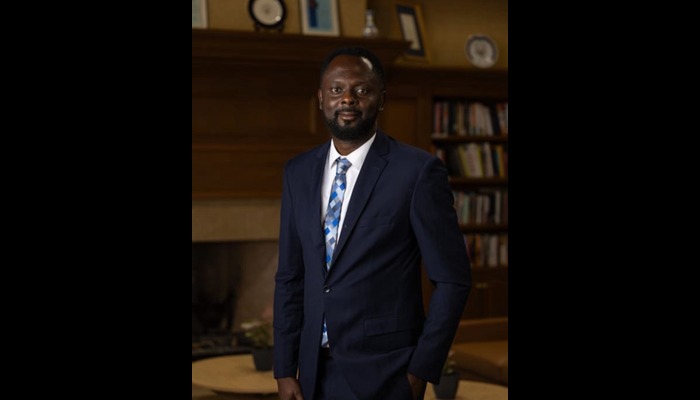
Mathematics may be one of the oldest sciences, but in the hands of the right mind, it continues to evolve and shape the modern world. Dr. Maduabuchi Gabriel Orakwelu has built a career not only on the strength of mathematical theory but also on its power to solve real-world problems. His work bridges abstract models and applied systems, offering solutions that matter in engineering, public health, and digital infrastructure.
In recent years, Dr. Orakwelu has developed numerical methods designed to solve higher-order differential equations more efficiently and accurately. These equations, which govern everything from mechanical vibrations to fluid dynamics, are often broken down into simpler systems before being solved. But Dr. Orakwelu has taken a more direct path. His approach preserves the original equation structure, resulting in improved accuracy and faster computation.
One standout contribution is his design of hybrid block methods that directly solve third-order ordinary differential equations. These methods use additional intra-step evaluation points to increase precision without increasing complexity. The result is a tool that can handle complex simulations in fewer steps and with less error than traditional techniques. This is particularly useful in systems that must respond in real time, such as aerospace models or smart grid monitoring.
His models have passed critical tests for convergence and stability, giving engineers and scientists confidence to use them in sensitive applications. More importantly, these methods are self-starting, meaning they do not rely on additional solvers to begin processing data. That simplicity makes them easier to deploy in both academic research and industrial simulations.

But Dr. Orakwelu’s impact extends beyond equations and algorithms. He has trained students at multiple levels and led seminars to help demystify complex topics in numerical analysis and applied mathematics. He brings a practical mindset to teaching, emphasizing tools and strategies that students can carry into research labs, tech companies, or government agencies.
His work has also made its way into areas like disease modeling and control optimization. In one project, he explored how mathematical models can simulate and improve the timing of cancer treatments. In another, he used control theory to evaluate how diseases spread and how interventions could be better timed. Each case drew on deep mathematical principles, but the focus remained on clarity, usability, and social benefit.
Dr. Orakwelu has collaborated with engineers and scientists across disciplines, co-authoring work on stiff systems and hybrid methods for large-scale simulations. His research often deals with scenarios where the speed and reliability of computation are essential.
Whether modeling heat transfer, mechanical stress, or biological growth, his goal remains the same: use mathematics to provide insight and improve decision-making.
His work has appeared in journals that value both theoretical strength and applied focus. Each publication showcases a careful balance between mathematical rigor and practical function.

His methods are not only proven on paper but designed to run efficiently in modern computing environments. This includes compatibility with parallel processors and edge devices, making them suitable for everything from research clusters to embedded systems.
In professional circles, he is known for his attention to detail and long-term thinking. His numerical schemes are designed with implementation in mind. They are written clearly, tested across different problems, and tuned for adaptability. He also contributes to research forums and conferences, where he shares new findings and builds connections with others working at the intersection of mathematics and engineering.
Looking to the future, Dr. Orakwelu is focused on making advanced mathematics more accessible. He is developing user-friendly libraries and exploring how low-cost sensors can feed real-time data into hybrid models. He is also interested in expanding the use of explainable mathematics in monitoring infrastructure, helping users understand not just what a system is doing, but why.
His work reflects a clear philosophy: mathematics should serve. Whether it is helping an engineer simulate the stress on a bridge, or a policymaker understand the timing of an outbreak, the tools he builds are meant to translate theory into action.
From abstract analysis to real-world application, Dr. Maduabuchi Gabriel Orakwelu is part of a generation of mathematicians redefining how the field contributes to society. Through careful design, interdisciplinary thinking, and a commitment to clarity, he is proving that modern mathematics is not only alive but deeply connected to the systems we rely on every day.