|
Getting your Trinity Audio player ready...
|
In what looked like an after the reggae play the blues scenario, well-wishers and motorists who drove to the inauguration with fuel bought at the subsidised pump price of N238.11 per litre were not only a part of history in witnessing the swearing-in ceremony but also returned home to join our new reality party after the party.
It was a mixed bag for everyone. Tony Elumelu, a friend of the administration and Chairman of the UBA Group, did not miss the windstorm that followed.
While commenting on the decision of the bank to review upwards the welfare allowance of its staff, UBA GMD/CEO Oliver Alawuba said, “We are aware of the impact of recent economic policy pronouncements on prices and your capacity to meet your financial commitments to family and personal needs.”
UBA’s operating expenses are said to have risen by 104 percent to N218.9b in the first quarter of 2024 from N107.3b in the corresponding period in 2023.

The cost of transportation received a direct hit as the new price regime for petrol came into effect, with commuting and haulage going up by over 300 per cent and leaving many Nigerians to trek long distances.
My personal driver’s daughter and only child had to withdraw from her former school, whose beautiful uniform she never thought she could give up for anything. Her pain was visible and written all over her face as she prepared to resume studies at a new school closer to the house.
But President Tinubu, a first-class graduate in accounting, kept insisting that the pains were temporary and necessary to avert a financial crisis ahead of us.
“I feel your pain. This is one decision we must bear to save our country from going under,” he assured in his first June 12 Democracy Day speech.
As of Q1 2023, Nigeria was already in debt both domestically and externally to the tune of US$108.30b and still had to borrow more to honour contractual obligations.

Read also: President Tinubu’s gas administration Politics: Visionary leadership or crass opportunism (Part 1)
Weeks later, in an effort to ameliorate the sufferings occasioned by the withdrawal of the petrol subsidy, President Tinubu approved the setting up of a Presidential CNG Initiative (PCNGi) to, among other things, facilitate a smooth transition to gas-powered vehicles for Nigerian motorists.
Looking back at the initiative, a Nigerian motorist and former National Secretary of the Independent Petroleum Marketers Association of Nigeria (IPMAN), Mike Osatuyi, thinks that the PCNGi coordinated by Michael Oluwagbemi is slow.
Hear him: “Vehicles often spend hours – and trucks days – at CNG filling stations due to inadequate service capacity. Specific areas like Zuba-Kaduna Road, Abuja Airport Road, the Mountain of Fire area of Ibafo on the Ibadan Motorway, and the Ibadan Tollgate are just a few examples where users experience long wait times.”
While the Osatuyis of this world may have been thinking of the PCNGi bread as a solution, it became clear on August 21, 2023, that the President was thinking of a bakery as a lasting solution.
He unbundled the Petroleum Ministry and appointed Nigeria’s first gas minister in the person of Ekperikpe Ekpo, a former federal lawmaker and scholar in environmental pollution and toxicology, to bring the cleaner, cheaper fuel alternative dream to reality.
Rt. Hon. Ekperikpe Luke Ekpo, Ph.D., at this point became the one-stop shop for gas and all gas-related matters in the Tinubu administration, as the onus fell on him to run with the President’s alternative energy vision, harness Nigeria’s largely untapped gas resources, supervise the Energy Transition Plan (ETP), interpret the Petroleum Industry Act (PIA), and implement the Decade of Gas Policy. Quite a lot.
Regarding gas, figuratively, Nigeria had lived near a river but did its laundry with spittle.
Before now, many Nigerians did not know that Nigeria was more of a gas nation than oil, with well over 206.53 trillion cubic feet (tcf) of proven gas reserves. Nigeria’s gas resources are in the main untapped and routinely flared the most. This is the sad overview of Nigeria’s untold gas story.
With the tone set for the task at hand, Ekpo got an invitation from TotalEnergies and, on February 15, 2024, personally supervised the official shutting down of routine gas flaring on all its platforms in Nigeria; a first since the signing of the Associated Gas Re-injection Act in 1979. It was indeed a milestone.
In Gas Flaring: A History of Missed Deadlines, BusinessDay newspaper chronicles the long walk to TotalEnergies example of playing by the rules, starting with General Yakubu Gowon’s 1969 executive order to International Oil Companies (IOCs) to end gas flaring in Nigeria on a date not later than 1974.
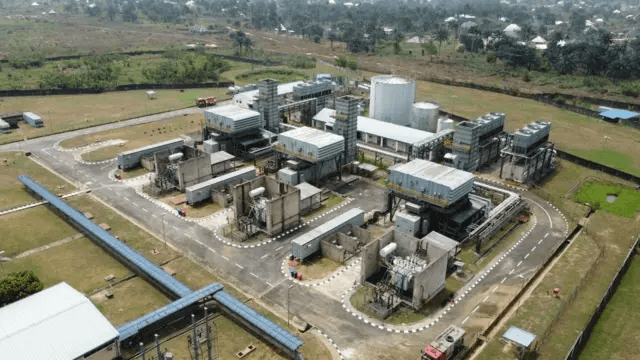
From Port Harcourt, Geometric Power in Aba became a destination for the new minister. The 141 MW multi-million dollar gas-fired power plant, also known as the Aba Integrated Power Project (Aba IPP), was in urgent need of attention.
From inception in 2004, the Aba IPP was beset with regulatory bottlenecks, among other things, including a gas supply challenge.
The project was designed to rely on a 27 km gas pipeline from Owaza in Ukwa West to Osisioma, but the initial owner of the oil block intended to supply gas, sold it to a company focused on gas exports rather than domestic use, and this disrupted Geometric plans in a significant way.
After the new gas minister received a formal briefing on their gas hurdle, Geometric found a new friend in the pioneer gas minister, and things got better. Geometric was able to receive sufficient gas to commence its operations for the first time on February 26, 2024.
After the successful resolution of issues at Aba, Bonny Island beckoned to the minister and his conflict resolution team. The ambitious $3.8b integrated methanol and gas processing plant project undertaken by the Brass Fertiliser and Petrochemical Company in Bayelsa State was on the edge.
The primary challenge for this project was securing a reliable gas supply commitment through a Gas Supply Purchase Agreement (GSPA) with the NNPC/TotalEnergies/NOAC Joint Venture (JV), which was a critical prerequisite for the Final Investment Decision (FID) and project financing.