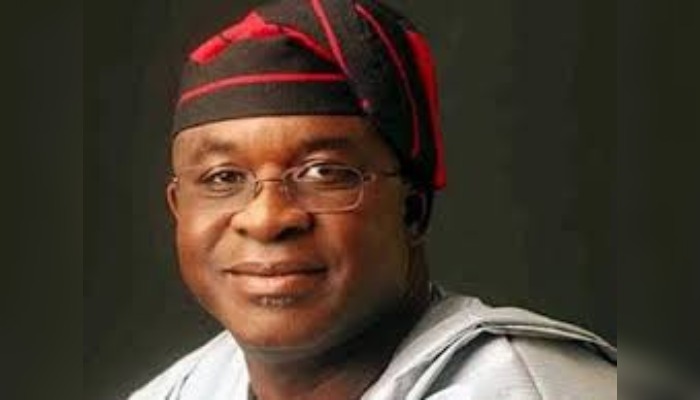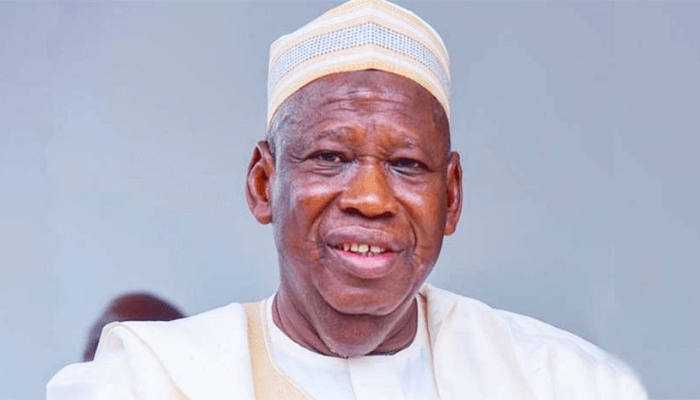
In a significant development within Nigeria’s ruling All Progressives Congress (APC), Joshua Dariye, a former Plateau State Governor and ex-Senator representing Plateau Central zone is poised to succeed Abdullahi Ganduje as the party’s national chairman.
Ganduje announced his resignation on Friday, citing personal well-being as the reason for stepping down from the position he assumed since 2023.
Ganduje took over the reins of the APC chairmanship from Abdullahi Adamu in August 2023. Since his appointment, there have been mounting calls within the party for the chairmanship seat to revert to the North Central geopolitical zone, from where Adamu hails.
In the interim, a national vice chairman of the APC has assumed the role of acting chairman until a substantive chairman is elected. This move is seen as an effort to maintain party stability while preparing for the upcoming elections.

Sources close to the party indicate that Ganduje, who hails from Kano in the North West region, was persuaded to resign amid growing internal opposition and strategic repositioning as APC looks ahead to the 2027 general elections.
The resignation of Ganduje comes amidst a backdrop of intense political maneuvering within the APC, with factions vying for influence and control ahead of the party’s critical electoral challenges.
Joshua Dariye, a seasoned politician and known ally of President Bola Tinubu, is widely expected to emerge as the next APC national chairman. Both Dariye and Tinubu served as governors from 1999 to 2007, forging a political alliance that continues to influence party dynamics.
Read also: Permutations trail Ganduje’s resignation
Dariye’s potential election is seen by many political analysts as a strategic move to consolidate support from the North Central region, which remains a vital electoral bloc for the APC.

The North Central region’s call for the chairmanship seat is part of a broader quest for equitable representation within the party’s leadership structure, a principle that has been a defining feature of Nigerian party politics.
Since Ganduje’s appointment, internal opposition within the APC has steadily increased, with critics questioning his leadership style and ability to unify the diverse factions within the party.
The party’s decision to accept Ganduje’s resignation without contest underscores the delicate balancing act the APC leadership is undertaking to maintain cohesion.
A member of the APC in Plateau state who pleaded anonymity told BusinessDay at the weekend that the shift in leadership could signal a renewed focus on party unity and grassroots mobilization as APC prepares for the 2027 polls.
“The recent change in leadership within the APC marks more than just a personnel adjustment, it signals a strategic recalibration ahead of the 2027 general elections.
“There’s growing recognition that party unity will be crucial for electoral success, especially with shifting voter sentiments and increasing political awareness at the grassroots level. The leadership appears to be aligning its strategies to reconnect with the base, rebuild trust, and energize loyal supporters.
“What we’re likely to see in the coming months is a more coordinated push for grassroots mobilization, stronger party discipline, and a focus on inclusion across regional and ideological lines. The APC seems intent on presenting a cohesive front not just to win elections, but to restore credibility and confidence among its core supporters,” the APC member told BusinessDay in Jos.
The interim period overseen by the acting national chairman, will be crucial in setting the tone for the party’s eventual election of a new leader.
It is expected to be a decisive moment for the APC, as it seeks to present a united front to the electorate and counter opposition challenges.
Dariye’s political track record, including his tenure as governor and senator, provides him with significant experience in navigating Nigeria’s complex political landscape.
His association with President Tinubu is likely to strengthen his position within the party and facilitate coordination between the national leadership and the presidency.
Stakeholders from the North Central zone have expressed optimism that Dariye’s leadership will enhance their region’s influence within the APC and national politics.
Read also: Ganduje’s resignation: Tinubu’s 2027 ambition rocks APC
“Dariye’s experience and deep-rooted connections across political and grassroots networks make him a unifying figure capable of rallying support and driving development-focused agendas. We believe his leadership will not only elevate the North Central’s political relevance but also contribute meaningfully to the APC’s strategic direction ahead of 2027”; the APC chieftain who did not want his name in print told BusinessDay on Saturday in Jos.
However, challenges remain, as the party must also manage competing interests from other geopolitical zones to ensure balanced representation.
Ganduje’s resignation may also be interpreted as a gesture aimed at smoothing over factional differences and avoiding protracted conflicts within the party ranks.
The APC’s national executive council is expected to meet soon to formalize the appointment of the acting chairman and outline the roadmap towards electing a new leader.
Party insiders reveal that the leadership change is part of a broader strategy to re-energize the APC’s organizational structure and strengthen its electoral machinery.
The coming months will be critical for the party as it consolidates support, addresses internal dissent, and prepares for what promises to be a highly competitive election cycle.
Political commentators suggest that Dariye’s emergence as chairman could recalibrate power dynamics within the APC and influence candidate selection processes at all levels.
The leadership transition also reflects the APC’s ongoing commitment to zoning and internal democracy, principles that are central to Nigeria’s political stability.
As the party navigates this transition, its ability to maintain unity and present coherent policies will be tested.
For now, all eyes are on Joshua Dariye as he gears up to lead the APC into what many see as a defining chapter in its history.
The next few weeks will reveal how effectively the party manages this leadership change and harnesses it for electoral success.
In the broader context, the APC’s handling of this transition could set a precedent for party politics in Nigeria as other parties watch closely.