



…Rallies youths in nationwide campaign for a safer Nigeria
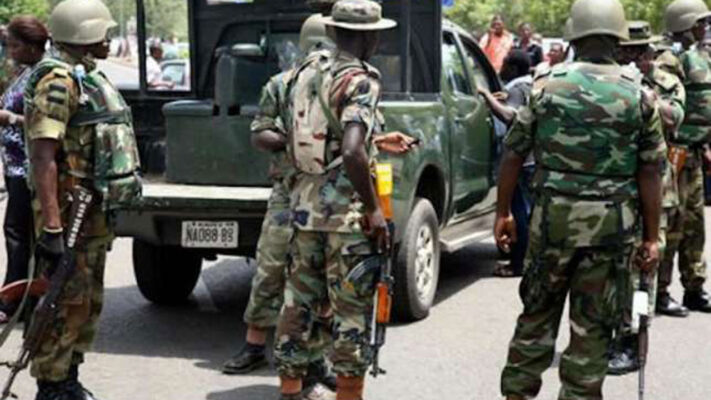
The Nigerian Armed Forces have launched a grassroots sensitisation campaign aimed at bridging the gap between soldiers and the communities, in a push to strengthen civil-military relations and rebuild public trust.
The initiative, championed by Christopher Musa, Chief of Defence Staff (CDS) seeks to demystify military operations, promote dialogue, and encourage active citizen involvement in national security.
By engaging traditional leaders, youth groups, religious institutions, and local authorities, the campaign is reshaping perceptions and fostering a spirit of collaboration in the ongoing fight against insecurity across the country.

The campaign, which visited Ikeja and Ojo Local Government Areas in Lagos, underscores the military’s strategic shift toward inclusive security operations.
It is focused not just on projecting the Armed Forces’ capacity to tackle threats, but also on cultivating trust among citizens, particularly youth, traditional rulers, religious leaders, and community stakeholders.
These engagements seek to transform public perception and create platforms for dialogue that were previously absent in civil-military relations.
At the Ikeja sensitisation event, Yomi Mayungbe, Vice Chairman of the Local Government, praised Musa’s leadership, describing it as “visionary and grounded in compassion.” He noted that the general’s direct approach to community engagement has created renewed hope and accountability in how national security is managed.
“Musa (General) is not only a military strategist, he’s a bridge-builder,” Mayungbe said. Leading the Defence Headquarters team at the events, Ayorinde Omojokun from the Directorate of Defence Media Operations provided an in-depth explanation of the campaign’s goals.

He emphasised that the initiative is designed to demystify the Armed Forces, clarify their constitutional roles, and ensure that Nigerians across all divides understand the military’s commitment to protecting lives and property without bias.
“This is not just an awareness drive; it’s a trust-building mechanism,” he said. Residents were also reminded of the importance of community-based intelligence and vigilance.
Omojokun stressed that the fight against insurgency, kidnapping, cultism, and banditry cannot be won by the Armed Forces alone. He urged communities to become active participants by sharing credible information and promoting unity in the face of divisive narratives.
The campaign, he added, is not only about operational updates but about building lasting partnerships for peace. In addition to military operations, the Armed Forces highlighted their humanitarian and developmental contributions.
Cythia Akor explained the Armed Forces’ Civil-Military Cooperation (CIMIC) programmes, which include free medical outreach, construction of boreholes and schools, and distribution of relief materials to displaced communities.
These non-kinetic interventions, she noted, are critical in winning hearts and minds, particularly in regions long affected by violence. At the Ojo Local Government event, Rasulu Idowu, Executive Chairman, described the campaign as a “game-changer” in civil-military relations.
He commended the Armed Forces for demystifying long-held fears about military presence and for encouraging grassroots participation in security matters.
Idowu detailed local initiatives already underway, including monthly security forums that bring together traditional leaders, youth representatives, and security agencies to discuss threats like cultism, street crime, and sexual violence.
“We have to continue talking to ourselves if we want to change,” he said, stressing that sustainable peace requires more than one-off interventions.
He recalled a time when Ojo was plagued by violence between student groups and cult gangs, but noted that collaborative efforts with law enforcement have significantly improved the situation.
He credited these gains to a mix of firm enforcement and continuous sensitisation, and appealed for expanded military engagement, particularly in secondary schools where young people are vulnerable to radicalisation.
The military delegation reiterated the importance of parental guidance and early education in shaping responsible citizens. They highlighted how insecurity is often fuelled by misinformation, economic desperation, and peer pressure.
The military noted that the campaign’s presence in Ojo and Ikeja shows the military’s willingness to listen and learn from local experiences. “We cannot win this war from Abuja. We must come to your streets, your homes, and your markets,” it stated.
Major General Nage also delivered operational updates from various regions. Omojokun spoke on Operation Hadin Kai in the North-East, which continues to weaken Boko Haram and ISWAP insurgents; Operation Safe Haven in the North-Central, addressing ethno-religious clashes; Operation Whirl Punch in Benue and neighbouring states, focused on anti-banditry; Operation Delta Safe in the South-South, safeguarding oil infrastructure; Operation Fasin Yamma in the North-West, tackling kidnapping and cattle rustling; and Operation UDO KA in the South-East, aimed at dismantling secessionist networks and restoring order.
He noted that these efforts are coordinated with the Nigerian Police, the Department of State Services (DSS), the Navy, Air Force, and civil society actors, ensuring both accountability and effectiveness.
“We do not work in isolation. Our operations are lawful, measured, and rooted in partnerships,” he said. The Armed Forces further warned of the growing threats of cybercrime, drug abuse, cultism, and online radicalisation.
With more than 60 per cent of Nigeria’s population under 30, the Armed Forces urged young people to choose peace over violence. Akor, while speaking at the events, implored youths to reject criminal influences and instead take advantage of government-supported vocational training programmes.
She listed options like catering, tailoring, carpentry, and ICT as meaningful alternatives to a life of crime. The military also proposed educational reforms, including integrating civic responsibility and security awareness into school curricula.
Akor encouraged the use of creative media, music, films, influencers, and storytelling to deliver security messages in a language that resonates with young people. The sensitisation campaign concluded with a renewed call for vigilance, urging Nigerians to adopt the “See Something, Say Something” principle.
The military warned against complacency, drawing parallels with other African nations where failure to act collectively led to societal breakdown. They reminded attendees that national security is not solely the responsibility of uniformed personnel; it is a collective duty of all citizens.
Residents at the events echoed these sentiments, praising the military’s approachability and openness. Many expressed surprise at how willing officers were to listen, clarify, and offer assistance.
Traditional and religious leaders requested that the campaign be extended to more LGAs and rural communities, especially those vulnerable to extremist infiltration and criminal exploitation.
As the campaign continues across Nigeria’s geopolitical zones, defence officials say their long-term goal is to institutionalise civil-military cooperation as a central pillar of national security.
In a country grappling with complex and evolving threats, security analysts observed that the Military Diplomacy Campaign is proving that dialogue, not just firepower, may be the most powerful weapon in the fight for peace.





