|
Getting your Trinity Audio player ready...
|
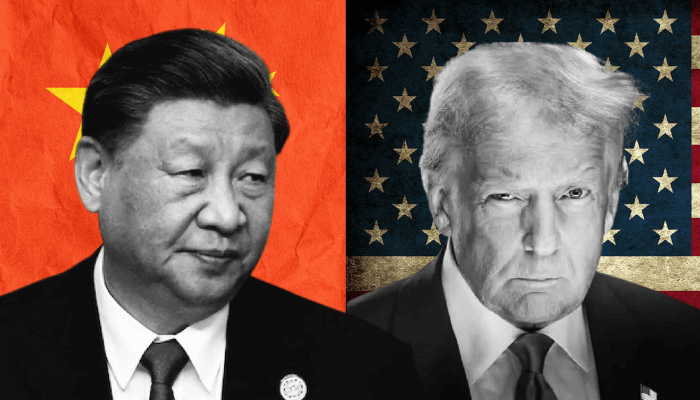
President Donald Trump announced on Thursday that the United States and China had signed a trade agreement, two weeks after officials said they reached an understanding in London about implementing a ceasefire in the countries’ trade dispute.
“We just signed with China yesterday,” Trump told reporters at the White House on Thursday, though he provided no specific details about the agreement.
According to the Financial Times, the US and China had “agreed to an additional understanding for a framework to implement the Geneva agreement,” referring to trade talks held in May when the nations first negotiated a truce.
FT also cited two anonymous sources saying that Washington and Beijing appeared to have formalised what negotiators had previously discussed but not included in a written document. Prior to the London talks, US officials had expressed their desire to reach a handshake deal with the Chinese, though some experts criticised this approach as naive without proper documentation.

The original Geneva agreement involved significantly reducing tariffs on each other for 90 days, while both sides attempted to negotiate a comprehensive trade accord. However, disagreements about Chinese rare earth exports and US export controls had stalled the deal.
Read Also: Trump confronts Israel, Iran over fragile ceasefire as 12-day war halts
Earlier this month, Treasury Secretary Scott Bessent led a team including Commerce Secretary Howard Lutnick and US Trade Representative Jamieson Greer for talks in London with Chinese Vice-Premier He Lifeng to resolve the impasse. After two days of negotiations, both sides announced they had reached a deal without providing specifics.
On Thursday, Lutnick confirmed they had completed the arrangement originally reached in Geneva. “That deal was signed and sealed two days ago,” he told Bloomberg Television.
Sean Stein, president of the US-China Business Council, welcomed the development cautiously, stating: “While we need to look at the details, if the deal brings more certainty, predictability, and fairness into US-China trade, it will be a great victory for the people of both countries.”

The Trump administration is working to secure broad trade deals with multiple partners ahead of a July 9 deadline when it would reapply “reciprocal” tariffs announced in April. Those levies, reaching up to 50 per cent on most US trading partners, had temporarily dropped to 10 per cent for 90 days to allow negotiations.
US officials have since conducted intensive talks with countries including India, Vietnam, South Korea, Japan and the European Union to reach permanent settlements. Thus far, only the United Kingdom has concluded a trade agreement with the US, whilst China has secured lower “reciprocal” tariffs of 10 per cent following a period of escalating tariff increases.
Additionally, Trump has maintained an additional 20 per cent tariffs on all Chinese imports, citing Beijing’s failure to curb the flow of fentanyl precursors from China.
The administration is also considering applying global tariffs to imports in sectors including semiconductors, consumer electronics, aerospace parts, lumber, copper, pharmaceuticals and critical minerals.