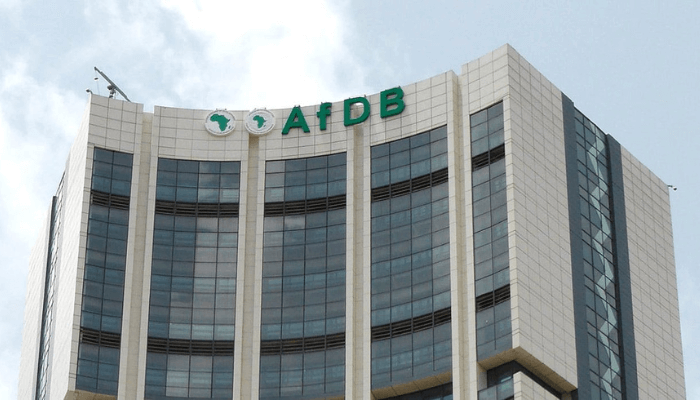
Peter Enogb, principal country economist, African Development Bank (AFDB), has said that the rise in global uncertainty, emanating from increases in global trade tariffs, has slowed Nigeria’s projected growth to 3.2 percent in 2025.
“Without this level of heightened uncertainty, our projections would probably have been somewhat higher. We’ve reduced our projections for Nigeria. We initially were projecting 3.5-3.6 percent growth in 2025.
“But given the current situation, our models are showing that we’re taking a more cautious approach. So that’s why we produced this and, of course, the main driver is uncertainty in the global economy,” Enogb said.
He said this at the launch of the 2025 Nigeria Country Focus Report (CFR) on Thursday.

AFDB projected that real GDP growth will hit 3.1 percent in 2026. Following the 2024 consumer price index (CPI) rebasing, with lower weights for food items, the inflation rate is expected to reduce over the medium term to 24.7 percent in 2025 and 17.3 percent in 2026.
Read also: New era at AfDB: What Nigeria’s economy can expect from the leadership shift
As imports start to rise over the medium term, the current account is projected to decline to 3.9 percent of GDP in 2026.
The National Bureau of Statistics (NBS) reported that Nigeria’s headline inflation slowed for the second consecutive month to 22.97 percent in May. This is down from 24.48 percent at the start of the year
This is contrary to the World Bank projection that Nigeria’s economy would record steady growth of 3.6 percent despite the shift in the global trade dynamics.

Joseph Ogebe, head of research and development at Nigerian Economic Summit Group (NESG), also said that global uncertainty has been very high in recent times, resulting from the Trump 2.0 effect.
“And also with the recent war between Israel and the international community, we’ve seen what’s happening to oil prices. Even with the call-off of the war, we’ve seen the effect on oil prices too, which has implications on the fiscal side. So it has implications for the general economy,” he said.
The head of research at NESG said that rather than focusing on just growth, what should be looked at is a strategy called growth with depth.
“Growth with depth means that your growth must be diversified, export-led, productive, and technologically driven,” he said.
Ogebe said that if the government works towards adopting a strategy of growth with depth, there is a tendency for the government to move towards its goal of achieving a $1 trillion economy by 2030.
The report revealed that the country’s recent policy moves, including fuel subsidy removal, exchange rate unification, and tax reforms, reflect a commitment to long-term transformation.
However, it also pointed out that at about 13 percent, Nigeria’s tax-to-GDP ratio is among the lowest in West Africa, noting that fiscal reforms are urgent.