|
Getting your Trinity Audio player ready...
|
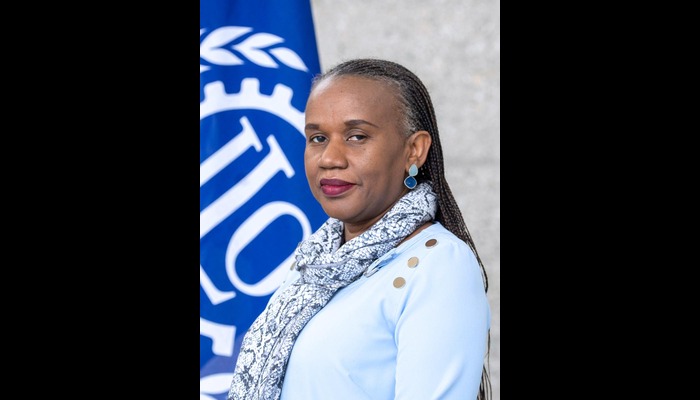
Fanfan Rwanyindo, Africa’s regional director, International Labour Organisation’s (ILO) has called on African governments to view its 9.6 million domestic workers as an economic driver supporting the wider economy, and not only as a private matter inside homes.
She noted this during Domestic Workers Day, which was adopted as the first international labour standard that recognises paid care within the home.
Rwanyindo argues that domestic workers play a vital role, not just within the households they support, but across the wider economy, as their labour is a strategic investment in the wellbeing and resilience of African societies that needs regulation and respect. When afforded protection, dignity and recognition, communities as a whole flourish.
In a clarion call for reform, the government must therefore legislate minimum wage, fair wages, legal protection and decent working conditions, for them, especially as the continent has over 9.6 million domestic workers over the age of 15.

To take action on this, she urged trade unions to organise domestic workers to demand pay increase. Also, employers can act in solidarity by ensuring that they pay and provide decent working conditions.
More broadly, she called on society to recognise care and domestic work not merely as household support but as a vital economic force deserving of investment, regulation and respect.
Read also: NGO, partner upscale domestic workers skills in Nigeria
Only 7 countries in Africa have implemented ILOs domestic workers convention
Rwanyindo revealed that only seven countries in Africa have ratified and implemented the ILO’s Domestic Workers Convention, 2011 (No. 189), and therefore called on more governments in Africa to take steps to ratify and ensure its principles are reflected in national laws. See also ILO’s progress and prospect, ten years after adoption of its convention.

These African countries are Angola, Cote d’Ivoire, Guinea, Mauritius, Namibia, Sierra Leone and South Africa excluding Nigeria.
She argued that the work should be seen as one that needs stronger protections, fair pay, and inclusive policies to ensure dignity and decent work for all.
“In Africa, care and domestic work is foundational to our survival and resilience. An estimated 15.8 percent of Africa’s paid female employees are domestic workers. But this vital work is undervalued and underpaid. Too many domestic workers are in informal employment, working without written contracts, minimum wage guarantees, healthcare or unemployment benefits”.
“In some African countries, they are excluded from national labour laws. In many others, enforcement of existing laws is weak or non-existent. Without access to maternity leave, healthcare, or safe working conditions, domestic workers are asked to care for others while their own care needs go unmet”, she says.
Read also: NECA wants FG to protect workers with speedy labour law reforms
Making a case for domestic workers in Africa
Rwanyindo highlighted that domestic workers have long underpinned households across cities, towns, and rural areas, often playing an unseen yet crucial role in local economies.
She noted that these workers, active day and night, were vital to the wellbeing of families, yet their own welfare frequently remained overlooked, particularly during periods of crisis.
According to her, the African continent had continued to grapple with challenges ranging from COVID-19 and armed conflict to economic hardship, climate-induced displacement, and natural disasters like droughts and floods. These disruptions, she said, have exposed and deepened existing inequalities, placing further strain on already fragile social protection systems.
She stressed that domestic workers, most of whom are women, were among the hardest hit. In times of upheaval, they were typically the first to lose employment, the last to receive relief, and the least likely to benefit from formal social protection. She added that migrant domestic workers and those with disabilities faced even higher risks of exploitation and discrimination.
Despite these hardships, Rwanyindo observed that domestic workers continued to serve others with dedication such as preparing meals they could not afford for themselves, and providing care to children, the elderly and persons with disabilities, all while navigating personal risk.
Governments, employers and society at large have therefore been urged to place care at the forefront of crisis planning and reform. Only by protecting, recognising, and valuing domestic workers, she asserted, could communities truly thrive.