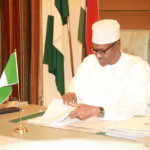
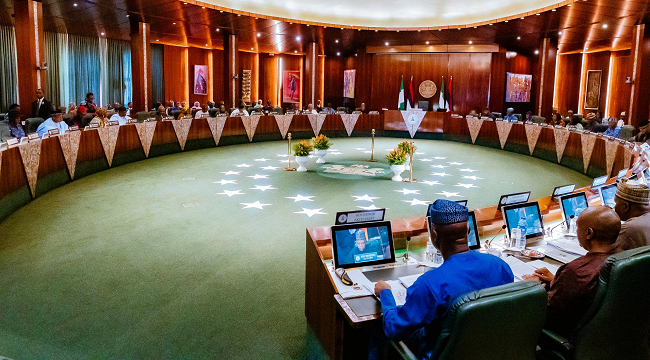
Nigeria remains without a full governing infrastructure almost two months after President Muhammadu Buhari took office on May 29, 2015, and more than four months after his election on March 28, 2015. The delay was initially assumed to be to allow the president’s Transition Committee complete its work, then speculated to be due to political infighting within the new ruling APC. The suggestion has also been floated that the constraint is that many potential cabinet nominees have not survived the new administration’s strict integrity scrutiny.
Now it seems clear that the president has decided not to form his cabinet until September because, as articulated in Buhari’s Washington Post op-ed as he visited US President Obama on July 20, “it would neither be prudent nor serve the interests of sound government to have made these appointments immediately on my elevation to the presidency” and appointments should be suspended until he puts “new rules of conduct and good governance in place”. We do hope those rules will be put in place expeditiously so that proper governance can take off.
While there will be benefits from cleaning up governance processes as the president envisages, there are costs to the current vacuum in governance and policy. First, political costs – the delay encourages power struggles within the party as we have seen in the Senate and House of Representatives, and we may see in other spheres of power as long as the president does not exert power and authority on the system. There are security costs as initial delay in appointing new service chiefs to replace the lame-duck military chiefs inherited from ex-President Jonathan may have provided a fillip to “Boko Haram” which has embarked on a bombing spree from May 29 that has seen more than 700 persons killed in just 52 days, a ratio of 13.5 persons per day! The most unambiguous consequence has been in the economic dimension. Since May 29, the Nigerian capital market has lost over N1 trillion in value, according to analysts’ reports. The currency has come under severe pressure and the margin between the official inter-bank and parallel market rates has risen to over N40 to the dollar with CBN fixing its rates around N196/$ but street rates over N240/$. It is clear that markets are discomfited by the absence of a clear policy agenda and by emerging hints about an aversion to downstream petroleum sector deregulation.
President Buhari’s visit to US President Barack Obama occurring so early in the tenure was a golden opportunity to galvanize US and global support for Nigeria not just with challenges with security and terrorism, but also regarding foreign policy, trade and investments, energy, infrastructure and other areas of economic cooperation. It may be somewhat of a missed opportunity that we didn’t make that trip with substantive ministers for foreign affairs, defence, finance, trade and investment, power and petroleum, amongst others. I was a bit disappointed watching Buhari meeting with Obama in the company of Rochas Okorocha, Adams Oshiomhole and Al-Makura et al while civil servants represented critical ministries.
President Buhari has hinted publicly that he is not persuaded of the merits of removing fuel subsidies, dismissing arguments so far presented to him as “lacking depth”! I know of two major substantial arguments against fuel subsidy removal – the fear that removal of fuel subsidies will lead to higher food and transportation costs and raise inflation thus affecting the poor, and a concern it could lead to political instability and erode support for the new administration. On the other hand, the case for deregulation and subsidy removal is very weighty – spending 25 percent of federal budget on importation of petrol (while Nigeria has huge crude oil and gas reserves, and a lot of poor people!) may not make economic sense; the subsidy prevents the creation of a domestic refining and petrochemical sector through private investment (private investors and their potential financiers cannot invest in a sector where prices are regulated and subject to political veto); fuel subsidies are a middle-class, consumption subsidy that is wasteful and prone to corruption; Nigeria needs to invest in the poor rather than middle class; the inflationary effect of oil subsidy removal is a one-off economic adjustment which is vastly outweighed by the benefits; fuel subsidy removal will release N1 trillion per annum for investment in people and redressing poverty, unemployment and inequality; the economy is paying the cost of deregulated fuel (most people have bought fuel at N110+ per litre in the last three months) without getting the benefits of deregulation; given Nigeria’s rich crude oil and gas deposits, Nigeria should be an exporter of REFINED petroleum and petrochemical products, rather than just crude.
This will increase the value of our exports and create jobs locally rather than subsidize foreign jobs. The sole factor preventing investment in domestic refineries is the oil subsidy. Full industry deregulation would produce a huge domestic, private sector, refining and petrochemical sector; risk of political instability can be easily managed by a careful communication campaign. Indeed, many Nigerians are now ready to accept higher oil prices in return for elimination of cycles of instability and scarcity; the long-term credibility of the government may in fact be enhanced by carrying out this policy and creating a burgeoning industry; the timing is auspicious due to low oil prices; most international stakeholders – the multilateral partners, foreign governments and embassies, foreign investors, global market analysts and banks – have identified the fuel subsidy as a representation of poor economic decision-making (and corruption) in Nigeria. The decision to retain fuel subsidies may be interpreted as a negative signal!
Nigeria is at a moment of opportunity with significant international and domestic goodwill and a government with a mandate for change. We must not miss the opportunity.
Opeyemi Agbaje