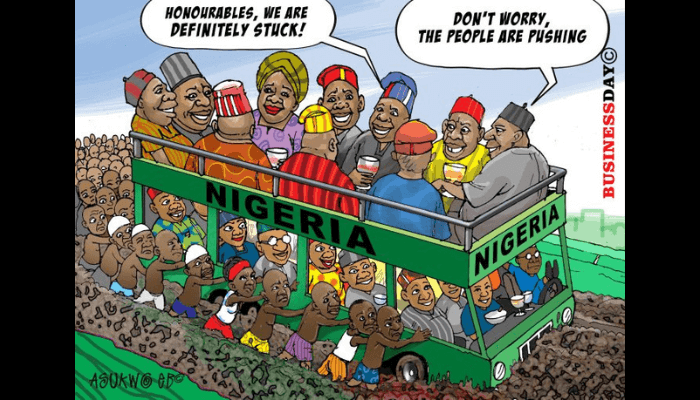
…Exploit citizens’ frustration, poverty
…Okada, grinding machine, clipper empowerment too little to make impact
Yemisi Michael, a 40-year-old mother of four, lives in a rural community of Ondo State, South western Nigeria.
For some years now, she has been struggling to make ends meet, working odd jobs to feed her family.

The widow bears the responsibility of catering for her four children after the demise of her husband three years ago.
During the 2023 general election, politicians visited their community, promising to improve their lives.
They distributed food items, cash, and other handouts to gain their support.
However, Yemi found favour from one of the politicians who empowered her with a grinding machine; some youths in the community were also given clippers by the same politician, in the build-up to the election.
However, just a month after using the grinding machine, it broke down, after spending so much to repair it without success, she abandoned it. She was told it was inferior.

Despite the promises, in her community, no development project has materialized so far, and the community remained impoverished.
Yemi, just like other community members, realized they traded their votes for temporary relief, becoming dependent on handouts.
This scenario plays out in many Nigerian communities. Politicians exploit citizens’ desperation and poverty, offering short-term solutions to gain power and their votes.
The empowerment which is most common with federal lawmakers, often come in the form of motorcycles, popularly known as Okada, grinding machine, clippers etc.
Many citizens have questioned if these empowerments can stimulate the economy and truly improve the beneficiaries’ economic state.
Meanwhile, systemic issues persist, and people like Yemi and her children remain trapped in poverty.
Read also: Nigerian politicians and the ‘toilet roll’ treatment of the masses
Create a cycle of dependency
Economists say these handouts create a cycle of dependency, undermining self-sufficiency and dignity.
Citizens become perpetual beggars, awaiting the next election cycle for more handouts. This phenomenon perpetuates a culture of entitlement, rather than empowering communities through sustainable development.
“I strongly feel that Nigerian politicians should have moved past this outdated and inconsequential practice of distributing items like grinding machines, clippers, and Okadas in the name of empowerment,” Hameed Muritala, a media and development practitioner, said.
“Just yesterday, I came across a report that the Kwara State government, through vice chairmen of local government councils in the state, distributed gas cookers and pots to women across the state as an empowerment initiative. That, to me, is both absurd and disappointing. What kind of empowerment is that?”
He further noted that many of these so-called empowerment items end up being sold by the supposed beneficiaries almost immediately after collecting them.
Observers say the trend has continued because Nigerian voters are docile and the level of consciousness and education is low. They warned that citizens must exercise their franchise without thinking of what they would get in return.
Similarly, some experts say the level of poverty in the country has made it impossible for many Nigerians to reject gifts and promises from these politicians.
“People see it as free gifts that they should collect; but that’s why these guys don’t come back after four years, because they think they have paid them by buying their votes and giving clippers to get their votes,” Michael Okafor, an economist, said.
Citizens must demand good governance
Experts say that these so-called empowerment initiatives have little or no sustainable impact on people’s lives. They do not lift people out of poverty, nor do they provide a pathway to self-reliance.
To break this cycle, citizens must demand accountability and good governance. By prioritizing education, job creation, and infrastructure development, communities can become self-sufficient and thrive.
Lucy Okafor, a public affairs analyst, said the trend makes citizens trapped in a never-ending cycle of poverty and reliance on politicians’ largesse, which forces people to prioritize their next meal over long-term goals, like education or starting a business.
She argued that Nigerians must learn to hold their leaders accountable, stressing that such can only happen when people vote freely by not selling their conscience to satisfy immediate needs.
“It is becoming systemic and that is because of the poverty state of our people. Successive governments have failed them and are now weaponising poverty. It is sad, but the way forward is good governance and policies that can fight poverty,” she said.
Skills development, access to finance, entrepreneurship support way forward
Experts say that instead of sharing money and giving handouts to less-privileged citizens, politicians and government officials should rather focus on skills development, give soft loans and other support for people to go into entrepreneurship.
Such people can also be given digital literacy, vocational training, as such initiatives can create real economic opportunities.
“If our politicians cannot do these, they should rather expend funds meant for their empowerment on projects or programmes that can benefit a wider segment of their constituents, rather than engaging in tokenistic handouts that do nothing but perpetuate a cycle of unending dependence and poverty,” Muritala further stated.
Many pundits however, believe that with the widening poverty gap in Nigeria now, the trend is likely to continue, with many citizens seeking assistance from wealthy individuals, elite and government to survive.
Since President Bola Tinubu assumed office in 2023, reports indicate an increase in poverty in Nigeria, particularly, following the removal of fuel subsidies and the floating of the naira.
The rise in petrol prices stoked inflationary pressures that reached an almost three-decade high, triggering the worst cost-of-living crisis in a generation and sparked days-long protests.
As at the end of 2023, the World Bank reports stated that 104 million Nigerians were poor. But the number rose sharply a year after as more than half of the population fell below the poverty line at 129 million.