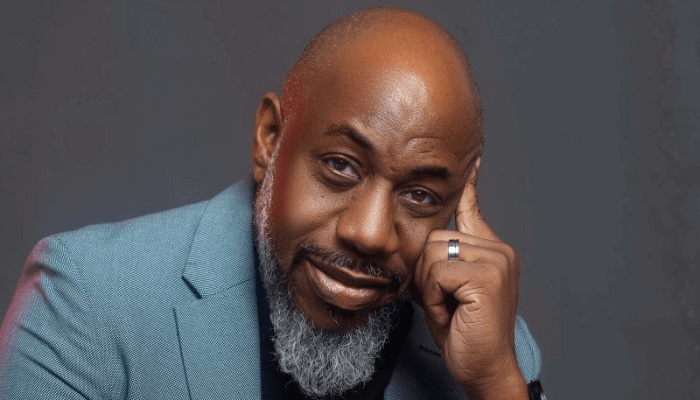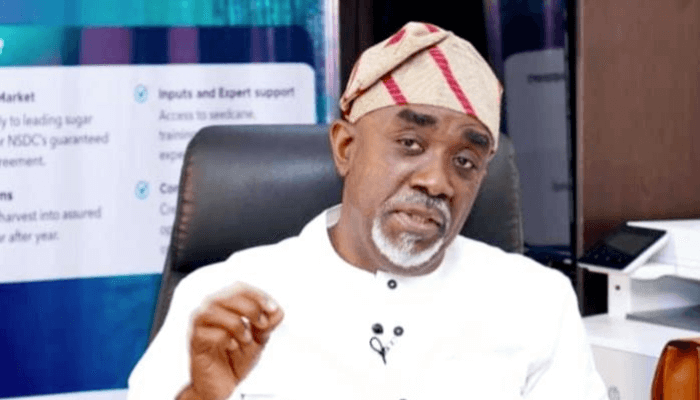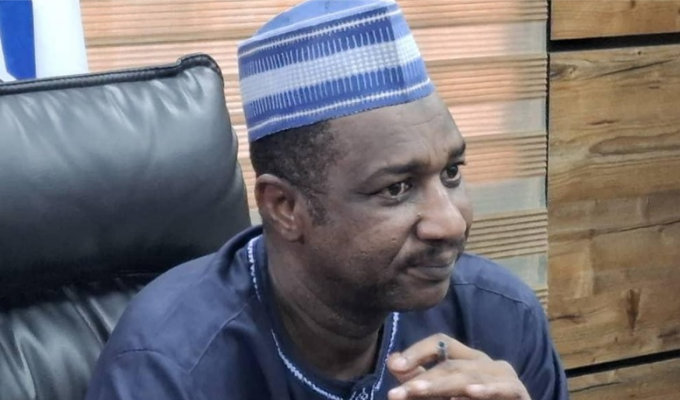
Professor Ahmed Ahidjo is the Chief Medical Director of the University of Maiduguri Teaching Hospital (UMTH). In this interview with OLATUNJI OMIRIN, he spoke on a number of issues, including the recent flood disaster and its multifaceted effects on the only cancer centre in the region, and other vital components of the hospital. Excerpts:
What have you been doing in recent time?
The University of Maiduguri Teaching Hospital (UMTH) is over 40 years old now. In 2023 we celebrated our 40th anniversary and we were all very happy- 40 years of existence. We are a public institution that is working on the mandate that is given to us by the federal government to provide clinical practice; to provide training and also research. These are the three major mandates in line with the Acts that established the University of Maiduguri Teaching Hospital, and since 1983 we have been the laboratory for training in liaison with the University of Maiduguri. Training of medical doctors started as early as 1983 and we have several graduates that are really supplying the medical needs of the North East, but many are working outside the North East and also outside the country. So, it’s not just only about producing doctors for Borno State or the North East, but it’s beyond. As of now, of the 14 federal tertiary health institutionS in the North East, 12 of them are headed by products of these medical school here, trained in this University of Maiduguri Teaching Hospital, and almost more than 50% of the skilled workforce that you find in the health institutions across the North East, are products of this institution. So, in terms of human resources, I think we have done well for medical doctors. We are producing a lot of nurses. Now, if you look at the other side of the university also, we train the physiotherapists, we train the pharmacists, we train the nurses, we train the radiographers and so many others, and all of these are continuously producing human resource for the country. I think this is one of our major mandates that we have achieved. The hospital is so big, if not the biggest hospital in the whole of the country, with about 1,305 bed capacity, with over 40 different departments, over 12 specialised centres and so many clinical and non-clinical units also that operate on their own. As we are talking with you now, kidney transplant is going on. So many things are coming, advancement in technology. We have over 100 professors of medicine, almost 500 doctors, over 200 specialised consultants, so many close to 1000 nurses, almost 62 radiographers, over 60 pharmacists. It is a huge place with over 5000 workforce. So, we do a lot of clinical service provision, both as out-patient, in-patient operations, minimally, so many things.
Can you take us through the flood and post-flood experiences?

Not only did I raise alarm, but I cried several times. I can’t count the number of times I cried because of pain. You know when you build a system, and then you see it right in front of you being destroyed by a power that you cannot control is beyond you, and you know what it takes to build it. It’s only you that have that feeling deeper inside you. You know what it feels, not because you are losing something, no, not because you expended your own energy to do it. No, it’s because when you have gone so far, so much to do for patients to benefit. But now you are seeing it all going, the beneficiaries, the intended beneficiaries, will no longer benefit. That’s the pain. The sick people that you know, when they come, they won’t get the benefit. I was crying for them. That’s my pain. It’s not the pain of building or losing the equipment, but the pain of these patients, what they will feel, because they will come, especially the cancer patients. Since, the September flood disasters that destroyed equipment worth more than N20 billion, nine months after we are still struggling with aftermath of most heart-wrenching events.
They have been coming from over six countries to this hospital. All parts of the country, North, South, West, everywhere, patients are coming, and now they can’t come because they cannot access the services. That’s why, when I look at the place, I shed tears. The last patient I saw, I keep on saying, he came from Lagos. Jacob is an engineer. He was on the couch for radiation to treat his own cancer. I saw him. I said where are you from? He said, he was from Lagos. I said, we have two centres in Lagos, why are you not going to that centre to get your treatment? He said that he was in LUTH, and they gave him two months’ appointment, and he’s afraid, and it’s N1.2 million. He was in a private centre in Lagos, and they told him it is N5million, but he’s subject to dollar exchange rate, so it can be more than N5 million. So, somebody told him, there is a centre in Maiduguri. They have more modern equipment, and it’s just N500,000, you can fly and get it and come back within the context of the money immediately, and that’s how God saved him to be there. But unfortunately, that was his first day, and he was on the couch. His treatment has not finished when the flood disaster struck and the next day, everything is gone. So, you know, when you see this kind of thing, you feel the pain for the patient. You can imagine how many will have been operated on their waiting list, and is their operation time? And then everything stopped. Including three Oxygen plants that are not working. So, it’s a very painful situation. The flood is actually a real disaster.
Can you attempt to quantify the losses incurred by the hospital as a result of the flood?
The initial assessment that we made was about N23.2 billion. But that did not stop there. Many things are coming, even as of now, many new things we are discovering are gone that we did not discover initially. One of the major things is the cancer centre. Two Linac and the CT. When we bought our Linac in 2022, the dollar was 380, HD Versa was N1.5 billion. The Elector infinity was N1 billion when the dollar exchange rate was N380. You can now compute and see how much it will be. Now, just this machine. City scanners are approaching a billion. Imagine a PCR, a gene sequencing machine in the WHO lab, how much it costs, but to talk of a CT scan in radiology, all the equipment there, the high-tech, MRI was bought. All inside water, the Molecular Lab. Most of the COVID-19 things that we bought, flooded laboratories. Many people look at the physical building. That’s not our concern. In my IR centre, the whole of the building is less than N500 million, the biggest building when we built it, but one piece of equipment will be over a billion naira, and you have like five of them inside the same building, and people don’t see such equipment. They say the building is looking good. Water did not affect them, so they won’t understand. Look at this physical rehabilitation centre that was built by the International Red Cross. Then it was $3.6 million and almost everything was flooded. But thank God to the ICRC. They came. They bought the equipment, they renovated the whole of the place, and they replaced, as of now, everything is working again. They did not even tell us how much it cost. They just did it as a philanthropy. The Cancer Centre, we have to thank people like Sir Emeka Ofor. He donated 1million US dollars for the first Linac it has now arrived. He paid directly to the company in the United Kingdom.
As of then, $1million is equal to 1.57 billion naira. So, we are working hard. We have lost so much, I believe, over 20 billion, if we have to quantify. The roads, some of the consultants there are complaining that mosquitoes are all over. We realized what it was, the whole of the drainages has gone. The blocks are broken. You see it, if you go behind, you see us reactivating some of them. And water is just static, and mosquitoes are breeding. Everywhere is being blocked because of the damage. If you come in front of my office, you see potholes all over. It’s an erosion effect. If you go just beyond, close to the powerhouse, you see the wall down. So, it’s a lot. It’s not only the equipment, it is not only the physical building, it is not only the roads; it’s not only the sewage, or electricity, if you say you talk about it, is a big damage, not to talk of drugs in the pharmacy, consumables, papers, almost all the papers.

If you go to the store, you see piles and piles of patient folders. We just kept those ones as a sample, so that people can see some of them have to be destroyed. Our electronic medical record, computerized system, even the wiring networking, not to talk of the computers and to worsen it, people are stealing at that time. You are crying of destruction by water and some people are taking advantage of that to come and loot. So, the damage is enormous. It was a serious devastation.
After the destruction, what have you been doing for some of the cancer patients that have been coming to seek services?
Well for now, it is closed, no service up till now. We are talking from September 10 to now, there is no service in the centre. It’s closed down. In the whole of the Northeast, there is no cancer centre. So, they have to move to Abuja or Sokoto. That’s the closest place they go. And some of them have to wait over with booking. Some may not even have the money. Can you imagine the consequence, because here they don’t have to travel anywhere. It is the cheapest in the country, no line, because the machines are modern. We were doing 150 patients in a day, but no hope now. The federal government has assisted in their own way as part of their appropriation, especially the Honorable Minister of Health, he has appropriated at the ministry to buy the cancer machines, which is the balance that is remaining from what is paid by Sir, Emeka Ofor. So, we are waiting for the budget this year so that we can have the two Linac and the CT scanners to start working.
For how long should patients wait?
Well, that one is a difficult question to answer. It is very difficult to say statistics, because the federal government has a procurement system where you have to go through the procurement system of the Federal Ministry and to purchase it, to come and install it, to come and pay for it. All have to go through the process of the normal procurement of the government.
Talk about the oxygen plant that was affected?
Yes, it was equally affected. We had three oxygen plants in the hospital. All of them were affected at the time. They were not working. We have to start buying oxygen from Damaturu. So, we had to look for the engineers to cannibalise them. For now, we have cannibalised the machines. Take spare parts from one and add to the other. We are just using one. It’s only one of the three. We have to take what is good here to the other so that one can work, and that’s the one that is working, and the other two, they are not working as of now. So, it’s part of things that we have to look for money to buy them. Up till now, there is no money.
In all these, in what areas are you needing the assistance of the federal government most?
The Federal Government has tried. They have given the hospital the appropriation through the Federal Ministry of Health and then from our own appropriation, we are working hard to do, but some of these, the money that we need is beyond the appropriation. We need special interventions. I mean, to fix all the equipment. The money that is given cannot be enough. So, we need more funding, and it is urgent but we have to wait for next year’s appropriation.
Is it correct to say that the hospital is in a pitiable situation?
Of course, the cancer centre is not working, CT scan is not working, MRI is not working. All the high sophisticated, complex machines are not working. We have to thank the Governor of Borno State, he has donated N500 million to the hospital for rehabilitation of the structures. We have been working hard, if not for that money, the primary and secondary skeletal service that you see now, we cannot even do them because just to fix electricity working back to normal. All the switches were all submerged. Is a big thing. If you look at the trauma centre, now you realise it’s newly renovated. If you look at the kidney centre now you realise it’s renovated. If you look at the fire service is renovated. And some parts of the wall, we do all the emergency thing. If you look at our electronic medical record now, it is working. So, all these, we use some of the funding the walls that have even fallen down after the flood, to fix them for security reasons, even perimeter fencing is a big thing; so, it’s just too much for us.
Tell us more about the electricity challenge?
As I said, electricity is the first major challenge after a flood disaster. We realise, if we did not turn off the electricity, patients will even be electrocuted, because the light was on, water was rushing in, and there are patients inside. So, the first thing we did was to turn off electricity and all generators, and we continuously rewired areas that have challenges, repairing the generators, the Solar that we have installed, working on it hard, but recently, we have got solar. The 12 megawatts electricity project by the federal government. It is a very good project, and to be honest, is a game changer. It has changed the way we work. Prior to this, you’ll find that with the vandalism that were going on of towers, if you recall, it will leave the hospital, and the town may be three, four months without electricity, and all the time will be running on generators, which is very difficult. Maybe, we can provide only four, five hours during the daytime. But now, with the coming of the solar all through the day, we have light. The only challenge we have is the night storage. So, we are working also to see how we can improve the situation of things. Another big headache is the issue of Band A. The Yola Electricity Distribution Company, whether by calculation or intention that they have put the hospital on Band A, where will the money come from? Is it the people of Borno State that have insecurity and there are no jobs and there is no money. We were paying N63 per unit, and now it is N209, are they telling us to increase the patients’ bills to be able to pay electricity bill? Or are they sabotaging the effort of the government? The government invested in providing electricity for the hospital and the university for 12 megawatts. And we are getting light for 12 hours. We all know when they say Band A, it means you are getting 20 hours. And I said, I need only 12 hours. And 12 hours is Band C. They say you must get Band A, what becomes of the investment of the federal government? The federal government invested massively to cushion the effect of the electricity. Take it somewhere where they need the Band A. Our own, we need only 12 hours in the night. During the day, there is solar. They said no, we must give you Band A. I think it’s very, very unfair treatment.
We wrote to the Nigerian Electricity Regulatory Commission; there is no response up till now. I will write, I will talk, but I don’t even have money if I want to pay the money, I don’t have the money. Four hours in a day, they brought N30 million for four hours in the night, because I don’t have the money, I say, okay, give me the light between eight and 12. I’m just 12, and they N30 million for four hours in a day. Where will I get the money? No. And in between there is generator work. In between, during the day, you don’t get light full. So, we put on generators also. So, where will I get N100 million for electricity in a month? My appropriation is far less than N30 million. So, it is a challenge, and painful. The Nigerian Electricity Regulatory Commission is supposed to note that this is a philanthropy, it is not a money-making organisation. We’re a nonprofit organization. We don’t make money here. We serve the people.
Are there statistics to back the effect of the absence of cancer centres so far?
I’m sorry, we didn’t have the records of follow up, but we referred them appropriately to where they can get attention. You know, as I say, some of them may be financially constrained, because in UMTH it’s the cheapest and is the most accessible with no waiting, as you just get it as you come. But the feedback from them is what we don’t have the data.
What could be the fate of foreigners accessing this service?
That’s the challenge, and that’s the reason why we have to fix it fast. You understand what it means, it means disrupting the service that is being provided, and the solution is to fix it fast. Already, the federal government has appropriated, many have promised to help, especially the one that I mentioned to you, have already got his own help, many have come and seen it, and they were pathetic at that time. But the response is poor.
Lastly, what is your appeal to wealthy Nigerians?
A sick person is a person that needs the service most. It is not a luxury. It’s not like going to a restaurant to eat food. No, it is a necessity. He needs it to survive. So, let’s all come together and sort this challenge of UMTH, but we have to, at the end of today, thank the Honorable Minister of Health, he has, like a personal attachment to the challenges of UMTH, We have to travel with him to the United Kingdom, to the factory producing the cancer machine because of his level of commitment and now his Excellency, the governor, we have to thank him. We are working right now also with the North East Development Commission. They are putting their hands to see where they can help, also the WHO, the International Red Cross, and as well as many other foundations, they are really coming in and helping from time to time. But the destruction is massive. So, we have to again, engage so many others and those that have started. Let’s be fast, because in this type of scenario, speed is very important. Just like the ICRC and the WHO, they have restored the WHO regional laboratories w the physical rehabilitation is back to service. So, we have to have speed in addition to the promise, there has to be speed. Please, let us come together to save the UMTH from its presence pitiable situation that resulted from last year flood disaster.