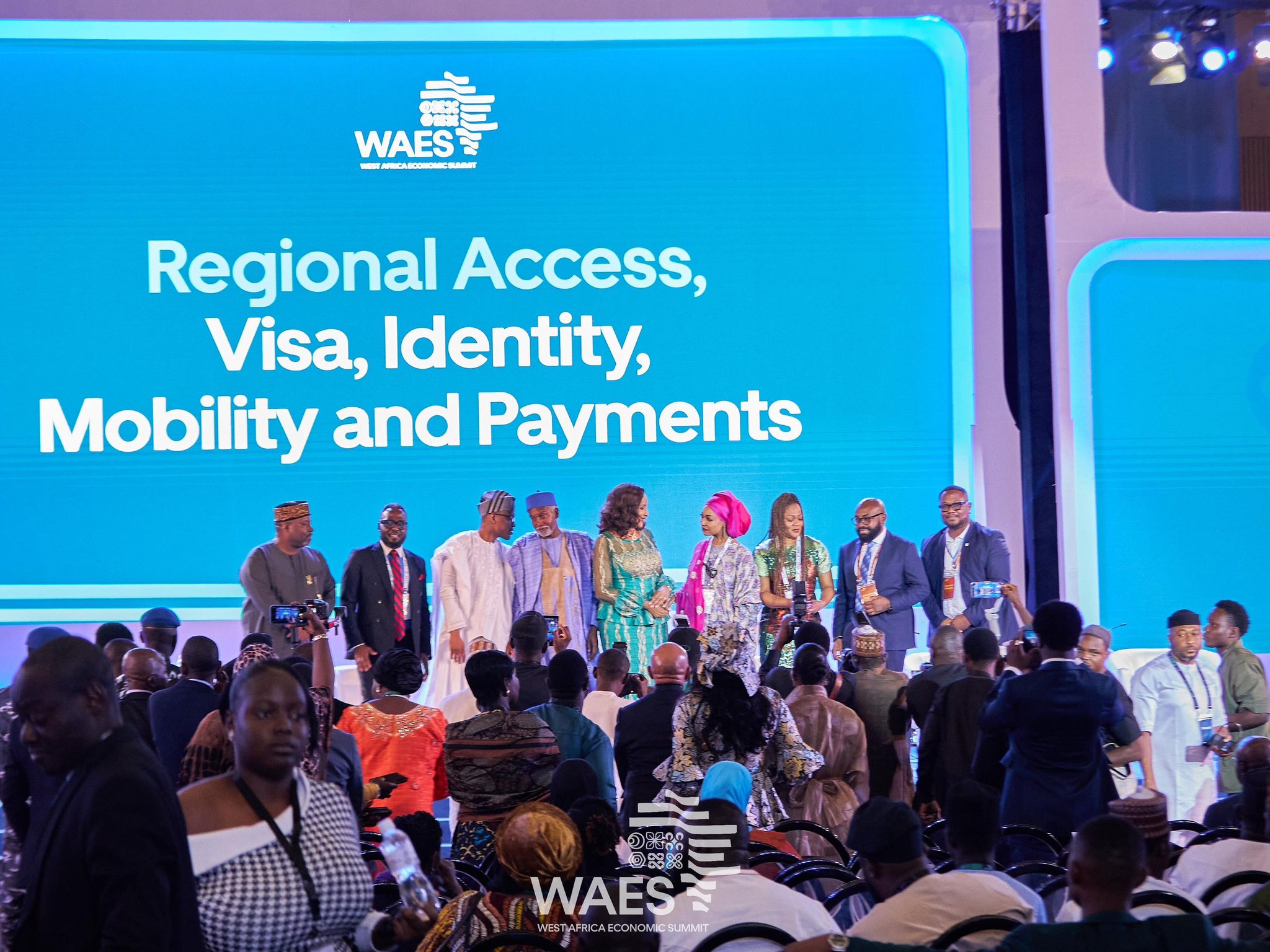
Stakeholders on Friday in Abuja made strong recommendations for the adoption of single visa and unified identify systems to boost regional integration trade in West Africa.
The panel made up of experts, while debating the topic of “Regional Access Visa, Identity, Mobility and Payment” at the ongoing West Africa Economic Summit (WAES), noted that greater regional integration will only be possible if the region accelerates the implementation of protocols on free movement of people, and harmonised digital identity systems.
The panelists which included Olusehegun Bakare, Foreign Affairs Minister of Benin Republic, Hannatu Musawa, Nigeria’s Minister of Arts, Culture, Tourism and the Creative Economy, Obi Asika, Director General, National Council for Arts and Culture, Abisoye Coker-Odusote, Director General of the National Identity Management Commission (NIMC) and Chidozie Arinze, a Fintech expert, agreed on the need to adopt the policies as they will help in unlocking West Africa’s trade, tourism, and cultural potential.
Read also: WAES: Experts make case for more equity investments to grow trade

Bakari advocated for a unified West African visa system to promote intra-regional tourism and deepen economic ties.
He argued that the current barriers to movement, including high travel costs, fragmented payment system and identity systems, as well as visa restrictions have contributed in stifling West Africa’s ability to grow its tourism sector and leverage its cultural wealth.
“It’s more expensive to fly from Cotonou to Abidjan than to Paris. That must change. We need a single air traffic area and a Schengen-style visa system, at least among the coastal states, so tourists can explore the region seamlessly”, Bakari said.
Highlighting the region’s underutilised tourism potential, especially among Africans themselves, Bakari called for deliberate efforts to encourage West Africans to discover neighbouring countries.
“Too many West Africans have never visited a neighbouring country. We must promote intra-African tourism by removing visa bottlenecks and cutting travel costs”, he said.

He also stressed the importance of cultural tourism, pointing to Elmina Castle and similar heritage sites as prime attractions for the African diaspora.
“With 200 million Afro-descendants globally, West Africa is well positioned to draw visitors searching for their roots,” he said, noting that Benin is investing heavily in hospitality infrastructure to attract such tourists.
On the subject of identity, Bakari praised Nigeria’s push for widespread adoption of the National Identification Number (NIN), adding that Benin has enrolled 98% of its population in its national ID database. He proposed interoperability of national identity systems across West Africa to facilitate seamless travel and digital payments.
Abisoye Coker-Odusote, Director General of the National Identity Management Commission (NIMC), echoed this sentiment, identifying fragmented identity and payment systems as a major barrier to regional progress.
She called for a harmonised digital identity ecosystem, built on the foundation of existing frameworks like the ECOWAS National Biometric Identity Card (ENBIC) and the World Bank-supported WURI program.
“For the region to achieve seamless movement, we must unify our systems and data protection frameworks. We need a regional agreement that allows for secure cross-border interoperability of digital identities”, she said.
She also urged member states to align their national systems with the African Union Interoperability Framework, warning that operating in silos would undermine the shared goal of economic integration.
Read also: Why Ghana Cedi is Africa’s best performing currency in 2025
Arinze, financial technology experts and payments industry leader, stressed the role of unified cross-border digital payments in driving trade and inclusion.
Referencing the European model, he noted noted that enabling smooth cross-border transactions is key to unlocking intra-African commerce.
“Payments are the lifeblood of trade,” said Arinze, who advocated for policy harmonisation across countries. “We’re supporting the Pan-African Payment and Settlement System (PAPSS) under the AfCFTA to ensure that trade payments become part of daily life, not an exception.”
He emphasized that fostering competition, interoperability, and private sector partnerships are essential to creating a robust digital payments landscape in the region.
The panelists explained that while many smallholder farmers and microentrepreneurs make up a significant portion of the region’s GDP, their businesses often stagnate due to a lack of basic financial literacy.
“Building new fintech products is not enough. We must educate grassroots entrepreneurs on managing money, reinvesting profits, and scaling their businesses. That’s how we grow our GDP sustainably,” the panelist argued.
He added that easing cross-border travel for small traders, by using national ID cards instead of passports could transform their economic realities and foster a more integrated West African economy.
Obi Asika, Director General of the National Council for Arts and Culture (NCAC), presented Nigeria as a cultural powerhouse with global influence, thanks to its music, fashion, food, and digital content.
He said initiatives like the Creative Leap Accelerator Program (CLAP) and the Origins platform are designed to empower young creatives and connect Africa’s cultural diaspora through digital tools.
“Culture travels faster than people—Afrobeats needs no visa. Nigeria is already everywhere culturally. We now need to scale digitally, financially and structurally to maximise that influence”, Asika said.
He stressed the need for collaboration between digital content creators, tech platforms, and national identity systems, saying, “The average Nigerian is 18 years old and on a mobile phone. What we deliver to them through that device can accelerate development.”
Participants agreed that regional integration is not just an economic imperative, but a cultural and identity revolution.
As visa reforms, identity interoperability, and cross-border payments become central to policy discussions, the hope is that West Africa can position itself as a unified economic bloc that thrives on mobility, innovation, and shared heritage.
He emphasized the global relevance of Nigeria’s creative exports, noting that the country’s influence in music, fashion, and film stretches far beyond its borders.
“We are the heartbeat of the black world,” Asika stated. “Five of the top global arena artists are Nigerian, yet very few include African cities in their world tours. That has to change.”
He advocated for increased regional touring across West Africa and called for investments in digital platforms that facilitate collaboration and content distribution, stressing that the creative economy could impact over 10 million jobs in the next three years.
“Integration is not a choice, it’s survival. “The more we connect, the stronger we become”, a panelist said.
Hannatu Musawa, Minister of Arts, Culture, Tourism and the Creative Economy, has unveiled a series of ambitious initiatives aimed at positioning the country, and the West African region, as a global hub for culture, creativity, and tourism.
Musawa highlighted plans under the “Destination 2030: Nigeria Everywhere” vision, which seeks to rebrand Nigeria internationally through its culture, talent exports, and thriving creative economy. The strategy also focuses on boosting inbound tourism and fostering job creation through infrastructure investment, grassroots engagement, and policy harmonisation.
“We’re not just talking about international tourism. We’re also committed to driving domestic tourism by working hand-in-hand with states to showcase their unique assets. Our renewed hope cultural project is about unlocking the tourism value in every state of the federation”, Musawa said.
She revealed that the ministry is conducting a landmark data-mapping exercise to gather comprehensive industry data for the first time in Nigeria’s history, information that will serve investors, government agencies, and creatives alike.
This includes tracking sector growth, identifying regional tourism hotspots, and facilitating targeted investment.
Among the platforms driving the sector’s transformation is CLAP (Creative Lab Accelerator Programme), a one-stop digital shop for creators aimed at supporting 2 million creatives by 2027.
The initiative connects talent to training, opportunities, and funding, leveraging partnerships with both local and international stakeholders.
Musawa also called for regional policy harmonisation and an incentive regime to attract cross-border collaboration in arts and tourism, while referencing successful models such as Mexico’s Cancún and Saudi Arabia’s AlUla. Nigeria, she said, aims to replicate this success through tourism development in destinations like Zuma Rock and Obudu.
The West Africa Economic Summit continues to spotlight the opportunities—and challenges facing regional integration.
But from harmonised policies to digital infrastructure and cultural diplomacy, stakeholders agree: the time to act is now.
“Nigeria is open. And West Africa is ready. Culture, commerce, and connectivity must move together, not separately”, said Asika