…Says “ We must become value-chain smart
…Seeks investments in local processing
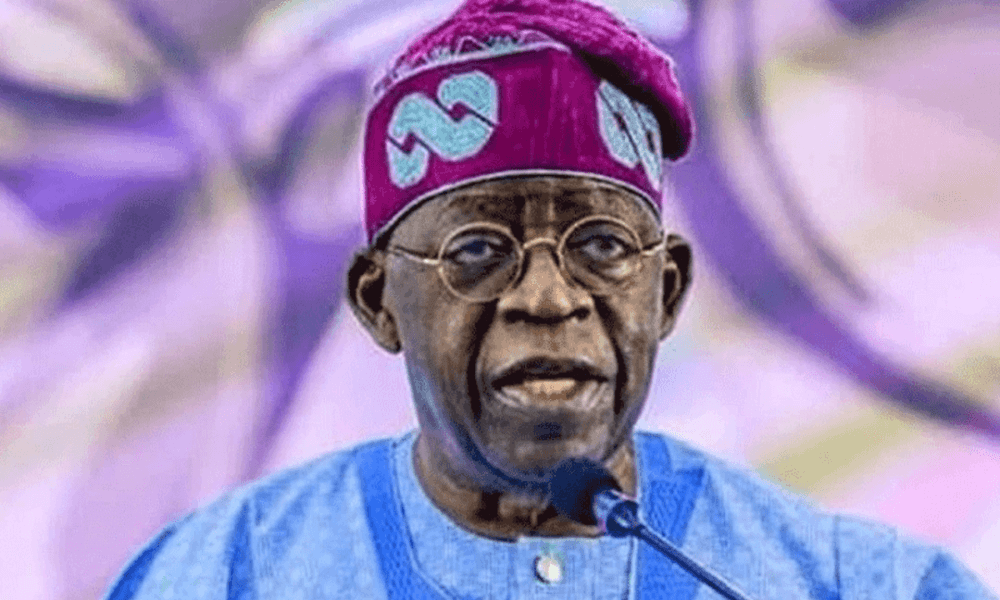
President Bola Tinubu has charged countries in the West African region to move from rhetorics and declarations to concrete implementation of policies that will help to advance inter-regional trade.
Tinubu who spoke at the second day of the ongoing two day West African Economic Summit in Abuja, on Saturday, also charged West African leaders to ensure that the next global economic revolution does not leave the region behind.

“Let us also recognise that Africa was left behind in previous industrial revolutions. We cannot afford to miss the next one.
The President while noting that the region’s rare minerals power tomorrow’s green technologies, stated that it is not enough to be resource-rich; adding that “ we must become value-chain smart and invest in local processing and regional manufacturing. The era of pit to port must end. We must turn our mineral wealth into domestic economic value—jobs, technology, and manufacturing”.
He stated that the leaders must support plans that will ensure the region “ emerge from this summit with actionable outcomes: a renewed commitment to ease of doing business, enhanced intra-regional trade, improved infrastructure connectivity, and innovative ideas that move our people from poverty to prosperity. Let us build a West Africa that is investable, competitive, and resilient—one that leads with vision, responsibility, and unity.”
The Economic Summit which is the first of its kind, was initiated by President Tinubu in his capacity as Chairman of the ECOWAS Authority of Heads of State and Government and convened to deepen regional economic integration with a strong focus on enhancing trade and investment cooperation across the subregion.
The event witnessed the physical presence of Presidents of Liberia, Benin Republic, Senegal, Sierra Leone and representatives of other west African leaders.

It also featured Private sector leaders, development partners, and policy experts are also participating.
Tinubu, while welcoming his guests, noted that their presence signals the shared commitment to shaping a new economic future for the region.
“We gather at a decisive moment. Today is not about celebrating how far we’ve come but forging a new path that leaves behind fragmentation and missed opportunities and moves us toward deeper integration, collective action, and shared prosperity.
Read also: WAES: Single visa, unified digital identity seen boosting regional trade, integration
“ West Africa is one of the last great frontiers of economic growth. Yet opportunity alone does not guarantee transformation. Opportunity is not destiny. We must earn it through vision, integration, policy coherence, collaboration, and capital alignment.
President Tinubu who noted that “Intra-regional trade remains under 10%, added that “ it is a challenge we can no longer afford to ignore”.
“The low trade is not due to a failure of will but a coordination failure. The global economy will not wait for West Africa to get its act together, and neither should we. Rather than competing in isolation or relying on external partners, we must strengthen our regional value chains, invest in infrastructure, and coordinate our policies,” he said.
The President while also noting that the region’s greatest asset is its youthful population, said however, that “this demographic promise can quickly become a liability if not matched by investments in education, digital infrastructure, innovation, and productive enterprise”
Tinubu while also noting that Nigeria has invested in skills development, digital connectivity, and youth empowerment, said “no one country can do this alone. Our prosperity depends on regional supply chains, energy networks, and data frameworks. We must design them together — or they will collapse separately.
“From the Lagos-Abidjan Highway and West African Power Pool to digital and creative industry initiatives, our joint projects demonstrate what is possible when we work together. But we must do more. We must move from declarations to concrete deals; from policy frameworks to practical implementation.
“Let us also recognise that Africa was left behind in previous industrial revolutions. We cannot afford to miss the next one. Our rare minerals power tomorrow’s green technologies—yet it is not enough to be resource-rich; we must become value-chain smart and invest in local processing and regional manufacturing. The era of pit to port must end. We must turn our mineral wealth into domestic economic value—jobs, technology, and manufacturing.”
The President also challenged the private sector to get involved in the move for transformation, adding that “ fundamental transformation will not come solely from government but from unleashing our people’s entrepreneurial spirit. Governments must provide the right environment—law, order, and market-friendly policies—while the private sector drives growth.
“Our task is to find new and effective ways to invest in our collective future, improve the business climate, and create opportunities for our youth and women.
Yusuf Tuggar, Nigeria’s Minister of Foreign Affairs, while speaking on the purpose of the summit, said it is to ‘Reset the Vision for the Economic Future of the West Africa Region.’
Read also: WAES: Experts make case for more equity investments to grow trade
Tuggar noted that government create the enabling environment. “ it’s up to the creative talents, enterprise and ingenuity of our people to deliver that transformation. Governments and organisations are at their best when they realise the limits of their influence and power”
“ Long before this city was founded, before independence movements and colonial cartography, the people of this region related and traded — not through treaties, but through brotherhood and trust. Livestock from the Sahel moved southward; kola nuts from the forest zone moved northward. Markets such as Salaga, Katsina, and Kano were economic engines long before the modern state existed.
Tuggar, who also noted that West Africa pay the costs for the climate emergency, said the region however, received few of the benefits of the process that created it.
While also noting that competition is healthy, he said “ and it is in our common interest to keep that competition healthy and positive for all stakeholders. As a region, West Africa has the scale, talent and critical mass that no individual state alone can match.
“Let’s reflect on that for a moment: markets. Markets are a West African story, a story about trade, innovation and the generation of wealth and opportunity. We still believe in free markets – not a free-for-all, but markets that thrive because of effective co-operation between supply and demand, regulated by accepted and acceptable parameters.
“Let us not forget that in 2024, West Africa exported goods valued at over $166 billion. Yet only 8.6 percent of that trade remained within our borders. Imports follow the same pattern — heavily tilted toward partners outside the continent. Machinery and manufactured goods from China, India, the United States, and the European Union dominate our import flows, while we continue to export unprocessed raw materials.
Describing the trajectory as “untenable”, added that “the issue is not just capacity, but orientation.
“We know what economists call the informal sector finds ways to deliver what the market wants, bypassing borders and regulations when they are too slow and bureaucratic. As governments, as states and the region, we need to do more to make it easy to bring that activity within the formal sector, to bring with it the economies of scale and other efficiencies that will accelerate growth and help our entrepreneurs. And this is already happening: this Summit, as envisioned by President Tinubu, is the chance to build on that change.”
“Our job now, our responsibility, is to help find the best way to deliver goods and services to our people, to help the private sector and the free market to do what they do best, generating investment and building capacity.” he said