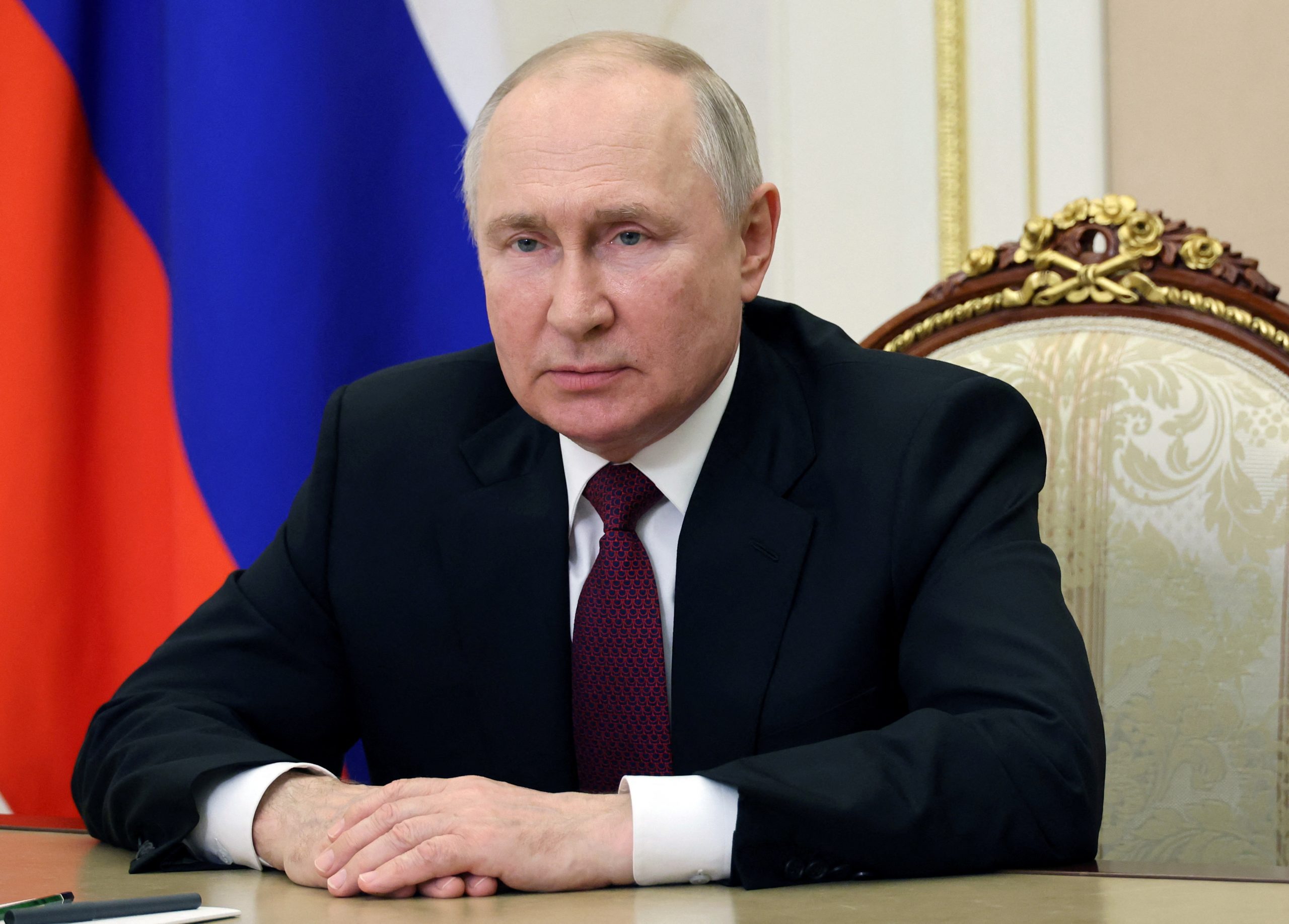
Vladimir Putin, Russian president, has said he is not seeking to act as a mediator in the growing crisis between Iran and Israel, insisting that Moscow is merely offering ideas to defuse the volatile situation.
Speaking at the Saint Petersburg International Economic Forum on Friday, Putin said: “We are by no means seeking to act as a mediator, we are simply suggesting ideas. If they turn out to be attractive to both sides, we will only be happy.”
Read also: Iran strikes Israeli hospital; Trump to decide on US role in conflict within two weeks
His remarks come after a week in which the Kremlin positioned itself as a possible peacemaker following Israel’s airstrikes on Iranian targets, which triggered retaliatory missile and drone attacks from Tehran. But Western leaders have pushed back on any mediation role for the Russian president, citing Moscow’s ongoing invasion of Ukraine and strained credibility on the global stage.

Despite Russia’s strong ties with Iran, including a sweeping strategic partnership agreement signed months ago, the Kremlin has not offered military assistance to Tehran in this latest flare-up. Instead, Moscow has condemned Israel’s strikes and warned the United States against military intervention.
The Russian foreign ministry on Thursday cautioned Washington against joining Israel’s military operations, suggesting that such involvement could escalate the conflict further.
Read also: Between missiles and markets: What the Iran-Israel conflict means for Nigeria
Putin, who held separate phone calls with Israeli prime minister Benjamin Netanyahu and newly elected Iranian president Masoud Pezeshkian following last week’s Israeli strikes, said he remained hopeful that tensions would not spiral out of control. Pressed on Israeli threats reportedly targeting Iran’s supreme leader Ayatollah Ali Khamenei, the Russian leader said, “I really hope that the things you mention remain at the level of rhetoric.”
However, the Kremlin has acknowledged that Israel appears uninterested in Moscow’s diplomatic overtures. Earlier this week, a Kremlin spokesperson said there was a clear “reluctance, at least on the part of Israel, to resort to any mediation services or to embark on a peaceful path towards a settlement.”

The Russian attempt to insert itself as a broker has been met with sharp rebukes from Western leaders. US president Donald Trump, speaking to reporters at the White House, dismissed Putin’s proposal: “He actually offered to help mediate. I said: ‘Do me a favour, mediate your own. Let’s mediate Russia first, okay?’”
Read also: Oil extends gain as Israel-Iran conflict stokes supply concerns
French president Emmanuel Macron has also reportedly expressed doubts about Moscow’s credibility as a neutral player in the Middle East.
While Russia continues to exert influence in the region — notably in Syria, where it cooperates closely with both Tehran and Damascus — its leverage appears limited in the current crisis. For now, Putin’s remarks suggest a more cautious posture, mindful of not being dragged into direct confrontation, even as the Middle East teeters on the edge of wider conflict.