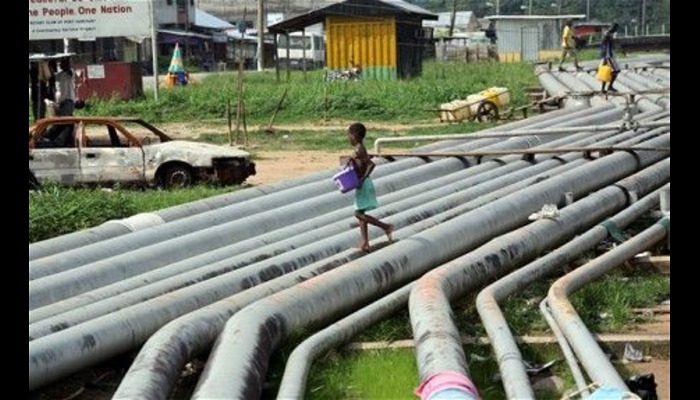
Civil society groups in Rivers State say a full implementation of the Petroleum Industry Act (PIA) and the Nigerian Oil and Gas Industry Content Development (NOGICD) Act will create jobs and reduce youth restiveness in the Niger Delta.
The National Bureau of Statistics (NBS), in its 2023 data, puts unemployment figures in the Niger Delta at 6.56%, above the national average of 5.4.%.
Civil society actors, during a training for journalists on ‘Environmental Justice Reporting,’ in Port Harcourt on Friday, June 13, 2025, linked the unemployment figures in the region to incidents of pipeline vandalism and other forms of economic sabotage.
Constance Meju, Chairman, Executive Director, Center for Gender Equity and Sustainable Development, on the sidelines of the media training, organised by Kebetkache Women Development and Resource Centre, placed the restiveness in the region on the high rate of unemployment.

She said environmental degradation and the destruction of farmlands and fishing areas, due to pollution arising from oil exploration activities, have impoverished the youths and people of the Niger Delta, denying them of means of livelihood and access to needed social infrastructure.
Meju pointed out that “The environment is the livelihood of the people, and fishing and farming is our traditional occupations. Those have been destroyed. Which is why we have high youth unemployment, vices and conflict everywhere.”
Henry Eferegbo, Executive Director of OLEGH Centre for Community Development, however called for proper implementation of the provisions of the Nigerian Content Act and the PIA, arguing that these can create jobs for youths in the region.
He pointed out that the PIA requires the settlor (oil company) to contribute 3% of its previous year’s operating expenditure (OPEX) to the Host Community Development Trust Fund (HCDTF).
“While the Nigerian Oil and Gas Industry Content Development Act (2010) reserves all unskilled jobs, 50% of semi-skilled jobs, 10% of skilled jobs and 20% of the total personnel required during the operations for indigenes of the host community,” he said.

Eferegbo pointed out that some HCDTs have funds running into billions of Naira as 3% accruing to them from the settlor’s OPEX. He argued that if the provisions of the PIA and NOGICD “are properly enforced, it will liberalise the system, creating opportunities for the youths to be skilled and properly engaged, and also fund indigenous businesses and overall social development.”
Emem Okon, Executive Director of Kebetkache Women Development and Resource Centre, stressed the need to mainstream gender particularly when reporting the pollution, oil extraction and environmental degradation in the Niger Delta, as well as issues surrounding Petroleum Industry Act, local content Act and Host community development trusts (HCDTs).
“When we are talking about the PIA and the host community development trust you begin to look at issues of how many women are in the board and management of the trusts? What powers do women have in the trust? The NEEDS assessment. How were community women involved in the NEEDS assessment?
“Not just community women, but the youths also. And when we talk about youths, female youths. How were persons with disability involved in the needs assessment? Were their needs identified? Are their needs included in the community development plans?
“If you do that, you must have created awareness and also directly or indirectly educate the leadership of the trust on how they should manage the trust,” Okon said.