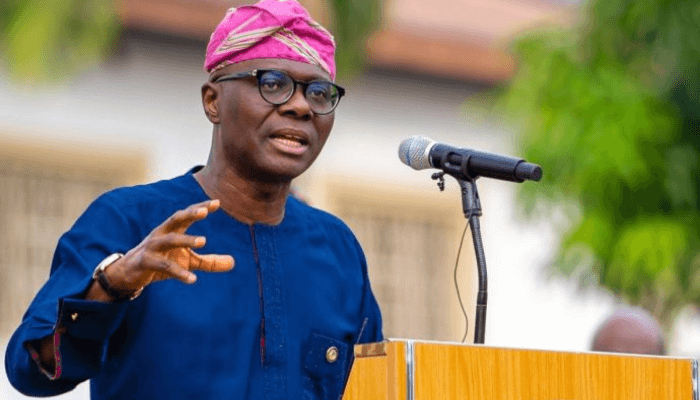
Governor Babajide Sanwo-Olu has called on Innocent Ohagwa, the newly inaugurated President of the Chartered Institute of Taxation (CITN), to foster innovation and catalyse reforms that will benefit Nigeria and drive national development.
Babajide Sanwo-Olu, who was represented by Opeyemi Ogungbo, his Special Adviser on Taxation and Revenue, also urged Ohagwa to deploy his decades of experience in tax administration and management to strengthen Nigeria’s tax system.
Speaking at Ohagwa’s Investiture Ceremony as the 17th President of the Institute recently, the governor hailed the new president as being a consummate professional with over 35 years’ experience in tax administration, urging him to steer the institute to greater heights and strengthen professionalism in the sector.
“As the president of the institute, his leadership will no doubt inspire confidence among stakeholders and catalyse reforms that would benefit Nigeria and its citizens,” the governor added.

He urged him to build on the solid foundation already laid and contribute to the growth and modernisation of Nigeria’s tax system.
Muhaammad Mainoma, Professor and the former Vice-Chancellor, Nasarawa State University, said the country’s tax system is undergoing a fundamental tarsnformation fuelled by rapid technological advancement and growing regulatory complexity.
Mainoma noted that countries are moving towards harmonisation of tax rules and data sharing mechanisms; automating and digitalisation of tax systems; economic integration and stronger tax governance.
He added that taxpayers today want fair taxation that reflects economic substance and transparency in tax payments and incentives, urging the Government to embrace public accountability and ethical prudence.
According to him, innovation is now a must, noting that Artificial Intelligence (AI), Blockchain and Robotic Process Automation (RPA) are some tools to transform taxation into the future.

He called for collaboration between the Government, taxpayers and stakeholders and called for a transformation of policies, mindsets and service delivery.
He listed some challenges hindering tax innovation to include economic and technological barriers, human capitals and skills deficit, institutional barriers, changing regulations as well as scalability and sustainability issues.
Calling for Government support on tax innovation, he called for better legislation, alignment, access and accountability.
In his acceptance speech, the new CITN president appreciated members of the Institute and implored them to work with him to elevate tax profession from the Institute, state and up to the federal government level.
He pledged to defend the integrity of CITN and vowed to deliver on the mandate, vision and mission of the Institute.
“Our expertise is needed now than ever in the history of Nigeria’s tax system, administration and management,” he said.