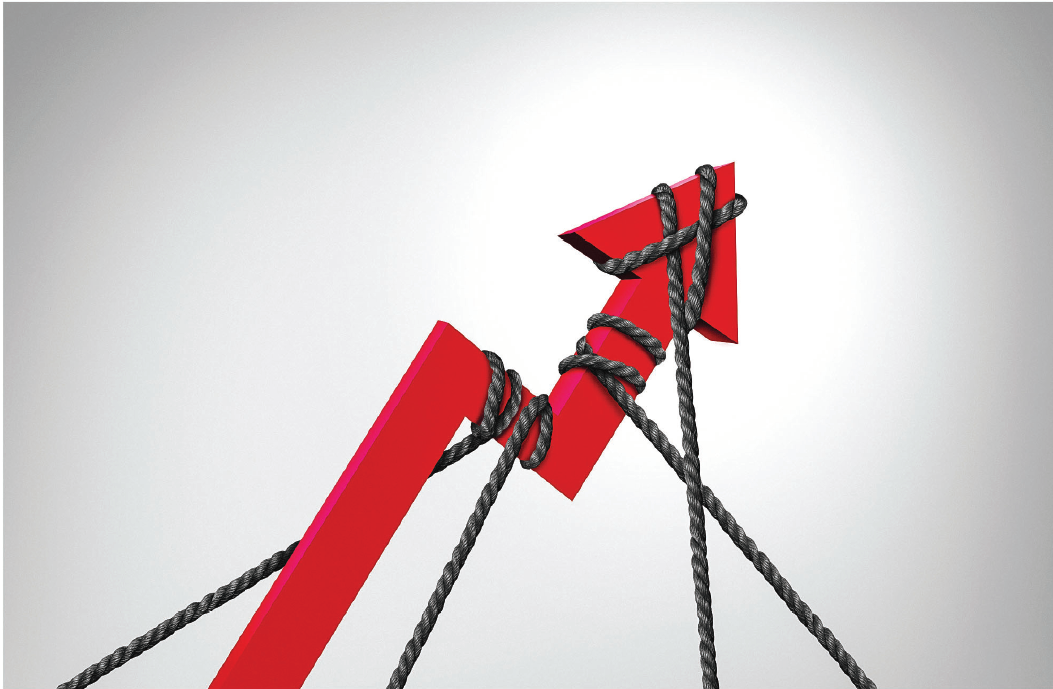
“There is no better opportunity for a leader to prove oneself than a crisis.” — TIEJA Inc.
Nigeria’s governance landscape presents a troubling paradox: a nation rich in resources and human capital that repeatedly stumbles into crises that should have been anticipated and prevented. Each disaster follows the same devastating pattern of poor preparation, inadequate response, and collective amnesia.
The nation is consistently blindsided by events that, in retrospect, were entirely foreseeable. Recurring nightmares are the inevitable results of a leadership culture that prioritises reactive measures over proactive governance, leaving millions vulnerable to preventable tragedies. The pattern, a fundamental failure in institutional learning and proactive governance, has trapped Nigeria in what experts call a “crisis rabbit hole.”
The anatomy of predictable surprises

Harvard Business School professors Max Bazerman and Michael Watkins have identified a phenomenon they term “predictable surprises” – crises that catch leaders off guard despite having sufficient information to anticipate them. These are not unfortunate coincidences but symptoms of systemic failures in leadership that have grave consequences for individuals, institutions, and society. Nigeria’s recent history provides a textbook illustration of this concept in action.
The pattern is disturbingly consistent: initial shock blindsides leaders, followed by reactive measures that focus on damage control rather than addressing underlying causes. Institutional memory then fades, reports gather dust, and recommendations for improvement are systematically ignored. Eventually, everyone looks surprised when similar crises recur, treating each incident as an isolated event rather than part of a recurring pattern.
The crisis rabbit hole in practice
The 2025 Joint Admissions and Matriculation Board (JAMB) crisis exemplifies this destructive cycle. Media coverage highlighted significant exam disruptions, including blank question papers, system crashes, power outages, and dramatic increases in failure rates. Writing for TheCable, Dr. Ganiu Okunnu noted that “just about nothing are not unique to Nigeria,” referencing similar disruptions experienced in 2015 and 2019 in Egypt. However, repetition does not excuse recurrence – each failure represents a missed opportunity to implement systemic improvements.
The flooding tragedy in Kagbe-Mokwa, Niger State, provides an even more sobering example. Deadly floods claimed over 200 lives, with 500 people still missing as of June 2025. The BBC reported that despite flood patterns being well-documented, urban encroachment on waterways and lack of climate resilience strategies created predictable disaster conditions. Rather than implementing comprehensive flood management systems, authorities defaulted to reactive emergency responses that failed to address root causes.

Systemic failures in crisis management
The nation’s crisis management failures stem from deeply entrenched systemic problems that perpetuate the cycle of predictable disasters. Leadership Response Patterns reveal a consistent tendency among Nigerian officials to address symptoms rather than tackle underlying causes. A common default response involves establishing committees that serve as substitutes for transparent action, yet these bodies frequently lack the commitment necessary to track performance outcomes effectively. Personnel changes become convenient alternatives to comprehensive systemic reforms, creating an illusion of progress while fundamental structural problems remain unaddressed. It is reactive – prioritising immediate political optics over sustainable long-term solutions.
The country’s Institutional Memory Loss represents perhaps the most damaging aspect of this dysfunctional cycle. The frequent need for personnel changes results in the systematic erosion of institutional knowledge and operational continuity. New administrations routinely discard previous strategies and hard-won recommendations, preferring to start with a clean slate rather than building upon existing foundations and lessons learned from past experiences. The approach sacrifices proven prevention strategies for short-term political visibility, ensuring that each new leadership team must rediscover solutions to problems that have already been analysed and addressed by their predecessors.
Weak feedback loops and inadequate accountability systems create an environment where past mistakes can be repeated without consequence. Without proper mechanisms to rigorously evaluate failures and extract meaningful lessons, institutions remain locked in cycles of reactive governance rather than developing the proactive capabilities necessary for effective crisis prevention. This enables the perpetuation of ineffective practices and prevents the institutional learning that could break Nigeria’s destructive pattern of recurring disasters.
Breaking the cycle
Nigeria possesses the information, resources, and human capital needed to anticipate and prevent repeated disasters. But the leader needs political will to implement comprehensive, long-term solutions rather than perpetual emergency responses. The choice is clear: break the cycle now, or the crisis rabbit hole will continue to claim lives, destroy livelihoods, and undermine the nation’s potential. The path forward requires abandoning the current mentality in favour of proactive governance.
Leaders must recognise that true leadership lies not in managing crises but in preventing them. Nigeria can continue its destructive dance with predictable disasters, or it can choose to invest in robust institutional memory systems, implementing comprehensive accountability mechanisms, and prioritising systematic prevention over reactive responses. The tools for change exist — what is missing is the political will to use them.