…Insists he won 1999 presidential election
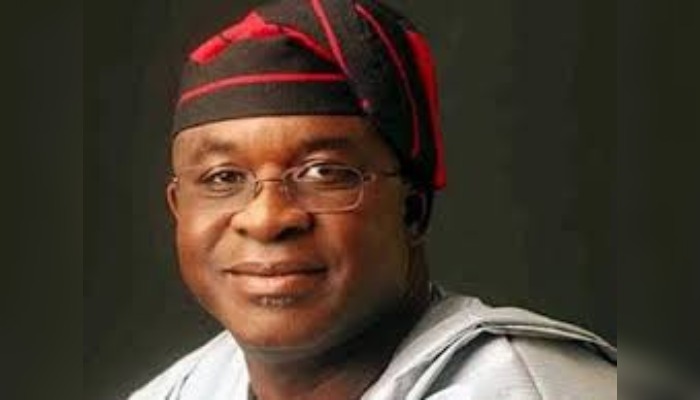
Former Secretary to Government of the Federation (SGF), and former presidential candidate on the joint platform of the Alliance for Democracy and the All People’s Party in the 1999 election, Olu Falae, has made a case for a parliamentary system of government, saying that it’s more suitable for a multi-ethnic country like Nigeria.
Falae insisted that he won the election, defeating former President Olusegun Obasanjo.
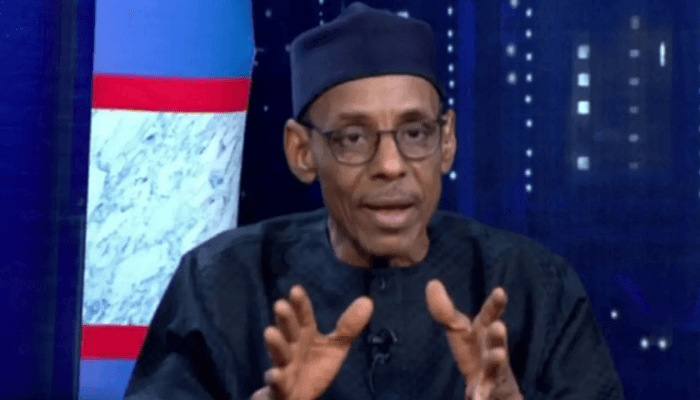
Speaking on Arise TV on Thursday in commemoration of Democracy Day, Falae stressed that there were flaws in the presidential system of government.

The former minister of finance regretted that he won the 1999 presidential election but was denied victory by those in authority who didn’t feel comfortable with him becoming the president.
He said, “The parliamentary system is by far more suitable for a multi-ethnic country like Nigeria. It’s more affordable to the Nigerian economy. We were at the national conference where I had the privilege of leading the Yoruba delegation.
“We made a very strong case for the parliamentary system. First of all the parliamentary system gives power and authority to the collective cabinet. The cabinet features ministers who must first of all be elected as members of the legislature before they could become ministers.
“In the presidential system the president can appoint anybody whether he’s qualified or not and sack him as he wishes. But in the parliamentary system you must have been elected by the people.
“You must have been accepted as a political leader in your constituency before you can be a minister. Number two, unless you are a multi-billionaire today you cannot try to be a president or even a governor. In the parliamentary system all you have to do is to win an election as a member of the House of Representatives and if your party happens to have the majority in that House then that majority will appoint you as a Prime Minister and Head of Government.

“In the parliamentary system the Prime Minister is a member of the legislature. The Prime Minister has to carry along his colleagues in the House.
“If he fails, then they can pass a vote of no confidence and remove him. The House cannot pass a vote of no confidence to remove the president. In a multi-ethnic state like Nigeria, there should be decentralisation of power and authority.”
Speaking about the flaws in Nigeria electoral system, he said, “In 2003 general elections I saw killings all over the country and I remember when Yar’Adua became president, he publicly admitted that he didn’t think the result was what it ought to be. He was horrified by the level of rigging.
“I don’t think that we have had any election that was free and fair. In an election somebody must emerge, so I believe that by the doctrine of necessity to form a government we have continued to stagger on accepting substandard election results. We will put our acts together and get an acceptable democracy.
“We have not had any election that was not followed by long drawn electoral petitions. I’m not saying people shouldn’t go to court. I went to court in 1999 but I stopped short of the Supreme Court for every good reason.
“It has become the habit in Nigeria that as you’re preparing for elections you’re also preparing for a long-drawn election petition, accessing your lawyers and raiding funds, that shouldn’t be the case.”
Speaking further, he said, “There are lots to be improved before we can get an acceptable democracy, unfortunately the sole determinant of who wins an election is money.
“Money is always a necessity for any enterprise but shouldn’t be the only factor that will determine an election. It’s no longer about manifestoes, but manifesto ought to be the foundation of democracy.”