|
Getting your Trinity Audio player ready...
|
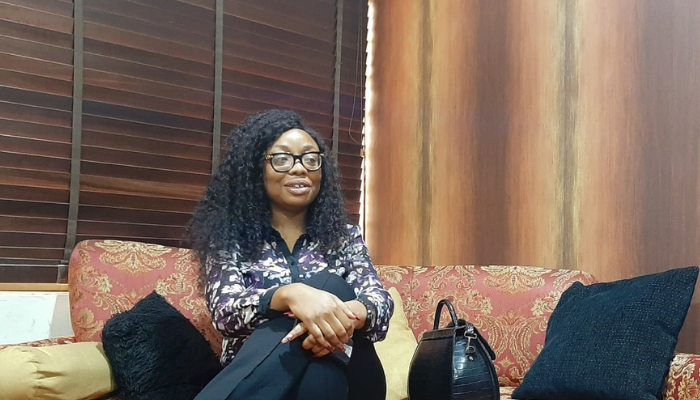
Adebodun Adeleye is a leading data scientist whose work spans finance, healthcare, and artificial intelligence. Her journey into data began with a drive to turn insight into real-world impact, whether in boardrooms or hospital wards. From building predictive models that transform customer engagement at Leadway Pensure to developing life-saving analytics in public health, Adeleye brings a rare cross-sectoral depth to her field.
In this interview with Chisom Michael, she speaks about breaking boundaries as a woman in tech, designing systems that drive transformation, and why purpose remains at the core of her work. Excerpts:
You’ve been recognised as one of Nigeria’s most dynamic and versatile data scientists. What sets your work apart from others in the field?
What sets me apart is the cross-sectoral scope of my work. While many professionals in data science remain in one domain, I’ve had the privilege of applying advanced analytics and machine learning across finance, customer intelligence, and public health. My focus has always been on real-world impact—using data to improve operational efficiency, predict behaviour, and even support life-saving interventions. I believe that data science isn’t just about insight—it’s about transformation.

Your contributions at Leadway Pensure have been called game-changing. Can you share some highlights?
At Leadway Pensure, I led strategic analytics initiatives that modernised organisational decision-making. I built real-time KPI dashboards, developed predictive models for customer retention, and used anomaly detection to optimise asset portfolios. My models helped the firm identify clients at risk of churn, tailor proactive engagement strategies, and streamline performance evaluation. These efforts not only improved service quality but also embedded a culture of evidence-based leadership across departments.
You later moved into healthcare analytics—a less traditional path for data scientists. What motivated that shift?
My motivation was simple: to use data to save lives. I realised the same analytical tools we use to forecast financial trends could also predict clinical outcomes. I developed a heart attack risk prediction model with 84.6% accuracy, integrating patient demographics, lifestyle data, and vitals to support early intervention. I’ve since expanded my work to include mental health and substance use prediction models—areas where data science can dramatically improve care delivery and policy design. The ability to apply AI in contexts that enhance human well-being is incredibly fulfilling.
You’re one of the few women globally—and even fewer in Africa—working at the intersection of AI, finance, and health. What does that mean to you?

It’s both humbling and motivating. Women are vastly underrepresented in senior data science and AI roles, and even fewer of us lead projects across divergent sectors like finance and healthcare. I’m proud to be part of a pioneering generation of African women in tech, proving that we can lead in deeply technical, high-impact spaces. For me, it’s not just about breaking barriers—it’s about redefining what’s possible for the next generation of women and girls in STEM.
Can you talk about some of the systems you’ve engineered, like the Bay Area Rapid Transit System (BART) SQL database?
Definitely, I designed and implemented the BART SQL database system to support large-scale analytics. It was built from the ground up for speed, integrity, and scalability. By optimising schema design and query logic, I enabled faster access to critical data and more efficient reporting. I’ve also developed ensemble machine learning models for housing price prediction and decision support tools for executives. Whether in finance or healthcare, the systems I build are designed to be both technically sound and operationally transformative.
Your academic credentials are just as impressive as your professional achievements. Could you tell us more about your education and training?
My academic journey laid the foundation for everything I’ve accomplished. I earned my Bachelor of Science in Computer Science from Oduduwa University, graduating with honours and a strong background in software engineering and systems architecture. To build global relevance, I went on to obtain a Master’s degree in Computer Science from San Francisco Bay University, where I focused on machine learning, AI, and advanced data engineering. I also pursued a suite of industry-recognised certifications in predictive analytics, AI, and big data platforms. This combination of formal education and ongoing technical training has been critical to keeping my skills sharp in such a fast-evolving field.
What’s next for you, and what do you envision for the future of data science in Nigeria?
I’m committed to expanding my impact in health analytics, and I’m passionate about mentoring and supporting the next generation of data scientists, particularly women. Nigeria has extraordinary talent—we need the infrastructure, support, and opportunities to nurture it. I also see data science becoming central to our national development, influencing how we deliver healthcare, manage resources, plan cities, and govern responsibly. I want to be part of that transformation, both as a leader and as a collaborator.
What fuels your passion?
Purpose. Every model I build and every insight I deliver must answer one question: “Will this make someone’s life better?” Whether it is a financial client receiving better service or a patient benefiting from early risk detection, data science must serve humanity. That belief drives me, anchors my values, and defines my career.